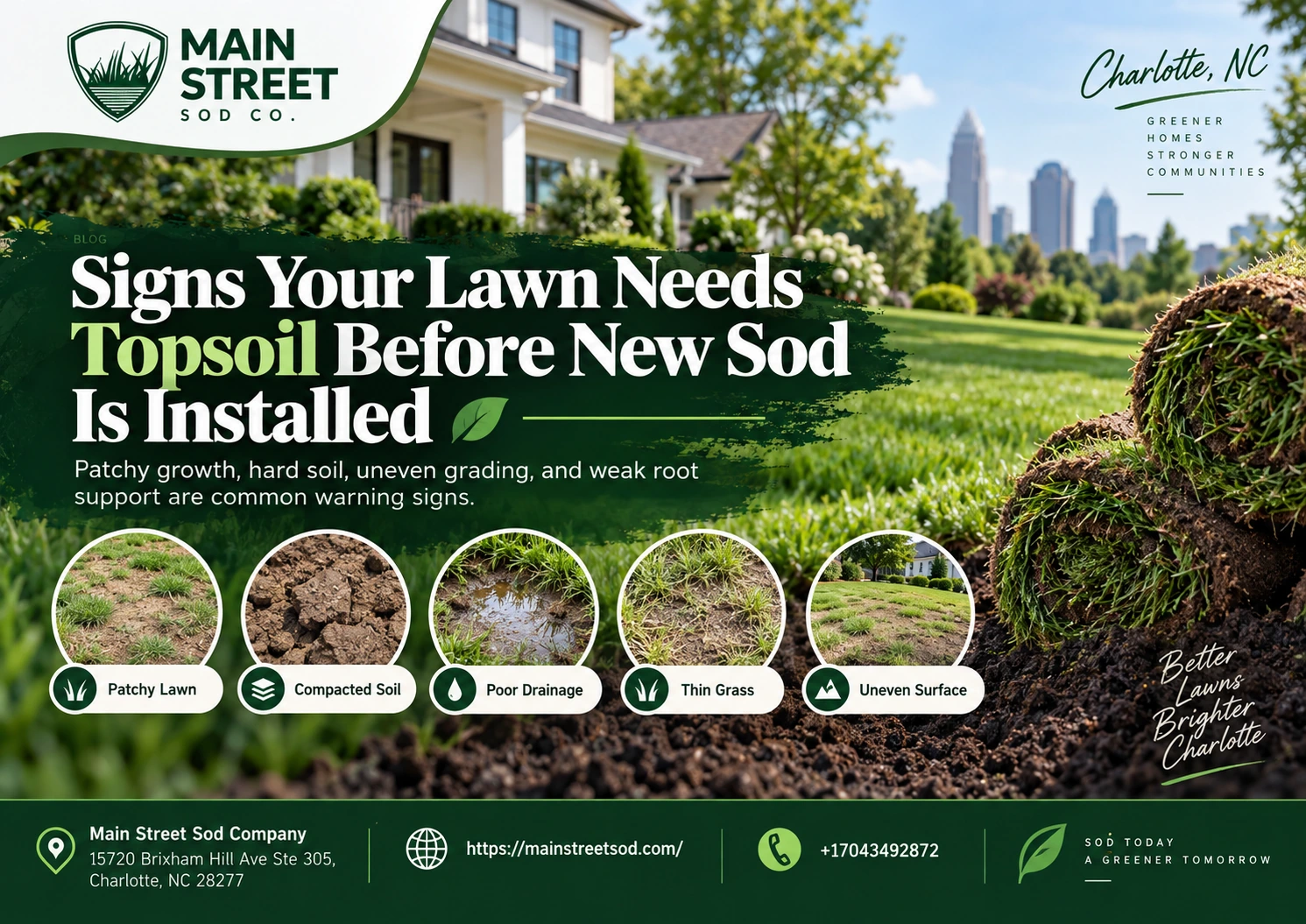
Not every lawn needs new topsoil before sod is installed. Some properties already have enough workable soil to support healthy root growth once the area is properly prepared.
Other lawns have shallow soil, heavy compaction, rocks, construction debris, poor drainage, erosion, or uneven grading that can make sod establishment more difficult. In those situations, adding or improving the soil may be part of preparing the site correctly.
The key is to evaluate what is already there. Topsoil can improve certain soil conditions, but it is not a universal solution for every lawn problem. Drainage, grading, compaction, and the condition of the existing soil all need to be considered together.
Why Does Topsoil Matter Before Installing New Sod?
New sod needs more than contact with the ground.
Its roots need a suitable soil layer where they can begin growing, access moisture, and gradually establish a stronger root system.
If the soil beneath the sod is extremely shallow, heavily compacted, full of debris, or otherwise difficult for roots to penetrate, the turf may struggle even if it looks healthy on installation day.
A suitable soil base can help support:
- Root establishment
- Moisture movement
- Drainage
- Nutrient availability
- Even grading
- Long-term turf health
That does not mean every sod project needs a fresh layer of imported topsoil.
A yard with workable existing soil may only need proper preparation, grading, and loosening before sod installation. The condition of the site should determine whether additional soil is necessary.
What Are the Signs Your Existing Soil Is Too Shallow?
One warning sign is a lawn where there is very little usable soil above hard subsoil, rock, or construction material.
This can happen on disturbed properties, heavily graded lots, or areas where previous construction removed or buried much of the original surface soil.
Possible signs of shallow soil include:
- Rock appearing very close to the surface
- Hard subsoil exposed in multiple areas
- Grass consistently struggling despite reasonable care
- Soil drying unusually quickly
- Difficulty digging even shallow holes
- Roots remaining concentrated near the surface
- Visible construction material beneath a thin soil layer
A shallow growing layer gives turf roots less room to establish.
However, adding topsoil without understanding the existing grade or drainage can create new problems. If the site is already poorly graded, simply adding soil may redirect water toward a structure or create low spots.
That is why shallow soil should be evaluated as part of the entire site rather than treated as an isolated problem.
Can Compacted Soil Prevent New Sod From Establishing?
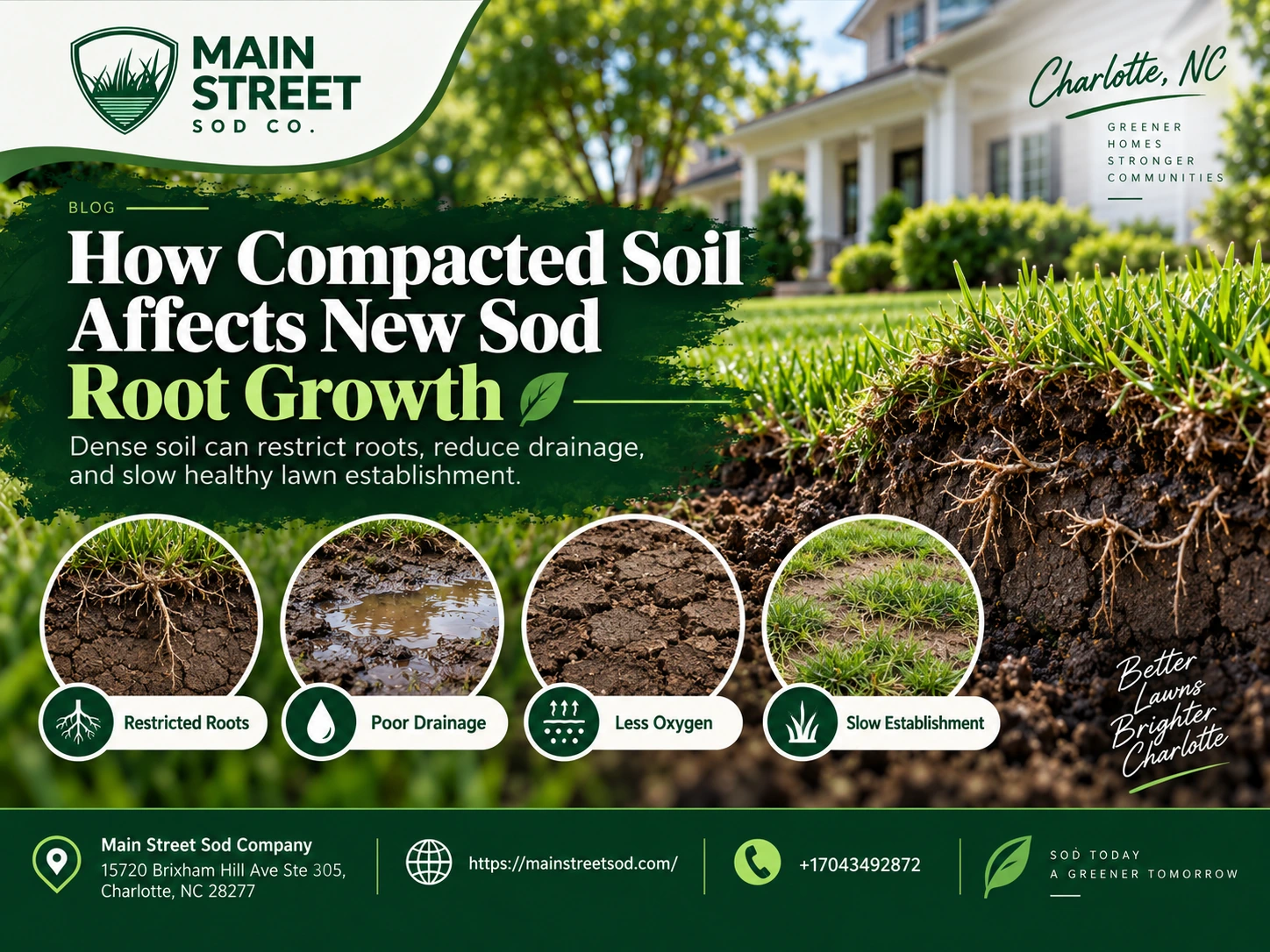
Yes. Severe compaction can make it difficult for new roots to move into the existing soil.
Compacted soil has very little open space for air and water to move through. The surface may feel extremely hard, and water may run across it rather than soaking in efficiently.
Possible signs of compaction include:
- Ground that is difficult to penetrate with a shovel
- Water running off rather than soaking into the soil
- Puddling after irrigation or rain
- Bare or thin areas where grass has repeatedly struggled
- Heavy foot traffic or equipment use
- Soil that becomes extremely hard when dry
Compaction is common in areas that have been driven over, walked on repeatedly, or disturbed by construction equipment.
Adding topsoil may sometimes be part of the solution, but simply placing loose soil over a severely compacted base does not automatically correct the underlying issue.
The existing surface may also need to be properly prepared so new roots can transition from the added soil into the ground below.
For more information about preparing a lawn before turf is installed, visit our Sod Preparation Page.
What Drainage Problems Can Indicate Your Lawn Needs Topsoil?
Drainage problems are another reason homeowners often wonder whether they need topsoil.
Signs can include:
- Standing water after rain
- Areas that stay soggy much longer than the rest of the yard
- Water flowing across the lawn instead of soaking in
- Erosion or washed-out areas
- Low spots that repeatedly collect water
- Soil that remains soft or muddy for long periods
In some cases, soil improvement or additional material may help create a better growing environment.
However, topsoil alone does not fix every drainage problem.
Poor drainage may be caused by grading, heavily compacted subsoil, runoff from neighboring surfaces, downspout discharge, low areas, or other site conditions.
If water is moving toward a house, pooling extensively, or repeatedly washing soil away, the problem should be evaluated before sod is installed.
Installing sod over an unresolved drainage issue can leave the new lawn too wet, unstable, or prone to erosion.
Does Poor or Rocky Soil Need to Be Improved Before Sod Installation?
Sometimes.
Rocky, debris-filled, or extremely poor-quality soil can interfere with root establishment and create an uneven growing environment.
This is especially common on recently developed properties where construction debris or disturbed subsoil may remain near the surface.
Potential warning signs include:
- Large quantities of stone throughout the soil
- Concrete pieces or construction debris
- Very hard, dense subsoil
- Extremely uneven soil texture
- Areas with little usable soil
- Previous grass that failed repeatedly
Small amounts of stone do not automatically mean the entire yard needs new topsoil.
The concern is whether the existing soil provides enough workable material for turf roots to grow and whether the surface can be prepared into a stable, even base.
In some cases, removing debris and preparing the existing soil may be sufficient. In others, bringing in appropriate topsoil can help improve the growing layer.
Our Topsoil Installation Page provides additional information about situations where adding soil may be part of preparing a lawn.
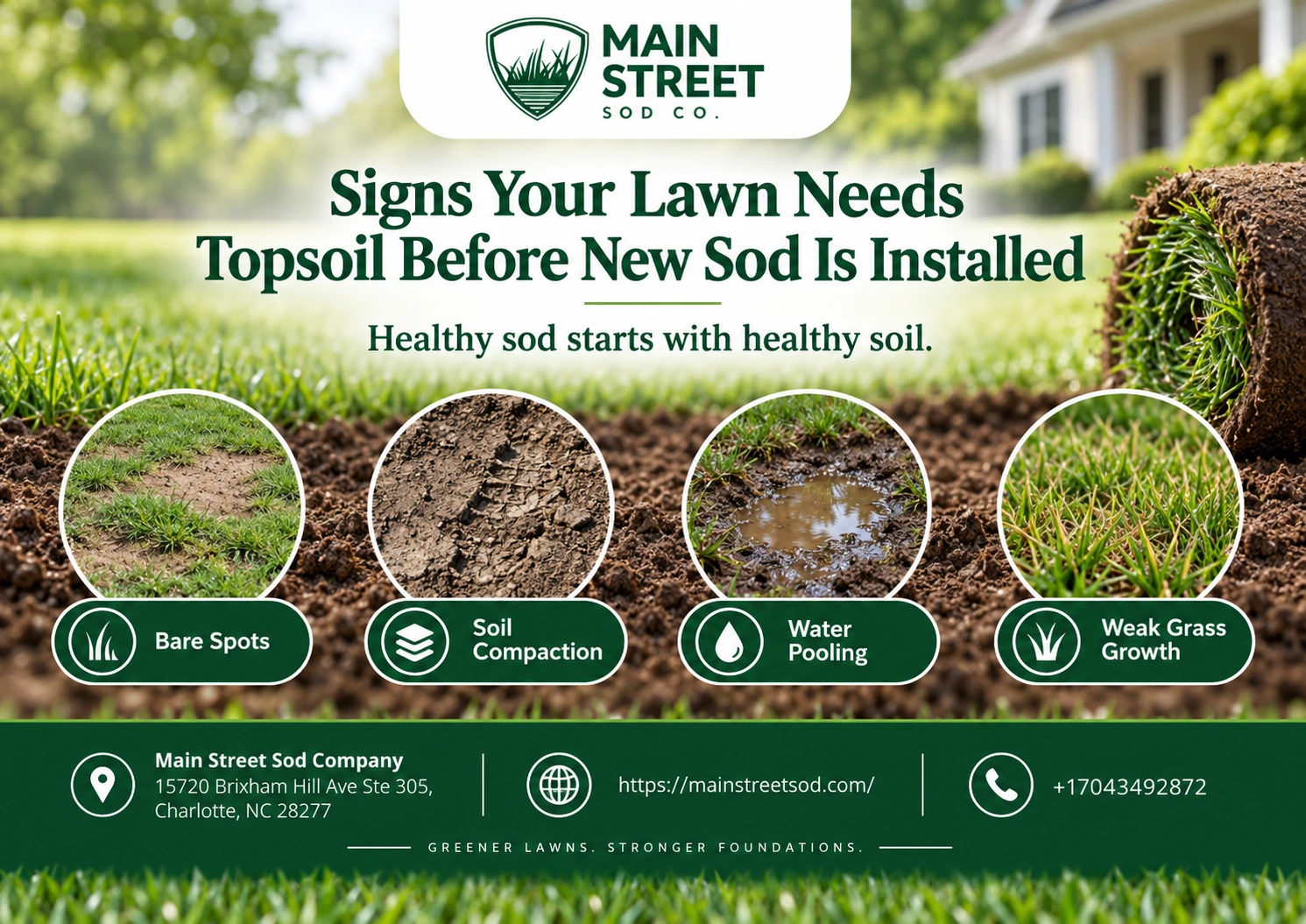
How Do Grading and Uneven Areas Affect Sod Preparation?
A lawn can have good soil and still need significant preparation before sod installation.
Low spots, high areas, erosion channels, settlement, and an uneven surface can affect both appearance and water movement.
Sod generally follows the shape of the surface beneath it.
If the yard is uneven before installation, adding sod does not automatically correct those contours.
Possible grading concerns include:
- Depressions that collect water
- Raised areas that dry quickly
- Soil settling near previous construction
- Erosion channels
- Sharp changes in slope
- Ground sloping toward structures
- Uneven transitions near sidewalks and driveways
Topsoil may sometimes be used as part of correcting minor contours or restoring disturbed areas, but major grading or drainage problems may require more than simply adding soil.
The goal should be to create a stable, properly shaped surface before the sod is laid.
How Much Topsoil May Be Needed Before Installing Sod?
There is no single amount that applies to every lawn.
How much topsoil may be appropriate depends on:
- How much usable soil already exists
- Whether the existing soil is compacted
- The depth of rock or subsoil
- Grading requirements
- Drainage conditions
- Whether material needs to be removed first
- The size and condition of the project area
Some properties may need no added topsoil at all.
Others may need soil only in selected areas where the existing growing layer is thin or disturbed. More heavily damaged sites may require broader soil improvement.
This is why choosing a fixed depth without evaluating the property can be misleading.
The goal is not to add the maximum amount of topsoil. It is to create an appropriate growing base for the specific site.
Can You Install Sod Without Adding New Topsoil?
Yes.
Many lawns can support new sod without bringing in additional topsoil.
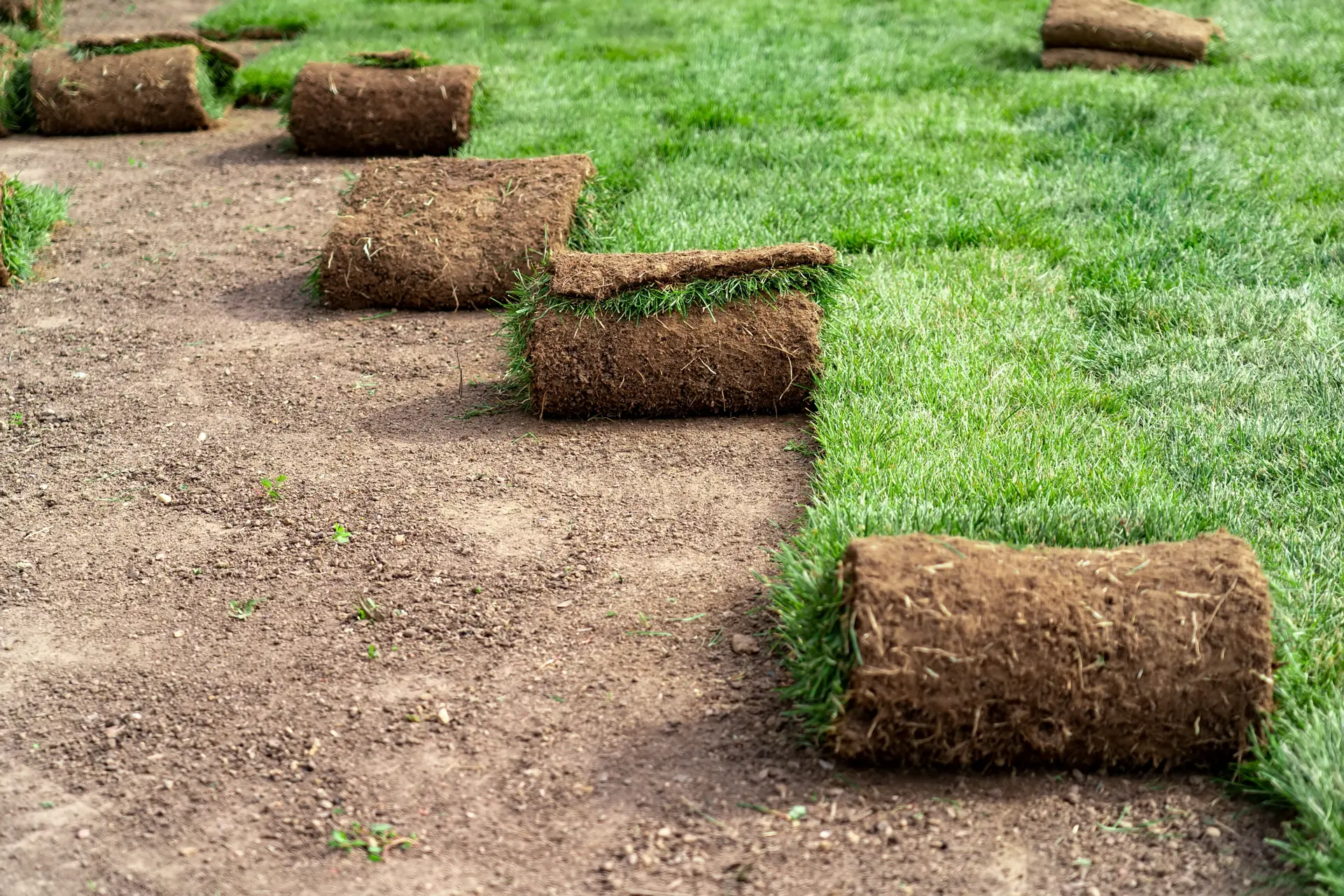
If the existing soil is deep enough, reasonably workable, properly graded, and able to drain appropriately, preparation may focus more on clearing the area, correcting the surface, loosening the soil where necessary, and creating good sod-to-soil contact.
Adding unnecessary soil can sometimes create its own complications.
For example, raising the lawn surface too much may affect transitions around:
- Sidewalks
- Driveways
- Patios
- Curbs
- Irrigation components
- Foundations
- Drainage areas
The decision should therefore be based on what the lawn needs rather than assuming that new sod always requires new topsoil.
When Does Your Lawn Need a Professional Soil Evaluation?
A professional evaluation can be useful when the problem is not obvious or when the property has multiple site concerns.
Consider having the soil and site evaluated if:
- Previous grass has repeatedly failed
- The soil is extremely hard or rocky
- Construction has recently disturbed the property
- Water regularly pools after rain
- Significant erosion is present
- The yard has obvious grading problems
- You are unsure how much usable soil is available
- Large sections contain debris or poor-quality fill
- Parts of the lawn remain unusually wet or dry
- You are unsure whether topsoil is actually necessary
An evaluation can help separate a soil problem from a drainage, grading, irrigation, or turf-selection problem.
That distinction matters because adding topsoil to the wrong problem may not improve the lawn.
Homeowners can learn more about Mainstreet Sod’s preparation services on our Sod Preparation Page and topsoil-related options on our Topsoil Installation Page.
For information about where service is available, visit our Service Areas Page.
FAQs
Do I always need topsoil before installing sod?
No. Sod can often be installed successfully over existing soil if the soil is workable, properly prepared, well graded, and suitable for root establishment. Additional topsoil is more likely to be considered when the existing soil is shallow, poor, heavily disturbed, or otherwise unsuitable.
How can I tell if my soil is good enough for sod?
Look at how easily the soil can be worked, whether it drains appropriately, how much rock or debris is present, and whether there is a reasonable growing layer above hard subsoil. A professional evaluation can help when those conditions are difficult to judge.
Can sod grow over compacted soil?
Heavily compacted soil can make root establishment difficult. The site may need preparation to improve the growing environment before sod is installed rather than simply placing turf directly over a hard surface.
Does standing water mean I need topsoil?
Not necessarily. Standing water can result from poor grading, compacted soil, drainage problems, or low areas. Topsoil may be part of a correction in some cases, but the underlying cause should be identified first.
Should rocky soil be covered with topsoil before sod installation?
It depends on how rocky the site is and whether enough usable soil remains for healthy root growth. Removing debris, improving the existing surface, or adding topsoil may be appropriate depending on the condition of the lawn.
Can topsoil fix an uneven yard?
Topsoil may help correct some minor surface irregularities, but significant grading problems often require more comprehensive site preparation. Water movement and final elevations should be considered before material is added.
When should I hire a professional for sod preparation?
Professional help can be especially useful when the property has severe compaction, drainage issues, construction debris, erosion, grading problems, or a history of failed turf. An evaluation can help determine whether the lawn needs topsoil, other preparation, or a combination of improvements.
Build the Right Foundation Before the Sod Goes Down
Healthy sod starts with the ground underneath it.
At Mainstreet Sod, we look at the existing soil, drainage, grading, and overall condition of the site before assuming that additional topsoil is necessary. Some lawns need added soil, while others simply need the existing surface prepared correctly.
If you are planning new sod and are unsure whether your lawn needs topsoil first, having the site evaluated can help you avoid unnecessary material while addressing the conditions that could affect root establishment. Learn more about our Topsoil Installation Services, Sod Preparation Services, or view our Service Areas.