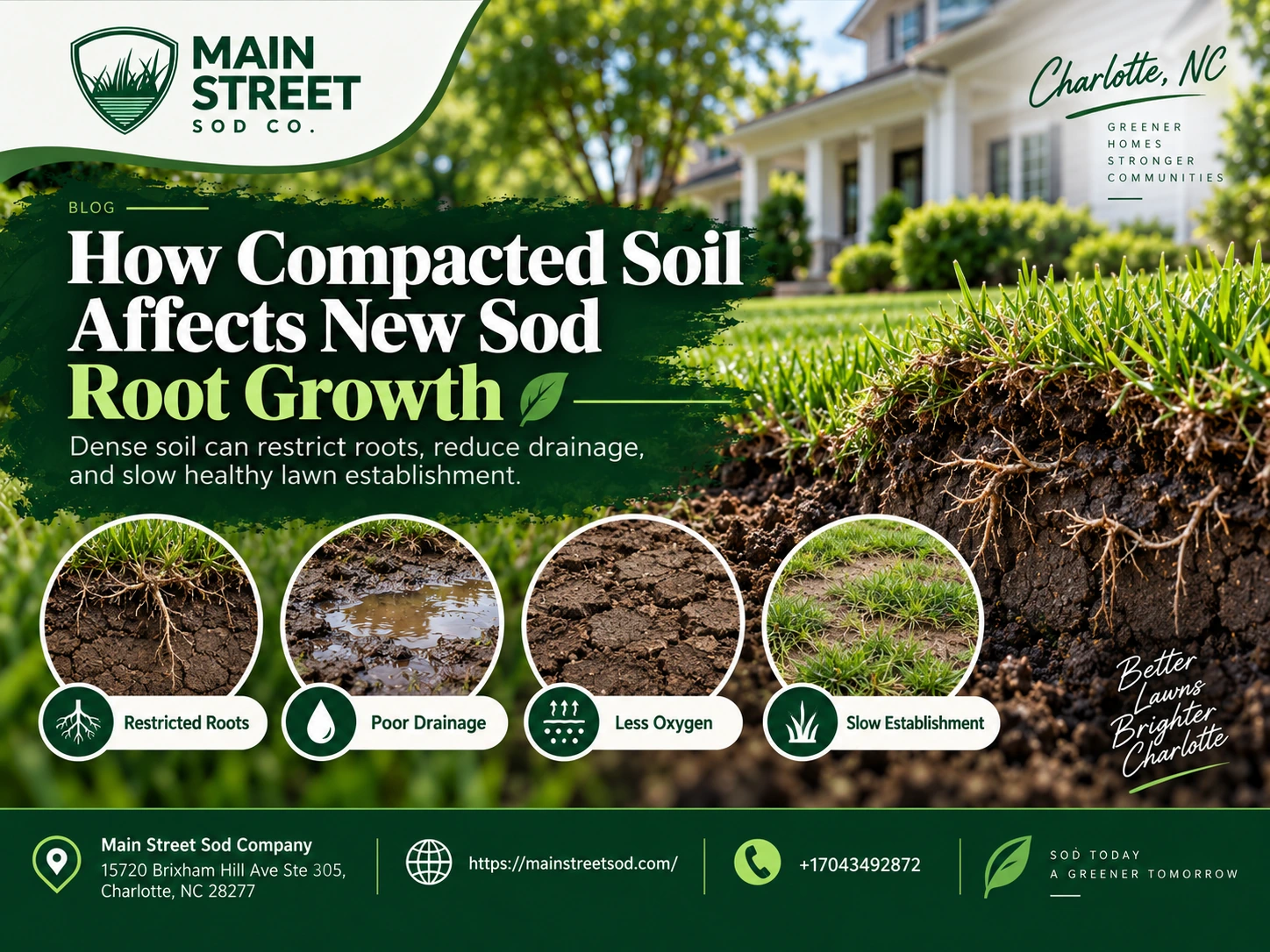
Compacted soil can make it difficult for new sod to establish because roots need room to grow into the ground beneath the turf. When soil particles are pressed tightly together, there is less pore space available for roots, water, and air.
New sod placed over compacted ground may still look healthy immediately after installation. The problem can become more noticeable later if roots have difficulty penetrating the soil, water runs off or drains unevenly, or the turf begins showing signs of stress.
Compaction is not responsible for every sod or drainage problem. However, identifying and addressing severely compacted soil before installation can give new turf a more suitable environment for establishing roots.
What Is Compacted Soil?
Healthy soil contains spaces, or pores, between soil particles. These spaces allow water and air to move through the ground and provide room for plant roots to grow.
Soil becomes compacted when pressure pushes those particles closer together and reduces pore space.
In residential yards, this can happen after:
- Construction
- Repeated use of heavy equipment
- Vehicle traffic
- Frequent foot traffic
- Soil grading or disturbance
- Repeated pressure on wet soil
Some soils are also more susceptible to compaction than others depending on their composition, moisture level, and how the property has been used.
The result can be ground that feels unusually dense or hard and is more difficult for turf roots to penetrate.
How Does Soil Compaction Restrict New Sod Root Growth?
Fresh sod arrives with an existing layer of roots, but those roots eventually need to grow beyond the sod layer and into the prepared soil below.
Compaction can interfere with that process.
When the underlying ground has limited pore space, new roots encounter greater physical resistance as they attempt to penetrate the soil. Air and water movement may also be restricted.
Instead of developing a stronger connection with the ground below, roots may remain relatively shallow or establish unevenly.
This matters because a healthy root system helps turf access the water and resources it needs as the lawn becomes established.
If the sod remains poorly rooted, it can become more vulnerable to stress.
Proper sod preparation is therefore about more than making the ground look smooth before installation. The condition of the soil beneath the finished surface matters too.
What Are the Signs Your Yard Has Compacted Soil?
You usually cannot diagnose compaction by looking at the surface alone, but several conditions can suggest that the soil deserves closer evaluation.
Possible signs include:
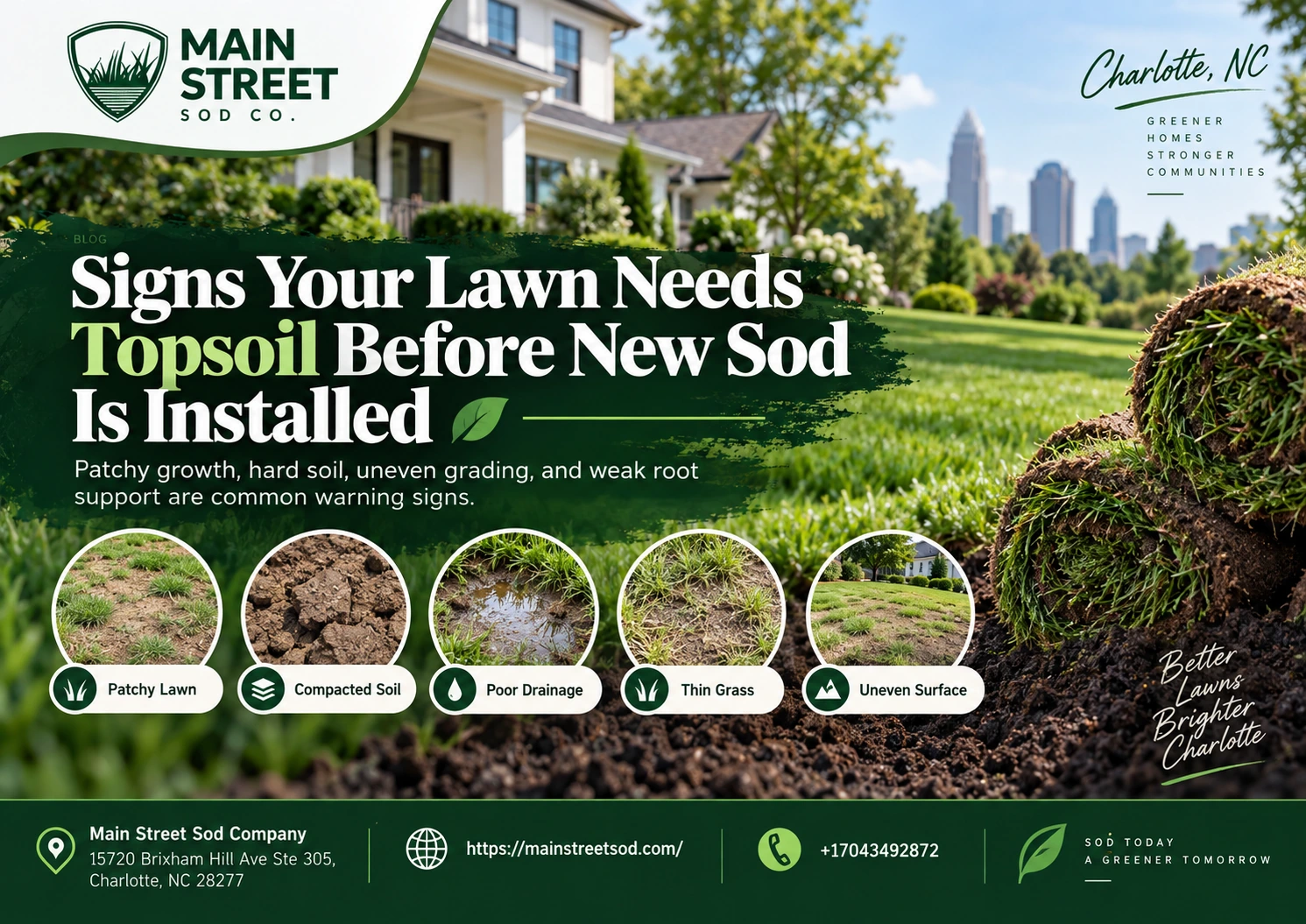
- Ground that feels unusually hard
- Difficulty pushing a shovel or similar tool into the soil
- Water running across the surface instead of soaking in
- Puddles that develop after irrigation or rainfall
- Areas that drain noticeably slower than surrounding soil
- Thin or struggling existing turf
- New sod that does not develop strong roots
- Bare areas in heavily traveled parts of the lawn
A history of construction can also be an important clue.
If trucks, loaders, building materials, or other heavy equipment repeatedly crossed an area, the soil may have become compressed below the surface.
These symptoms do not prove compaction is responsible. Poor grading, excessive irrigation, unsuitable soil, drainage problems, and other conditions can create similar signs.
That is why the whole site should be considered before deciding how to correct the problem.
Can New Sod Grow on Hard, Compacted Soil?
New sod may survive initially on compacted ground, especially while it is receiving careful establishment watering.
That does not mean the underlying conditions are ideal.
Fresh sod contains enough existing roots and plant material to look green shortly after installation. Long-term success depends on those roots forming a connection with the soil beneath them.
When that soil is extremely hard, roots may struggle to penetrate it.
Homeowners might eventually notice that sod:
- Lifts easily from the ground
- Develops shallow roots
- Dries quickly
- Shows uneven growth
- Becomes stressed during hot or dry periods
- Struggles despite regular watering
The severity of the problem depends on how compacted the soil is and whether other issues are present.
Sod does not require perfectly loose soil at unlimited depth. It does, however, benefit from a properly prepared growing environment that allows root establishment.
How Does Compaction Affect Water and Drainage?
Compaction changes how water moves through soil.
When pore space is reduced, water may have more difficulty infiltrating the ground. Instead of soaking evenly into the root zone, it may collect at the surface or move across the lawn as runoff.
This can create seemingly contradictory problems.
One part of the lawn may stay wet while another dries out because water is not moving into and through the soil evenly.
Possible signs include:
- Standing water
- Slow infiltration
- Surface runoff
- Erosion
- Persistently wet areas
- Turf that dries despite frequent irrigation
Compaction can contribute to these conditions, but not every drainage problem is caused by compacted soil.
The grade of the property, soil type, low areas, downspouts, runoff from hard surfaces, and other drainage conditions may also be involved.
Adding more water will not necessarily solve a rooting problem if the underlying soil cannot absorb or move that water appropriately.
Why Can Compacted Soil Cause New Sod to Struggle?
Poor root penetration is the central problem, but several related issues can develop from it.
Shallow rooting
If roots cannot readily penetrate the underlying soil, they may remain concentrated closer to the surface.
A shallow root system can leave turf more vulnerable when the surface dries.
Uneven moisture
Compaction can interfere with water infiltration.
Some areas may receive adequate moisture while others experience runoff or persistent saturation.
Limited air movement in the soil
Roots require an appropriate balance of water and air.
Reduced pore space can limit the movement of air through the soil, particularly when poorly drained ground remains wet.
Slower establishment
New sod needs to form a connection with the underlying soil.
If root penetration is restricted, the lawn may take longer to establish or remain poorly anchored.
Greater sensitivity to environmental stress
Sod with a weak root system may have more difficulty handling periods of heat, limited rainfall, or other stressful conditions.
This is why a new lawn can sometimes look good initially but struggle weeks later. The visible grass is only part of the picture; successful establishment is also happening below the surface.
What Causes Soil Compaction in Residential Yards?
Compaction can develop long before a homeowner decides to install sod.
Construction activity
New construction and major renovations can involve repeated traffic from trucks and heavy equipment.
The finished yard may look relatively smooth afterward even though deeper soil layers have been compressed.
Heavy equipment
Loaders, excavators, trailers, and other equipment place significant pressure on the ground.
Repeated traffic over the same path can make the effect more pronounced.
Vehicle traffic
Parking or driving across lawn areas can gradually compact the soil.
This is particularly common along driveway edges or informal parking areas.
Heavy foot traffic
Frequently used paths, play areas, and other high-traffic zones can become compacted over time.
Working wet soil
Soil can be especially vulnerable to compaction when it is wet.
Traffic or heavy equipment on saturated ground can compress the soil structure.
Understanding why the soil became compacted can help when evaluating how extensive the problem might be.
Should Compacted Soil Be Addressed Before Installing Sod?
Significant compaction is generally easier to address while the soil is exposed than after an established lawn covers it.
Before sod installation, the ground can be evaluated and prepared according to its condition.
Once sod is installed, correcting an underlying problem may become more disruptive.
That does not mean every lawn needs extensive soil work.
Minor surface firmness and severe construction-related compaction are very different conditions. Preparation should match what is actually happening on the property.
The important point is not to assume that sod itself will correct a poor soil base.
If a previous lawn struggled or the exposed ground is extremely hard, evaluating the cause before installing replacement turf may prevent the same problem from happening again.
How Do Professionals Prepare Compacted Ground for New Sod?
There is no single preparation method appropriate for every compacted yard.
A professional may first evaluate:
- How hard the soil is
- Whether compaction is limited to the surface or extends deeper
- Existing drainage
- Soil condition
- Site grade
- Areas of runoff or standing water
- Previous construction activity
- The turf being installed
From there, preparation can be matched to the site.
Depending on the condition of the property, work may involve loosening or modifying the existing surface, correcting unsuitable areas, removing debris, improving the final grade, or addressing other conditions that could interfere with establishment.
The goal is to create a suitable interface between the sod and the ground underneath it so new roots have a reasonable environment in which to establish.
This is different from automatically adding topsoil.
A compacted yard may have enough existing soil but need better preparation. Another property may have several problems occurring together and require a broader solution.
For more information about preparing the ground before new turf is installed, visit our Sod Preparation Page.
When Do Grading and Leveling Need to Be Addressed?
Compaction, drainage, and grading can be connected.
For example, a compacted low spot may collect water because infiltration is poor and because the surrounding grade directs runoff toward it.
Correcting only one issue may leave the other unresolved.
Possible grading concerns include:
- Low areas that repeatedly hold water
- Soil sloping toward a structure
- Erosion channels
- Uneven areas left after construction
- Significant high and low spots
- Poor transitions near sidewalks or driveways
- Runoff moving across the future lawn
A smooth-looking surface is not necessarily a properly graded surface.
The grade should support appropriate water movement while also providing a suitable base for the sod.
When elevation, drainage, or uneven ground contributes to the problem, learn more about Grading and Leveling as part of sod preparation.
Homeowners can also check our Service Areas for information about where Mainstreet Sod provides service.
FAQs
How can I tell if my soil is too compacted for sod?
Extremely hard ground, poor water infiltration, runoff, standing water, or a history of heavy equipment traffic can suggest compaction. If existing turf has repeatedly struggled or new sod fails to root, the soil may need further evaluation.
Will sod root into hard soil?
Some rooting may occur, but severe compaction can make root penetration more difficult. Sod establishes more successfully when the underlying ground has been appropriately prepared for root growth, moisture movement, and air exchange.
Why can I easily pull up my new sod?
Recently installed sod naturally lifts easily before its roots establish. If it continues to lift with little resistance after an appropriate establishment period, poor rooting could be related to compaction, moisture, soil conditions, installation factors, or another problem.
Can compacted soil cause drainage problems?
Yes. Compaction can reduce pore space and limit how readily water enters and moves through soil, contributing to runoff or standing water. However, drainage problems can also result from grading, soil type, low spots, and other site conditions.
Does watering more help sod root into compacted soil?
Not necessarily. New sod needs adequate moisture, but additional water does not correct severe soil compaction. Excessive watering can create additional problems if the soil already drains poorly.
Why did my sod look healthy at first but struggle later?
Newly installed sod can initially look healthy because it arrives as established turf. Problems may become apparent as the lawn needs to develop roots into the underlying soil. Compaction is one possible cause, but inadequate or excessive water, poor soil conditions, disease, unsuitable turf, and other factors can also contribute.
Should soil compaction be fixed before sod installation?
Significant compaction is generally worth addressing before installation because the exposed site is easier to evaluate and prepare. The appropriate amount of preparation depends on the severity and depth of the compaction and any related drainage or grading concerns.
When should I get professional help with compacted soil?
Consider a professional evaluation when the ground is extremely hard, water repeatedly pools or runs off, heavy construction equipment has crossed the site, previous turf has failed, or you cannot determine whether compaction, drainage, or grading is causing the problem.
Give New Sod Room to Put Down Roots
The success of a new lawn depends on more than what you can see above ground. If the soil underneath the sod is severely compacted, roots may have difficulty establishing even when the turf looks healthy immediately after installation.
At Mainstreet Sod, we can evaluate the condition of the ground before new turf goes down and identify whether compaction, drainage, grading, or another site issue needs attention. The goal is to prepare for a healthy establishment rather than waiting for a preventable soil problem to show up after installation.
If you’re preparing for new sod and are concerned about hard or compacted ground, explore our Sod Preparation Services, learn more about Grading and Leveling, or check our Service Areas.