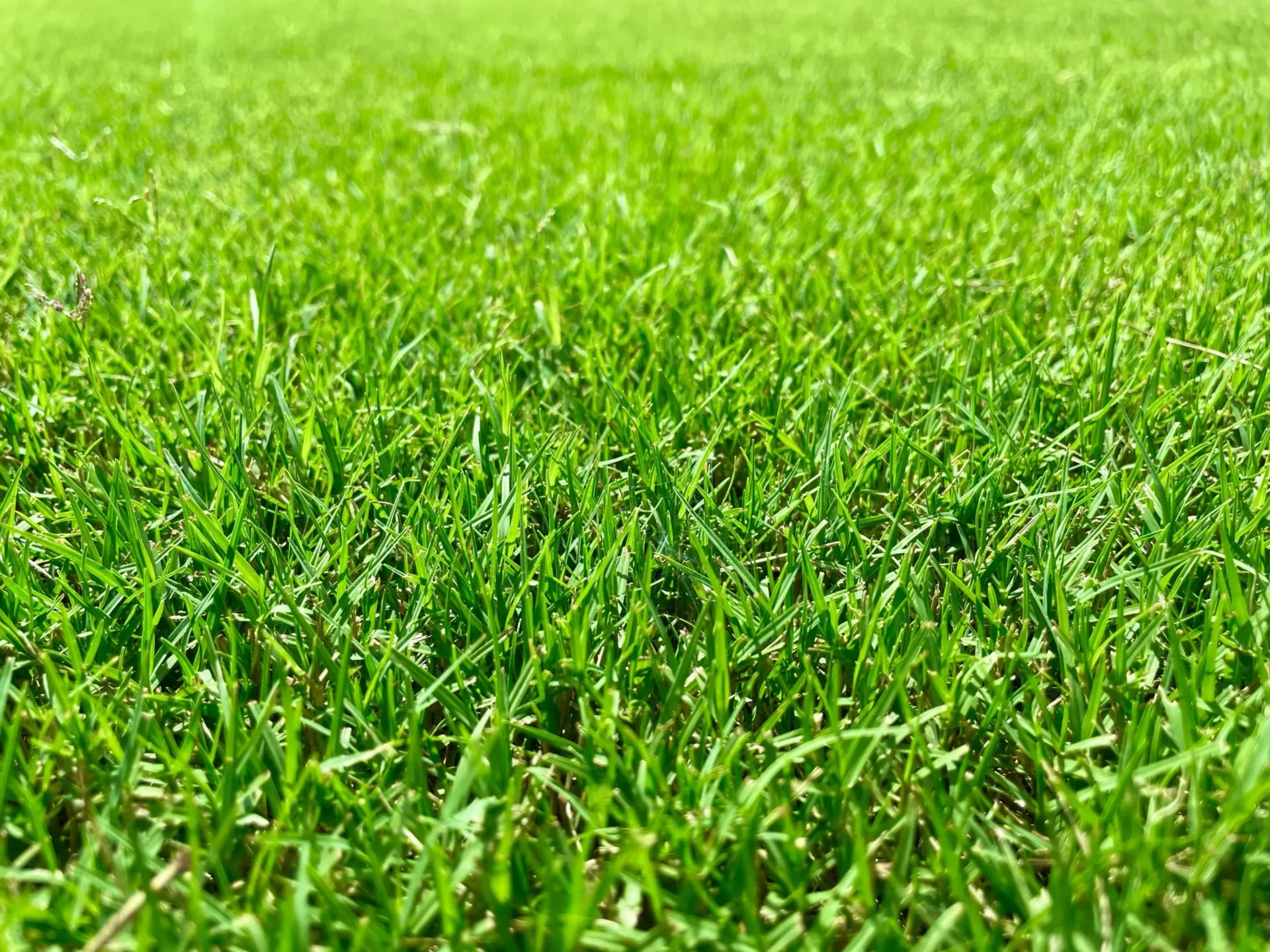
For homeowners comparing the best sod for dog urine and pet traffic, Bermuda and Zoysia are both strong options, but they have different advantages. Bermuda generally stands out when fast recovery from running, play, and repeated wear is the priority. Zoysia develops a dense lawn that can handle regular use, but damaged areas typically fill back in more slowly.
Neither grass is immune to dog urine. Concentrated urine can injure turf of any type, especially when a dog repeatedly uses the same small area. The better choice depends on more than urine exposure alone. You also need to consider sunlight, traffic level, maintenance, and how quickly you want worn areas to recover.
At Main Street Sod, we recommend choosing turf based on how your yard is actually used. A lawn with one small dog and moderate activity has different needs than a sunny backyard where several large dogs run the same route every day.
How Does Dog Urine Affect Grass?
Dog urine can cause dark green spots, yellowing, or brown patches in a lawn.
The damage is related to concentrated compounds deposited in a small area. Research from NC State and Colorado State Extension notes that urine-related turf injury is associated with concentrated nitrogen compounds, salts, and other components rather than simply the presence of a dog on the lawn.
You may notice two different responses.
Dark green patches
Sometimes the area where a dog urinates becomes noticeably greener than the surrounding lawn.
That can happen because the urine adds nitrogen to a concentrated spot. If the amount does not overwhelm the grass, it can temporarily stimulate greener growth.
Yellow or brown spots
With a more concentrated deposit, the turf can become stressed or die in the center of the affected area.
A darker green ring may sometimes appear around the damaged spot where the concentration is lower.
Repeated use makes the problem worse
Dogs often prefer the same bathroom location.
A turf variety may tolerate normal pet activity well but still struggle if urine is concentrated in the same few square feet every day.
For pet owners, this is why choosing durable grass should be combined with practical lawn management rather than expecting a completely urine-proof sod.
What Grass Traits Matter Most for Dog Owners?
When choosing sod for a dog-friendly yard, focus on more than how the grass looks.
Three characteristics matter especially when pets use the lawn every day.
Traffic tolerance
Running, chasing, turning, and repeated trips across the same path can wear turf down.
Larger or highly active dogs usually create more mechanical wear than occasional foot traffic.
Look for grass that can maintain a dense surface under the level of activity your yard receives.
Recovery speed
Durability and recovery are related, but they are not exactly the same.
A lawn can resist wear reasonably well but recover slowly once damage occurs. For a yard where dogs repeatedly create worn paths or thin spots, the ability to spread back into damaged areas can be important.
Dense growth
Dense turf helps provide a more consistent surface and can make moderate wear less visible.
However, density does not make grass immune to digging, urine concentration, or constant traffic.
Sunlight requirements
Dog activity is only one part of the decision.
A durable grass planted where it does not receive enough sunlight may still perform poorly. Before choosing between Bermuda and Zoysia, look at where your pets spend most of their time and how much sun those areas receive.
Maintenance expectations
Fast-growing grass may recover quickly, but that growth can also mean more mowing and maintenance.
Slower-growing grass can require less frequent mowing but may take longer to repair itself after significant pet damage.
The best choice depends on which tradeoff makes more sense for your household.
Is Bermuda Grass Good for Dog-Friendly Yards?
Yes. Bermuda is often a strong choice for active dog-friendly yards, particularly when the lawn receives plenty of sunlight.
Main Street Sod describes Bermuda as a durable warm-season turf suited to heavily used landscapes, and the company’s existing high-traffic guidance notes its quick recovery as one of its main advantages.
Bermuda handles repeated activity well
Bermuda is commonly chosen for lawns where durability matters.
That can make it practical for:
- Dogs that run frequently
- Backyard play
- Repeated traffic routes
- Active households
- Areas that need to recover from occasional wear
Bermuda spreads and recovers quickly
One of Bermuda’s biggest advantages is its growth habit.
It spreads through both above-ground and below-ground growth, allowing healthy turf to move back into worn or damaged areas.
For a dog owner, that can be valuable when paws repeatedly thin out a section of the yard.
Bermuda still has limitations
Fast recovery does not mean Bermuda cannot be damaged.
Repeated urine in the same location can still create spotting, and constant digging can damage turf faster than it can recover.
Bermuda also performs best with adequate sunlight. A heavily shaded dog run may not provide the conditions it needs even if the grass is otherwise well suited to traffic.
Is Zoysia Good for Heavy Pet Traffic?
Zoysia grass can also work well in a yard with dogs.
It forms a dense, thick turf that can tolerate regular use once established. Main Street Sod describes Zoysia as a durable grass with a dense growth pattern, while its existing high-traffic guide notes that Zoysia generally recovers more slowly from damage than Bermuda.
Zoysia creates a dense lawn
The dense growth is one of Zoysia’s main strengths.
For homeowners who want a thick lawn that handles normal family and pet use, it can be an attractive option.
It can tolerate regular traffic
Established Zoysia can handle activity from people and pets.
For yards with moderate dog traffic rather than constant running over the same narrow paths, its density can be a significant advantage.
Recovery is usually slower than Bermuda
This is the major distinction for active dog households.
When a heavily used area becomes worn or damaged, Zoysia does not generally fill back in as quickly as Bermuda.
That may matter if your dogs repeatedly:
- Run along the fence
- Chase each other through the same path
- Enter and exit through one gate
- Turn sharply in one part of the lawn
- Use the same bathroom zone
A grass that starts dense can still become thin if damage repeatedly occurs faster than the turf can recover.
Zoysia may offer more flexibility in partially shaded yards
Depending on the specific variety and site conditions, Zoysia can often accommodate some partial shade better than Bermuda.
That can make it worth considering in a backyard where dog traffic is moderate but sunlight is less consistent.
Which Sod Is Better for Dog Urine and Pet Traffic?
For a sunny lawn with highly active dogs, Bermuda will often have the advantage because of its faster recovery from wear.
For a yard with moderate pet activity where dense appearance, reduced mowing frequency, or some additional shade flexibility matters, Zoysia may be the better fit.
Here is the practical comparison:
| Factor | Bermuda | Zoysia |
| Heavy pet traffic | Excellent | Good to very good |
| Recovery from worn areas | Faster | Slower |
| Dense turf | Good | Excellent |
| Dog urine resistance | Not urine-proof | Not urine-proof |
| Full sun | Excellent | Excellent |
| Some partial shade | More limited | Generally better |
| Growth rate | Faster | Slower |
| Repeated running routes | Strong option | Can work, but slower to repair |
| Lower mowing frequency | Less favorable | More favorable |
The important point is that no natural grass should be chosen solely because a homeowner expects it to resist dog urine completely.
Urine exposure and physical traffic are two different problems.
If your dog mainly creates wear from running, Bermuda’s recovery rate may carry more weight.
If physical traffic is moderate and you prefer a dense lawn, Zoysia may be a strong alternative.
If one small bathroom area receives concentrated urine every day, either turf can develop damage unless you change how that part of the yard is used.
How Can You Reduce Lawn Damage From Dogs?
Choosing the right sod helps, but day-to-day habits can make just as much difference.
Vary the bathroom area
When practical, avoid encouraging your dog to urinate in exactly the same small patch every time.
Spreading bathroom activity over a larger area reduces repeated concentration in one location.
Maintain appropriate watering
Normal irrigation helps keep turf healthy and can prevent the lawn from becoming unnecessarily stressed.
Colorado State Extension notes that adequate irrigation can also help reduce the accumulation of salts associated with urine spots. Avoid turning this into excessive watering, which can create its own lawn and drainage problems.
Do not rely on questionable lawn or dietary remedies
Products and home remedies marketed as urine neutralizers are not necessarily supported by evidence.
NC State and Colorado State Extension specifically caution against several commonly promoted urine-treatment remedies and recommend consulting a veterinarian before changing a dog’s diet or adding supplements for the purpose of protecting grass.
Protect repeated running paths
Watch where your dogs naturally move.
Fence lines, gates, patios, and routes between the house and backyard can receive much more traffic than the rest of the lawn.
If possible, adjust how the space is used before a narrow trail becomes bare soil.
Address digging early
No turf variety is designed to withstand repeated digging.
If a dog develops a preferred digging area, redirecting that behavior will usually do more for the lawn than changing grass varieties.
Repair isolated damage before it spreads
Small damaged patches are easier to manage than large bare areas.
For Bermuda and Zoysia lawns, replacing severely damaged patches with matching sod can help maintain consistent color and texture. Colorado State Extension also recommends matching replacement material to the existing warm-season turf rather than introducing a visibly different grass.
Choose Sod for the Dog and the Yard
For most highly active, sunny dog yards, Bermuda deserves serious consideration because it combines good traffic tolerance with fast recovery.
Zoysia is another strong option when homeowners want dense turf, regular-use durability, and potentially greater flexibility where sunlight is not quite as intense.
Neither should be marketed as dog-urine-proof.
A better approach is to match the grass to your yard’s sunlight and traffic, then manage repeated bathroom areas and worn paths so the turf has a chance to recover.
Homeowners throughout our service areas can work with Main Street Sod to compare turf options based on pets, sunlight, lawn use, and the conditions of the property.
The goal is not simply to find grass that survives dogs. It is to build a lawn whose growth habits match the way your family actually uses the yard.
FAQs
What is the best sod for dog urine and pet traffic?
Bermuda is often a strong choice for sunny yards with heavy pet traffic because it tolerates wear and recovers relatively quickly. Zoysia can also perform well, particularly when dense turf and moderate traffic tolerance are priorities. Neither grass is completely resistant to concentrated dog urine.
Is Bermuda or Zoysia better for dogs?
Bermuda generally has an advantage for very active dogs because damaged areas can recover more quickly. Zoysia offers dense turf and good durability but typically repairs worn spots more slowly. Sunlight and maintenance preferences should also influence the decision.
Is there a grass that dog urine will not kill?
No natural turf should be considered completely immune to dog urine. Concentrated deposits in the same location can injure many turfgrasses. Managing where pets go and maintaining a healthy lawn can help reduce visible damage.
Does Bermuda grass recover from dog urine spots?
Living Bermuda surrounding a damaged area can spread back into thin spots during active growth, which gives it a useful recovery advantage. Severe urine injury may still require patching if the turf has died completely.
Does Zoysia stand up to dogs?
Established Zoysia forms dense turf and can handle regular pet traffic. However, repeated damage in the same location can create worn areas, and Zoysia normally fills those areas more slowly than Bermuda.
How can I stop my dog from ruining new sod?
Keep dogs off newly installed sod as much as possible while it establishes, use controlled bathroom areas, and avoid running or rough play until the grass has rooted firmly. After establishment, reducing repeated urine deposits and high traffic in one small area can help protect the lawn.