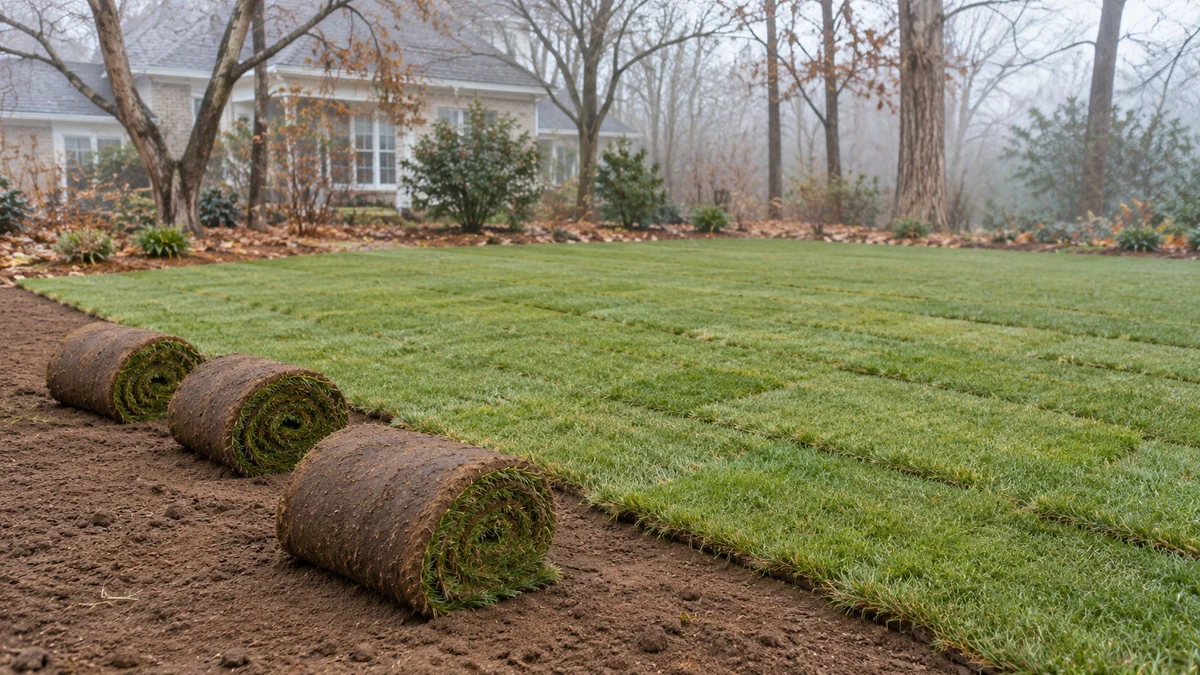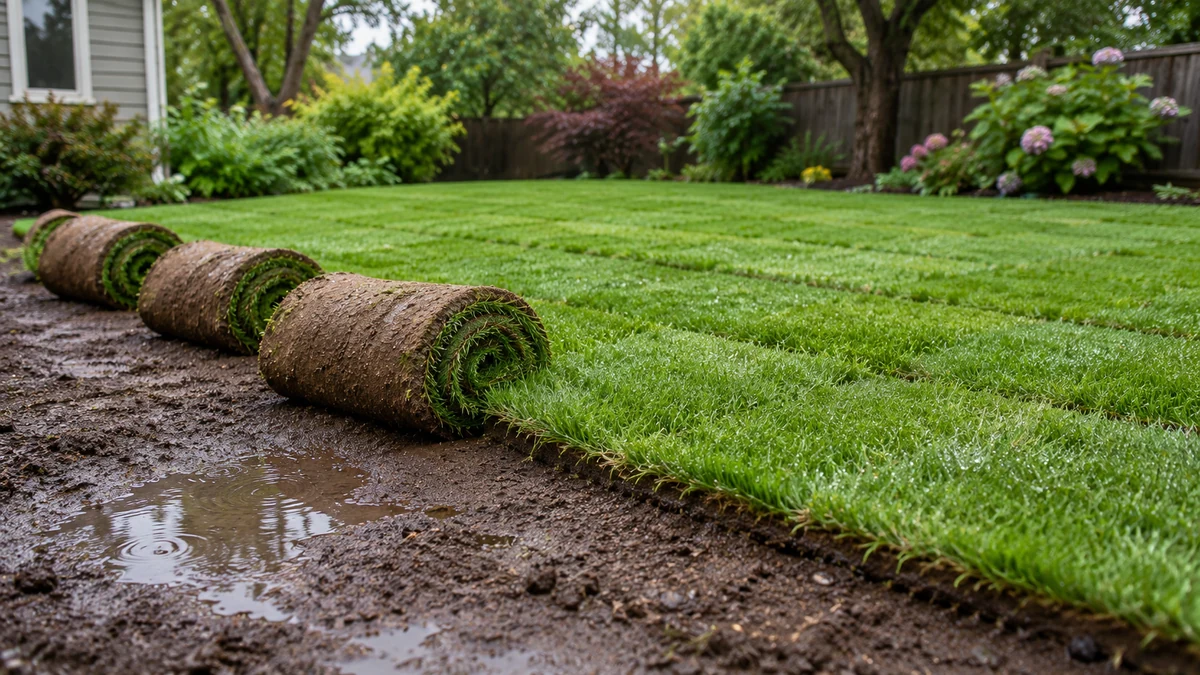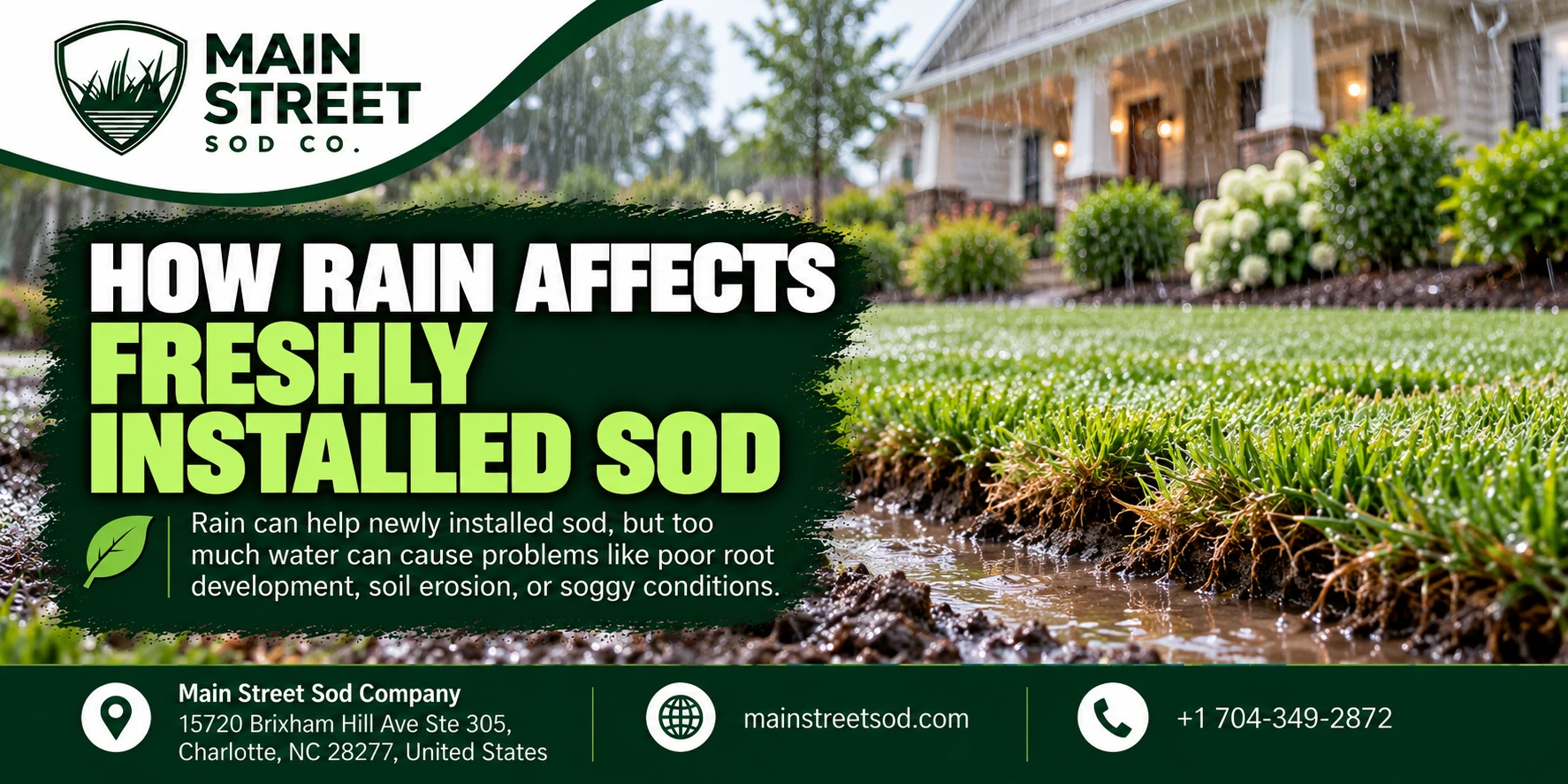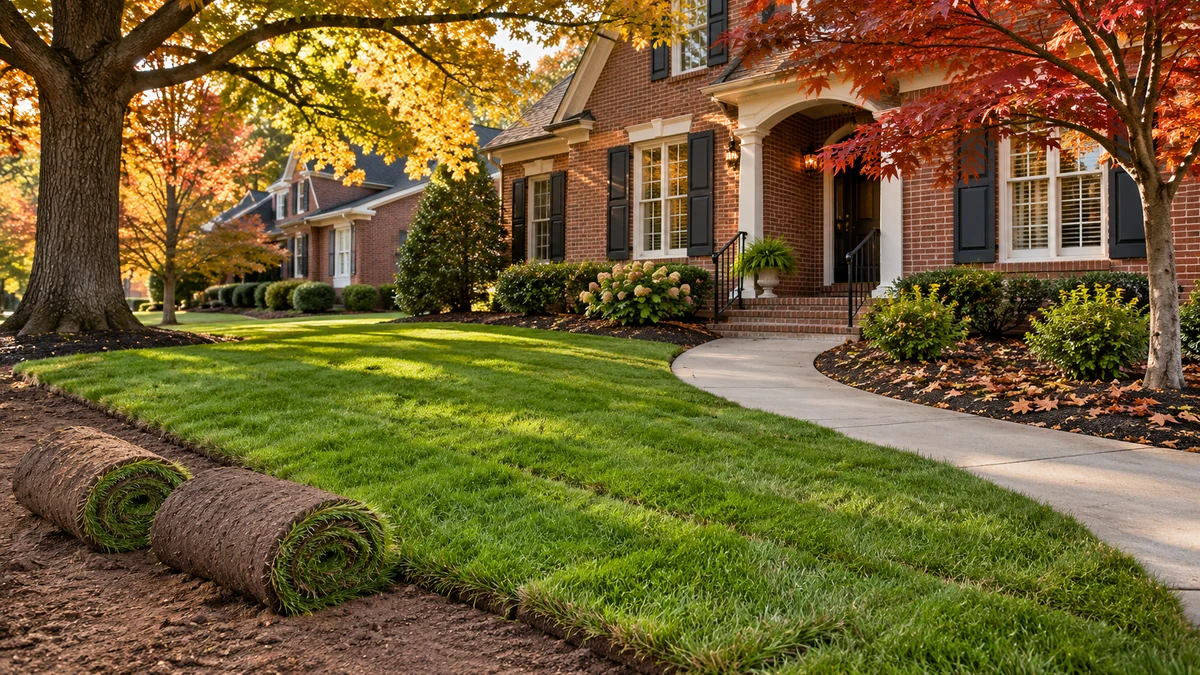
Fall sod installation in Charlotte can be a smart choice, especially for cool-season grasses such as tall fescue. Cooler temperatures, reduced summer heat, and favorable growing conditions can help new sod establish roots before winter. However, successful fall installation depends on choosing the right grass, monitoring soil moisture, managing fallen leaves, and understanding how seasonal dormancy affects different turf varieties.
Charlotte homeowners should also recognize that not every grass type responds to autumn conditions in the same way. While fescue benefits from cooler weather, Bermuda and Zoysia slow their growth as temperatures drop. Knowing these differences helps homeowners make informed decisions and protect their investment as winter approaches.
Is Fall a Good Time to Install Sod in Charlotte?
Yes, fall can be an excellent time to install sod in Charlotte, particularly when homeowners choose a cool-season grass.
Charlotte sits in North Carolina’s Piedmont region, where summers are typically hot and humid, while autumn brings gradually cooler temperatures. These seasonal changes can create favorable conditions for certain turfgrasses to establish.
Tall fescue, for example, grows actively during cooler portions of the year. Autumn temperatures allow it to develop roots without facing the intense heat stress associated with midsummer.
Warm-season grasses require a different approach.
Bermuda, Zoysia, and Centipede generally establish most successfully during warmer months. As fall progresses, lower soil temperatures slow their root development and eventually lead to winter dormancy.
According to NC State Extension, cool-season sod can be established during cooler growing periods when the ground is not frozen. Fall installation of warm-season sod is possible under certain circumstances, but it is generally less desirable because the grass has limited time to establish before winter.
For homeowners considering fall sod installation in Charlotte, the most important questions are which grass is being installed, how late in the season installation will occur, and whether adequate moisture and soil conditions are available.
How Charlotte’s Fall Weather Affects Sod Establishment
Charlotte’s autumn weather offers several advantages, but conditions can change considerably between early September and late November.
Understanding these changes helps homeowners avoid assuming that every fall installation will develop at the same pace.
Cooler Air Reduces Heat Stress
During summer, newly installed sod faces intense sunlight, high temperatures, and significant moisture loss.
As fall arrives, cooler air generally reduces evaporative demand.
This can make soil moisture easier to manage, especially for cool-season grasses.
Tall fescue also becomes more active as temperatures moderate, allowing it to direct energy toward root growth.
However, cooler weather does not eliminate the need for careful watering.
Soil Temperature Controls Root Development
Air temperature is only part of the equation.
Grass roots respond strongly to soil temperature.
Warm-season grasses require sufficiently warm soil to produce new roots. When soil temperatures fall too low, establishment slows significantly.
NC State Extension notes that warm-season sod generally does not produce roots unless soil temperatures remain above approximately 55°F for several weeks.
That makes late-fall warm-season installation more challenging.
Tall fescue, on the other hand, is adapted to cooler growing conditions and can continue establishing while temperatures remain suitable.
Fall Rainfall Can Help, but It Is Unpredictable
Autumn rain may reduce the amount of supplemental irrigation needed.
However, Charlotte can also experience dry stretches during fall.
New sod should not depend entirely on seasonal rainfall.
Homeowners need to monitor actual soil moisture rather than assuming cooler weather means sufficient water is available.
Shorter Days Change Growing Conditions
As autumn progresses, daylight hours decrease.
Reduced sunlight can slow growth, particularly in yards already shaded by homes or trees.
This becomes especially important for late-season installation.
A lawn installed in early fall may have more favorable growing time than one installed shortly before winter.
Which Grass Types Work Best for Fall Installation?
Choosing the appropriate grass is one of the most important decisions in a fall lawn project.
Charlotte’s transition-zone climate allows both cool-season and warm-season turfgrasses to grow, but their seasonal behavior differs substantially.
| Grass type | Fall suitability | Important consideration |
| Tall fescue | Generally favorable | Active during cooler weather |
| Bermuda grass | Less favorable later in fall | Root growth slows as soil cools |
| Zoysia grass | Best established in warmer weather | Slow establishment before dormancy |
| Centipede grass | Generally better in warmer months | Sensitive to cold-weather establishment stress |
Tall Fescue
Tall fescue is a cool-season grass that grows actively during fall and spring.
It is often a suitable choice for Charlotte homeowners who want a lawn that maintains green color through much of the cooler season.
Bermuda Grass
Bermuda grass performs best during warm weather and can tolerate substantial sunlight and traffic when established.
However, fall temperatures eventually cause growth to slow.
Installing Bermuda sod too late can leave roots insufficiently established before dormancy.
Zoysia Grass
Zoysia offers dense coverage and can perform well in many Charlotte landscapes.
Its growth slows as temperatures decline.
Because Zoysia generally establishes more slowly than some other turfgrasses, autumn timing requires particular care.
Centipede Grass
Centipede is another warm-season option.
It performs best under suitable warm-season conditions and is less appropriate for late-fall establishment.
Homeowners should consider both the current installation season and the long-term growing conditions of their property.
A grass that establishes successfully in fall still needs to tolerate Charlotte’s following summer.
Is Fescue a Good Choice for Fall Sod?
For many Charlotte properties, tall fescue is one of the strongest candidates for fall installation.
As a cool-season turfgrass, fescue responds well to moderate temperatures and can maintain attractive green growth during cooler weather.
Unlike warm-season grasses, it does not normally enter the same type of winter dormancy as Bermuda or Zoysia.
That makes fall an important growing period.
Why Fescue Benefits From Autumn Conditions
Tall fescue grows more actively when temperatures are moderate.
With sufficient moisture and healthy soil, new roots can begin developing beneath the installed turf.
Cooler air also reduces some of the heat stress that newly installed sod would experience during summer.
However, fescue is not maintenance-free.
It can struggle during Charlotte’s hot, humid summers, particularly in poorly drained soil or locations with inadequate irrigation.
What About Shade?
Tall fescue tolerates moderate shade better than Bermuda grass, making it useful in some tree-lined Charlotte neighborhoods.
However, it still needs sufficient sunlight.
Dense shade beneath mature trees or along buildings can limit growth and establishment.
Fall Sod Versus Fall Seeding
Fall is also a popular season for seeding tall fescue.
Sod offers immediate ground coverage, while seeding requires time for germination and turf development.
The distinction matters because recommended seeding windows should not automatically be treated as strict installation deadlines for sod.
Sod already contains established plants and a root layer, although it must still connect with the underlying soil.
For homeowners exploring fescue grass options, Main Street Sod Company can help assess whether the turf is appropriate for their property.
How Often Should New Sod Be Watered in Cooler Weather?
Watering is one of the most important parts of fall sod installation in Charlotte, but there is no universal schedule that works for every lawn.
Cooler temperatures often reduce moisture loss, yet freshly installed sod still needs consistent moisture while its roots establish.
The correct watering frequency depends on:
- Grass variety and its growth activity.
- Recent rainfall.
- Soil texture and drainage.
- Daily temperatures and wind.
- Sun exposure and shade.
- How well the sod has rooted into the soil.
Keep the Sod and Underlying Soil Moist
During initial establishment, water must reach the soil beneath the sod.
Lightly wetting the grass blades without moistening the root zone may not provide enough moisture for root development.
Homeowners can carefully lift a corner of the sod during early establishment to check whether the soil beneath it remains moist.
The soil should not be excessively dry or continuously saturated.
Avoid Waterlogged Conditions
Too much water can also create problems.
Poorly drained soil may remain saturated, restricting oxygen around developing roots.
Standing water, persistent sogginess, or muddy conditions indicate that irrigation may need adjustment.
Charlotte’s clay-heavy soils can be especially prone to slow water infiltration.
Rather than applying large volumes of water at once, irrigation may need to be adjusted to allow absorption without runoff.
Reduce Watering as Roots Establish
Once the sod begins rooting into the soil, irrigation should gradually shift toward encouraging deeper root development.
However, the transition should depend on actual establishment rather than a predetermined number of days.
An established fescue lawn has different water requirements from freshly installed sod.
Watch for Signs of Moisture Stress
Warning signs may include folded or wilted grass blades, unusual discoloration, or dry soil beneath the sod.
Excessive moisture can produce different problems, including persistently wet soil and deteriorating turf.
The best approach is to inspect the lawn regularly and adjust watering according to conditions.
How Falling Leaves Can Affect New Sod
Charlotte’s mature trees make autumn visually appealing, but falling leaves create an additional responsibility for homeowners with newly installed sod.
A few scattered leaves are generally harmless.
Thick layers of leaves, however, can interfere with establishment.
Leaves Can Block Sunlight
New sod needs light to produce energy through photosynthesis.
When leaves accumulate across the lawn, they shade the grass beneath.
This is especially problematic when daylight is already decreasing.
Wet Leaves Can Trap Moisture
A dense layer of damp leaves can prevent air movement near the grass surface.
Persistent moisture and limited airflow may create conditions favorable to certain turf diseases.
This can be especially concerning when a newly installed sod has not fully established.
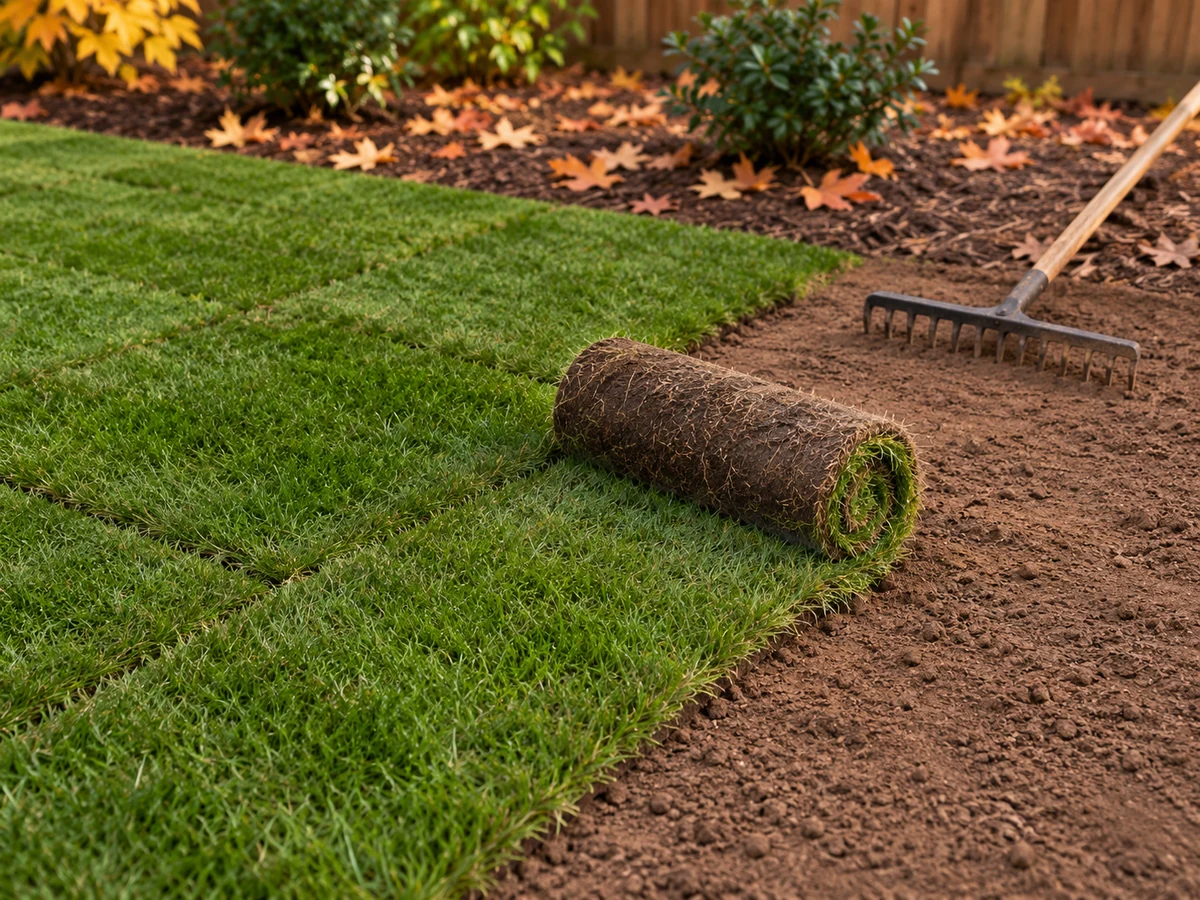
Leaf Removal Requires a Gentle Approach
New sod should not be subjected to unnecessary pulling or heavy equipment traffic.
Aggressive raking can lift sod edges before roots have anchored into the soil.
A lightweight leaf blower used carefully may be suitable for removing dry leaves.
Gentle hand removal is another option for smaller areas.
Homeowners should avoid repeated walking across saturated or newly laid turf.
Don’t Let Leaves Pile Up for Weeks
Fall leaf removal should be guided by how quickly debris accumulates.
A yard with several mature hardwood trees may require more frequent attention than a property with only a few small trees.
For new sod, keeping the grass reasonably clear of heavy leaf coverage is more important than achieving a perfectly leaf-free lawn every day.
How Shade Changes Fall Sod Care
Shade becomes an increasingly important factor as autumn progresses.
Charlotte neighborhoods often include mature oaks, maples, and other trees that cast substantial shadows across residential lawns.
Even yards receiving adequate summer sunlight may experience different light conditions in fall.
The Sun Sits Lower in the Sky
As the season changes, the sun’s angle becomes lower.
Buildings, fences, and trees may cast longer shadows across the lawn.
Areas that receive several hours of summer sunlight can become noticeably darker during fall.
Shaded Soil May Stay Wet Longer
Soil beneath trees or beside buildings often dries more slowly than soil exposed to direct sunlight.
This means shaded sections of newly installed sod may need less frequent irrigation.
Applying the same watering schedule across every part of the yard can leave some areas too wet.
Grass Selection Matters
Tall fescue has moderate shade tolerance, although it still requires adequate light.
Bermuda grass generally needs substantial direct sunlight and performs poorly in heavily shaded areas.
Some Zoysia varieties tolerate partial shade better than Bermuda, but dense shade remains challenging.
Tree Competition Can Limit Growth
Mature trees compete with turfgrass for water and nutrients.
Their roots may also affect soil conditions.
Even when the shade level seems acceptable, heavy root competition can make establishment difficult.
For homeowners considering fall sod installation in Charlotte, a site assessment should consider sunlight, soil conditions, and nearby trees together.
What Happens as Warm-Season Sod Approaches Dormancy?
One of the most confusing experiences for homeowners is watching newly installed grass begin turning brown as winter approaches.
With warm-season grasses, this color change may be entirely natural.
Bermuda, Zoysia, and Centipede slow their growth as temperatures decline.
After sufficient cold exposure, they typically enter winter dormancy.
Dormancy Does Not Automatically Mean Dead Grass
Dormancy is a normal seasonal response.
The grass reduces its growth and may lose much of its green color.
Its crowns and other living structures can remain viable through winter.
When temperatures become favorable again in spring, healthy warm-season turf normally resumes growth.
New Sod Faces Additional Risks
Established warm-season lawns generally have developed root systems and stored energy reserves.
Newly installed sod may not have the same level of root attachment.
If installation occurs too late in fall, the grass may enter dormancy before developing sufficient roots.
That can increase the risk of drying, winter injury, or poor establishment.
Can Dormant Sod Still Be Installed?
Warm-season sod can sometimes be installed during dormant or near-dormant periods, but this requires careful handling and management.
NC State Extension generally recommends establishing warm-season grasses during warmer portions of the growing season.
Late-fall installation should therefore be evaluated individually.
Where immediate ground coverage is necessary, a professional may consider whether the benefits outweigh the establishment risks.
For most homeowners planning a new warm-season lawn without an urgent need for coverage, waiting until more favorable growing conditions may be the safer choice.
How to Prepare New Sod for Winter
Winter preparation depends on whether the lawn contains cool-season or warm-season grass.
Tall fescue may continue growing during mild winter periods.
Bermuda and Zoysia generally slow significantly or enter dormancy.
Despite these differences, several principles apply to newly installed sod.
Monitor Soil Moisture Until Establishment
New sod should not be allowed to dry excessively simply because temperatures have dropped.
Rainfall may provide sufficient moisture during some weeks.
During extended dry periods, supplemental irrigation may still be necessary.
The goal is appropriate moisture, not continuously wet soil.
Avoid Heavy Foot Traffic
Freshly installed sod needs time to anchor into the underlying soil.
Frequent walking, playing, or equipment movement may disturb seams and interfere with rooting.
Wet soil is particularly vulnerable to compaction and surface damage.
Homeowners should limit unnecessary activity until the turf becomes established.
Be Careful With Fertilizer
Applying fertilizer without understanding soil conditions can create unnecessary problems.
The appropriate nutrient program depends on the grass species, soil test results, and growing season.
Tall fescue and warm-season grasses have different fertilization needs.
Heavy late-fall nitrogen applications are generally not appropriate for warm-season turf approaching dormancy.
A soil test and grass-specific recommendations provide a better basis for fertilization decisions.
Keep the Lawn Clear of Excess Debris
Leaves, fallen branches, and other debris should not be allowed to smother new turf.
Removing heavy accumulations helps maintain access to sunlight and airflow.
Adjust Mowing to Actual Growth
New sod should not be mowed simply because a certain number of days have passed.
The grass should be sufficiently rooted to avoid shifting or lifting during mowing.
Once established enough, mowing should follow the recommended height for that grass type.
Sharp mower blades help reduce unnecessary tearing.
Watch for Winter Damage
Cold weather, prolonged wetness, drying winds, and poor drainage can affect vulnerable turf.
Homeowners should monitor unusual thinning, lifted seams, or deteriorating patches.
Not every brown area indicates permanent damage, especially in dormant warm-season grass.
A professional assessment can help distinguish normal seasonal changes from actual establishment problems.
When Professional Sod Installation Makes Sense
Fall installation can be straightforward under favorable conditions, but certain properties present challenges that deserve professional attention.
The most important decision is often whether the grass type and installation timing are appropriate for the site.
When the Yard Has Heavy Shade
Properties surrounded by mature trees may have limited light and significant root competition.
A professional can assess whether turfgrass is likely to perform well or whether another landscape solution would be more appropriate.
When Soil Drains Poorly
Charlotte-area clay soils can create drainage challenges.
Persistent standing water, compacted areas, and uneven surfaces may affect the success of new sod.
These conditions should be addressed before installation.
When Warm-Season Sod Is Requested Late in Fall
Installing Bermuda or Zoysia as winter approaches carries additional establishment considerations.
A professional can help determine whether installation should proceed or be postponed until warmer weather.
When Homeowners Need Help Choosing Grass
Some properties contain a mixture of sunny, shaded, dry, and poorly drained areas.
Selecting turf based on appearance alone may lead to disappointing results.
Grass selection should consider the entire growing environment.
When the Property Is Large or Uneven
Large lawns and sloped areas may require additional planning for consistent soil contact, irrigation, and erosion control.
Main Street Sod Company provides professional sod installation in Charlotte, including turf selection, site preparation, delivery, and installation services.
Our team helps homeowners understand how seasonal weather, soil conditions, and grass variety may influence project planning.
We also serve Charlotte and surrounding communities throughout our service areas.
For homeowners considering fall sod installation in Charlotte, professional guidance can help avoid selecting turf that will struggle to establish before winter.
FAQs About Fall Sod Installation in Charlotte
Is October too late to install sod in Charlotte?
Not necessarily. October can provide favorable conditions for tall fescue sod when the soil is suitable and temperatures support root growth. However, late-season installation of Bermuda, Zoysia, or other warm-season grasses involves greater establishment risks.
Can new sod survive a Charlotte winter?
Yes, properly installed sod can survive winter when the grass is appropriate for the region and has sufficient moisture and root establishment. Newly installed warm-season sod may face additional risks if placed shortly before dormancy.
Does new sod need watering during fall?
Yes. Newly installed sod needs adequate moisture even when temperatures are cooler. Watering frequency should be adjusted according to rainfall, soil conditions, grass type, and root establishment rather than following a rigid daily schedule.
Should fallen leaves be removed from new sod?
Yes. Heavy leaf accumulation should be removed because it can block sunlight and trap moisture. Leaves should be cleared gently to avoid disturbing sod that has not fully rooted.
Is tall fescue better than Bermuda for fall installation?
Tall fescue generally has an establishment advantage during fall because it grows actively in cooler weather. Bermuda performs best during warmer conditions and typically enters dormancy as winter approaches. The best long-term choice depends on sunlight, traffic, maintenance, and summer growing conditions.
How long does fall sod take to establish?
Establishment time varies depending on grass type, soil temperature, moisture, and seasonal conditions. Cool-season sod may root during favorable fall weather, while warm-season sod can establish much more slowly as temperatures decline. Root attachment is a more useful indicator than a fixed number of days.
Give Your Charlotte Lawn a Stronger Start Before Winter Arrives
Fall can offer an excellent opportunity to improve a Charlotte lawn, but successful results depend on matching the grass variety to the season. Cooler weather may favor tall fescue, while Bermuda, Zoysia, and other warm-season grasses require additional planning as winter approaches.
Homeowners also need to consider rainfall, soil moisture, falling leaves, shade, and the amount of time available for new roots to establish.
At Main Street Sod Company, we help homeowners make informed choices about seasonal sod projects.
Our team provides professional sod installation, turf selection guidance, and site preparation services for properties throughout Charlotte and surrounding communities.
We understand that every lawn has different conditions. A sunny backyard in Ballantyne may have different requirements from a shaded property in Myers Park or a sloped lawn near Matthews.
Whether a homeowner is planning a complete lawn replacement or evaluating a late-season project, we can help determine which grass types and installation conditions are appropriate.
Ready to explore fall sod installation in Charlotte? Contact Main Street Sod Company at (704) 349-2872 to request a free estimate and discuss the best approach for the property before colder weather arrives.