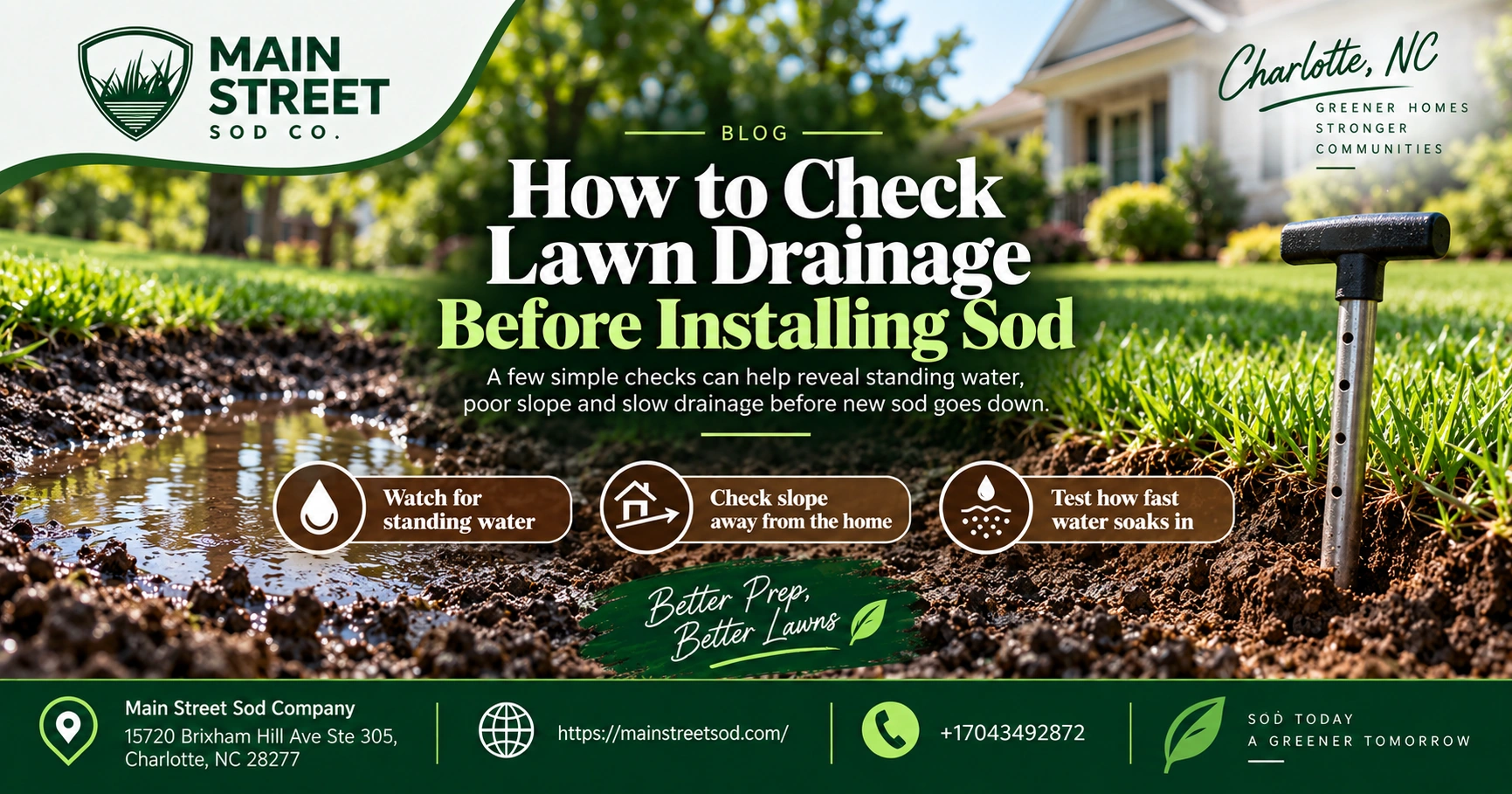
Before new sod goes down, take a close look at how water moves through your yard. Standing water, soggy low spots, heavy runoff, and areas that stay wet long after the rest of the lawn dries can all signal drainage problems that should be addressed first.
You do not need specialized equipment to check lawn drainage before installing sod. Start by observing the yard after rain or irrigation, looking for places where water collects, where runoff cuts across the soil, and where the ground remains unusually soft.
New sod can improve the appearance of a yard quickly, but it does not correct the slope or drainage conditions underneath it. If the existing surface sends water into low areas or allows runoff to wash across the lawn, those same problems can remain after installation.
At Main Street Sod, we look at the condition of the site as part of getting a lawn ready for new turf. Sometimes a yard only needs normal preparation. Other properties may benefit from grading, leveling, or erosion-control work before sod is installed.
Why Should You Check Drainage Before Installing Sod?
New sod needs consistent moisture while its roots begin growing into the soil beneath it. That does not mean the lawn should remain waterlogged.
Good drainage allows the soil to hold useful moisture while excess water moves away from the root zone. If water continually collects in one part of the lawn, the soil can remain saturated while other areas dry normally.
That creates an uneven growing environment from the beginning.
Poor drainage can contribute to problems such as:
- Sod remaining excessively wet in low areas
- Roots struggling to establish in saturated soil
- Mud developing beneath or around the sod
- Water washing soil away from sloped areas
- Uneven watering across the lawn
- Soft or unstable areas underfoot
- Visible puddles after rainfall or irrigation
Drainage should therefore be considered before installation, not only after a new lawn starts having problems.
A beautiful layer of sod on top cannot change where the underlying yard naturally sends water.
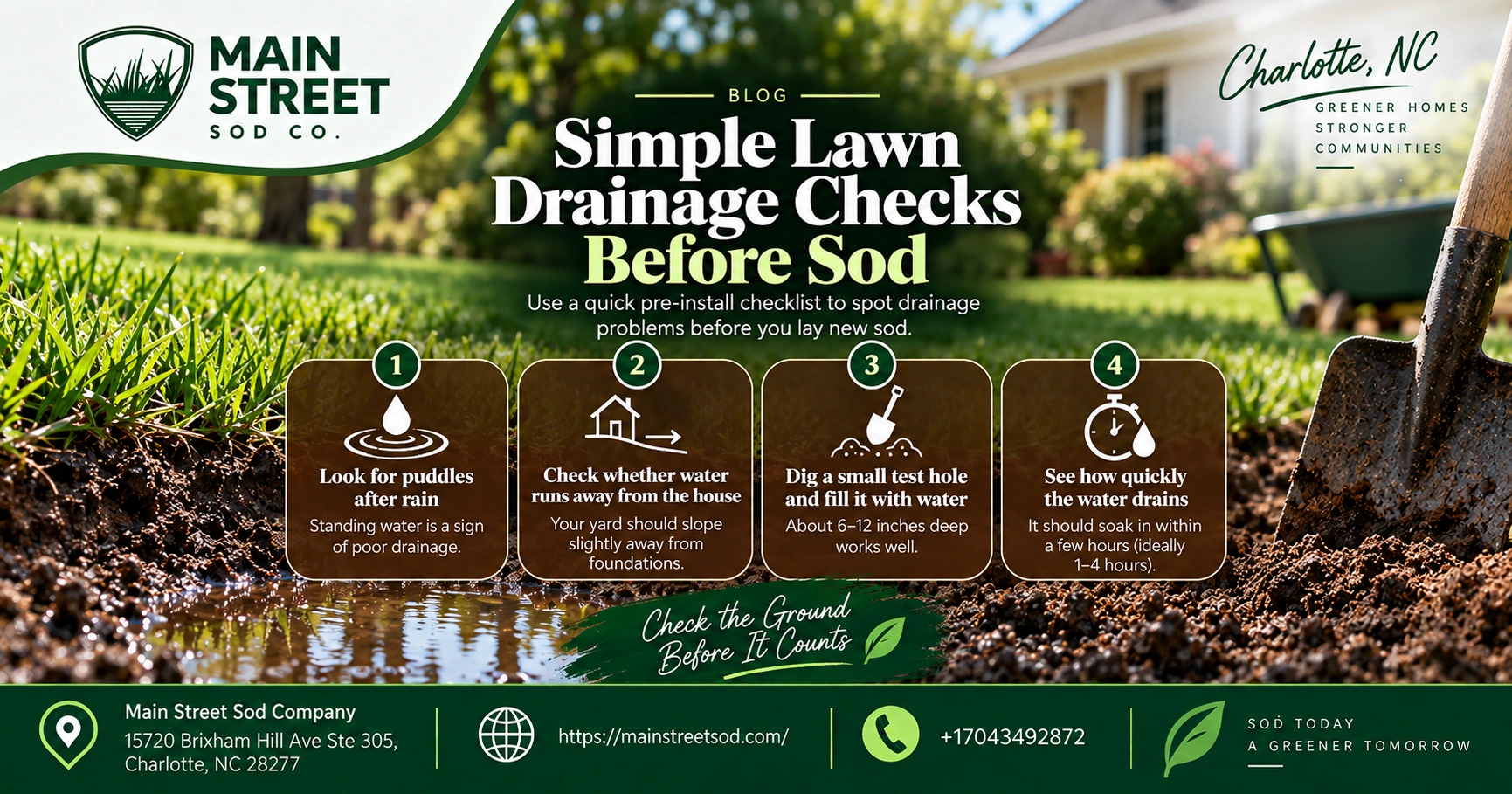
What Simple Tests Can Help Check Lawn Drainage?
Homeowners can learn a surprising amount by simply observing the yard under wet conditions.
You do not need to redesign the property yourself. The goal at this stage is to identify patterns that may deserve attention before sod installation.
Watch the yard during or shortly after rain
A steady rain is one of the easiest ways to see how water naturally moves across your property.
From a safe location, watch for:
- Water collecting in depressions
- Streams of runoff crossing the future lawn
- Water flowing toward the house
- Water coming from neighboring properties
- Downspouts releasing large amounts of water onto the lawn
- Soil washing away on slopes
- Areas that become muddy much faster than others
Take a few photos if you notice anything unusual. Drainage problems are often much easier to understand when you can see what the yard looks like while water is actually moving.
Check the yard again after the rain stops
Do not only look while it is raining.
Check the lawn again after some time has passed and compare different areas. If most of the yard begins drying while one section remains covered with water or stays extremely soggy, that location may be a drainage concern.
Pay special attention to visible dips and low spots.
Observe your irrigation system
If rainfall is not expected, regular irrigation can also reveal drainage patterns.
Watch where sprinkler water goes. Water should soak into the intended lawn area rather than consistently flowing downhill, collecting beside structures, or forming puddles.
If runoff begins quickly, the issue could involve slope, compacted soil, irrigation rate, or a combination of conditions.
Walk the property carefully
Once conditions are safe, walk around the lawn and compare how the ground feels.
A consistently soft or muddy section surrounded by reasonably firm soil can indicate that water is collecting there.
Also look for obvious depressions, uneven grades, exposed soil, channels created by runoff, or areas where water appears to have carried loose material downhill.
The point is not to diagnose the entire drainage system yourself. You are looking for patterns that suggest the yard may need more preparation before sod is installed.
What Are the Signs of Poor Yard Drainage?
Standing water is the most obvious warning sign, but it is not the only one.
Several conditions can suggest that water is not moving through the lawn properly.
Puddles that repeatedly form in the same locations
A puddle immediately after heavy rain is not automatically a major drainage issue.
What matters is the pattern.
If water repeatedly settles into the same low spots and those areas stay wet much longer than the surrounding yard, the grade may be directing water there.
Persistent soggy or muddy areas
Some poorly drained areas never develop a dramatic puddle. Instead, the soil simply stays soft and saturated.
If you frequently sink into a certain part of the lawn or find mud there after other areas have dried, investigate it before installing sod.
Visible runoff paths
Water moving rapidly across bare soil can create small channels, carry soil downhill, or expose roots and rocks.
Those patterns matter because installing sod does not necessarily stop concentrated runoff.
Where moving water is already removing soil or destabilizing a slope, erosion control may need to be considered as part of the site’s preparation.
Water moving toward structures
Pay attention to the direction of runoff around the home, garage, patio, driveway, retaining walls, and other structures.
A lawn should not simply be made visually flat without considering where water will go.
The objective is controlled water movement, not a perfectly flat surface.
Uneven lawn conditions
If an existing lawn has one area that is constantly muddy while another nearby area stays dry, the difference may point to drainage, grade, soil compaction, or irrigation issues.
Those underlying conditions deserve attention before covering the area with new turf.
How Does Grading Affect Water Flow?
Grading refers to the shape and slope of the ground.
Even a yard that looks relatively flat to the eye usually has changes in elevation. Those changes determine where rain and irrigation water travel.
A slight change in grade can direct water toward one side of a property, while a depression can collect water like a shallow basin.
That is why good sod preparation involves more than smoothing bumps.
The finished surface should support both healthy turf and sensible water movement.
Low spots can trap water
If a portion of the yard sits lower than the surrounding surface, water naturally moves toward it.
Installing sod directly over that depression does not eliminate the low point. It simply covers it.
The area may continue holding water once the new lawn is in place.
Steep or poorly shaped slopes can increase runoff
Water moving rapidly downhill may not have enough time to soak into the soil.
Instead, it can move across the surface, carrying loose soil with it. In more vulnerable areas, that runoff may contribute to erosion.
Level does not always mean completely flat
A common misconception is that preparing a lawn means making the entire property perfectly flat.
In reality, the grade needs to account for water movement.
Professional grading and leveling can address low spots, uneven areas, and slope conditions while creating a smoother surface for sod installation.
The exact approach depends on the property’s terrain and where water needs to move.
Can Sod Be Installed in a Yard With Drainage Problems?
Physically, sod can be laid over a yard with drainage problems.
That does not mean it is a good idea.
Sod follows the surface underneath it. If the ground contains a low spot before installation, the low spot will generally still exist afterward. If runoff is already cutting across a slope, new grass alone should not be treated as a guaranteed fix.
This is why drainage concerns are better evaluated before installation.
Sod does not correct standing water
Fresh sod needs watering, especially during establishment. Adding that irrigation to an area that already stays excessively wet can make moisture management more difficult.
Sod does not change the grade underneath it
Grass may hide minor surface imperfections visually, but it does not substantially reshape the ground.
If the lawn needs to be graded, that work is much easier to address before new sod covers the soil.
Sod should not be used to hide an unresolved problem
Installing new turf over poor drainage may make the property look finished initially, while leaving the underlying issue untouched.
Taking care of necessary site preparation first gives the sod a better foundation and avoids disturbing a newly installed lawn later if drainage work becomes necessary.
When Is Drainage or Grading Work Needed?
Not every puddle means you need a major drainage project.
Some yards only need minor site preparation and leveling. Others have more significant grade, runoff, or erosion concerns.
Professional evaluation may be useful when you notice:
- Water regularly standing in the same areas
- Large or numerous low spots
- Significant differences in elevation
- Runoff consistently flowing toward structures
- Soil washing away after storms
- Channels forming through the yard
- Water entering the property from surrounding areas
- Persistent muddy areas
- A slope that appears unstable or heavily eroded
- Previous attempts to correct drainage that have not worked
The solution depends on the cause.
A low area may require adjustments to the grade. A heavily compacted area may need different preparation. Concentrated runoff or soil loss may call for an erosion-control strategy. Other properties may have drainage conditions that require solutions beyond ordinary lawn preparation.
Avoid making major changes to the property’s grade based solely on guesswork. Moving soil changes where water travels, and correcting one low area without considering the surrounding terrain can sometimes redirect water somewhere you do not want it.
At Main Street Sod, our grading and leveling service focuses on preparing the ground while considering slope, low spots, and water movement before new turf is installed.
For yards where moving water is already causing soil loss, our erosion-control services may also be relevant.
Homeowners can view our service areas to see where Main Street Sod provides lawn and sod-preparation services.
Check the Ground Before the Sod Goes Down
The easiest time to address a drainage or grading issue is usually before the yard is covered with new sod.
Before installation, watch how water behaves after rain, check for recurring puddles and soggy spots, follow visible runoff paths, and look closely at the shape of the property.
If the yard drains reasonably evenly, normal sod preparation may be all that is needed. If water collects in low spots, runs aggressively across slopes, or repeatedly leaves areas saturated, additional site preparation may make sense first.
The goal is simple: give the new sod a stable surface with appropriate water movement so its roots have a better environment to establish.
If you are planning a new lawn and are unsure whether the site is ready, Main Street Sod can help evaluate the preparation needed before installation.
FAQs
How do I check lawn drainage before installing sod?
Observe the yard during and after rainfall or irrigation. Look for recurring puddles, soggy soil, runoff channels, low areas, and places that remain wet longer than the surrounding lawn. These patterns can indicate that grading or drainage work should be evaluated before sod is installed.
How long should water sit in a yard after rain?
Some temporary surface water can occur during or immediately after heavy rainfall. The more important warning sign is water that repeatedly remains in the same locations while the rest of the property drains and begins drying. Persistent standing water deserves further evaluation before sod installation.
Will new sod fix poor drainage?
No. Sod can cover the soil, but it does not correct an underlying low spot, poor grade, or concentrated runoff pattern. Drainage and grading problems should generally be addressed before the new lawn is installed.
Should a lawn be completely flat before sod installation?
Not necessarily. The surface should be smooth enough for good sod-to-soil contact, but the property also needs an appropriate grade that allows water to move in the intended direction. Making a lawn completely flat without considering drainage can create new low spots or water problems.
Do I need grading before installing sod?
Not every lawn requires extensive grading. Grading may be appropriate when the yard has significant low spots, uneven terrain, poor water flow, or slopes that need adjustment before sod installation.
What if water runoff is washing soil away?
Visible soil movement can indicate an erosion issue rather than a simple cosmetic problem. The runoff pattern and slope should be evaluated before installing sod so the underlying cause can be addressed and the new lawn is not placed over an unstable surface.