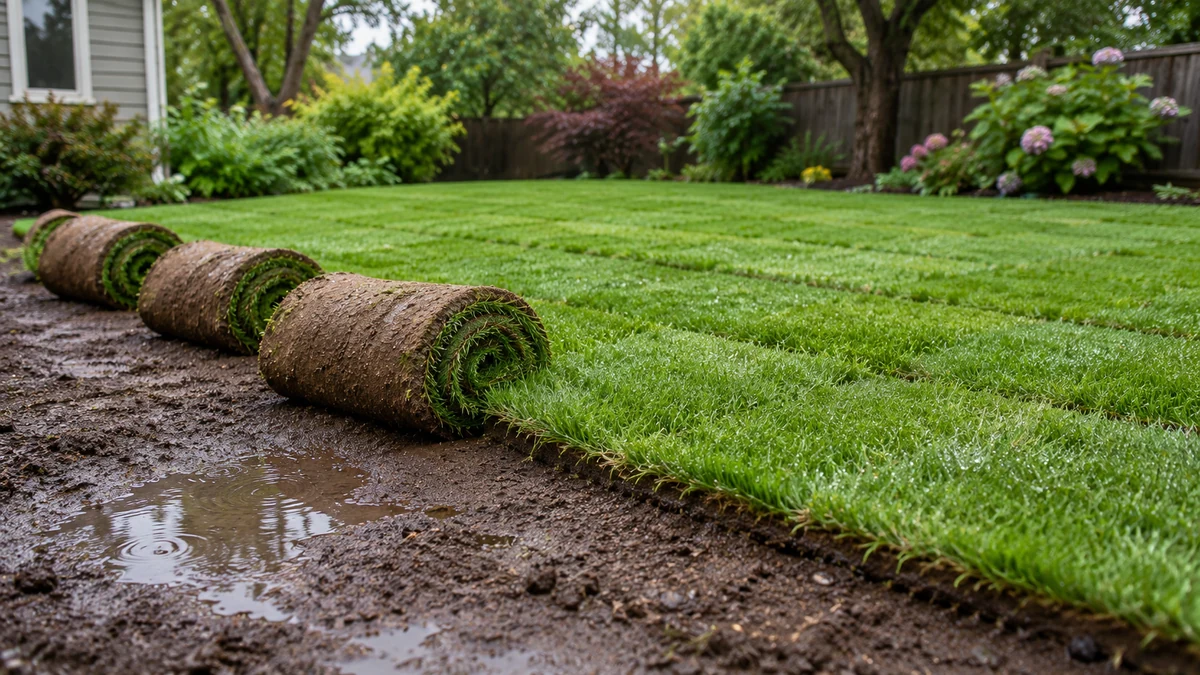
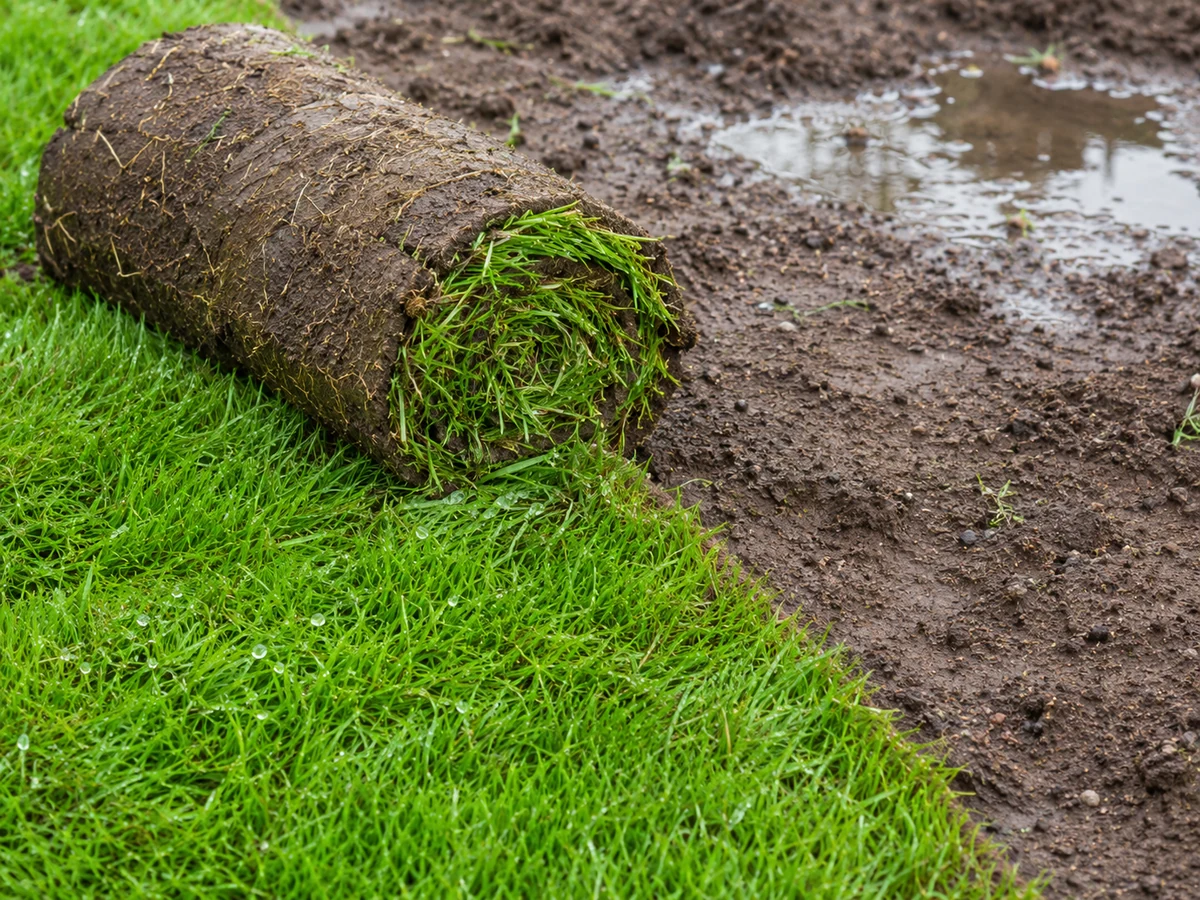
Sod can sometimes be installed after heavy rain, but the ground needs to be workable first. If the soil is still saturated, muddy, unstable, or easily compacted, delaying installation is usually better than trying to force the project onto wet ground.
The issue is not simply that rain occurred. It is what the rain did to the soil.
A well-drained yard may become workable relatively quickly, while heavy clay, low areas, compacted soil, or poor drainage can stay wet considerably longer. Contractors therefore evaluate moisture, firmness, grading conditions, and drainage rather than following one fixed waiting period.
Penn State Extension recommends laying sod when the soil surface is dry to slightly moist and specifically advises against installing sod on wet soil. NC State similarly recommends moist but not overly wet soil before sod installation.
Homeowners planning a project can review Main Street Sod’s sod installation services for information about professional installation and site evaluation.
Can Sod Be Installed After Heavy Rain?
Yes, if the lawn has drained enough that the soil can be prepared and walked on without becoming muddy, rutted, or heavily compacted.
Heavy rain does not automatically cancel a sod installation.
The determining factor is whether the soil underneath the future lawn is in suitable condition for preparation and placement.
Penn State Extension recommends that the soil surface be smooth and firm but not compacted before sod is laid. It also states that sod should be installed when the soil is dry to slightly moist rather than wet.
That distinction is important.
Slightly moist soil can be useful because it provides a favorable environment for the sod once watering begins. Saturated soil behaves differently. It may smear during grading, compress under equipment, form depressions beneath foot traffic, and make it difficult to create a consistent surface.
A contractor may therefore move ahead after one storm but delay after another.
Rainfall intensity, previous soil moisture, drainage, slope, temperature, soil type, and the amount of site preparation still required all affect the decision.
How Can You Tell When Soil Is Too Wet for Sod?
Look at how the ground behaves rather than just how it looks.
Soil may be too wet for installation when:
- Water is still standing on the surface.
- Footsteps leave deep impressions.
- Mud sticks heavily to shoes or equipment.
- The surface moves or pumps underfoot.
- Soil smears instead of crumbling when worked.
- Equipment creates ruts.
- Low areas remain visibly saturated.
- The yard cannot be graded without moving wet, sticky soil.
Main Street Sod advises homeowners to pay attention to standing water, persistent soggy areas, unusually soft ground, and sections that stay wet much longer than the rest of the property when evaluating drainage before sod installation.
A simple inspection can provide useful clues.
Walk only along the edge of the project area at first. If every step sinks deeply or squeezes water toward the surface, the ground probably needs more drying time.
If the soil is moist but remains firm and workable, the site may be much closer to installation readiness.
The contractor still needs to evaluate whether grading and preparation can be completed properly.
What Problems Can Happen If Sod Is Installed on Saturated Ground?
Installing sod over saturated soil can create problems underneath a lawn that may look acceptable from the surface initially.
One concern is compaction.
Wet soil can compress easily under workers, wheelbarrows, machinery, or other equipment. Once compacted, pore spaces that normally hold air and water become smaller, which can make future root growth and drainage more difficult.
Another problem is unevenness.
Soft ground can deform during installation. Footprints, tire marks, and shallow depressions may become part of the finished lawn if sod is placed before the soil is firm enough.
Saturated soil can also interfere with root establishment. Main Street Sod notes that overly wet soil, persistent standing water, and poor drainage can create an unfavorable environment for new roots.
Other possible problems include:
- Poor sod-to-soil contact
- Mud beneath the sod
- Low spots forming during installation
- Soil sticking to grading equipment
- Compaction
- Standing water after installation
- Increased instability on slopes
- Uneven settling as the soil dries
Waiting until the site is workable can prevent having to correct those problems after the lawn is already installed.
Can Wet Soil Affect Grading and Root Contact?
Yes.
Grading requires soil that can be shaped, smoothed, and firmed without turning into mud or being excessively compacted.
Penn State Extension recommends tilling when soil is moist but not wet and notes that mechanical firming should be done when the soil is relatively dry. It also warns that if rainfall or irrigation is used to settle the surface, several days may sometimes be needed before the soil becomes dry enough for fine grading.
That directly affects sod installation.
Sod performs best when the underside of each piece makes consistent contact with the prepared ground. Main Street Sod’s current installation process emphasizes firm sod-to-soil contact and reducing air pockets beneath the turf.
A badly rutted or muddy base makes that consistency harder to achieve.
Wet grading can also create a deceptively smooth surface. Soil may smear flat while wet, then harden or settle irregularly as it dries.
This is why professional preparation focuses on creating a stable, workable growing surface rather than simply making wet ground look level.
Homeowners can review Main Street Sod’s sod preparation services for more information about the work that may be needed before new turf is installed.
How Do Contractors Check Whether the Yard Is Ready?
Contractors usually evaluate several conditions together.
First is surface moisture.
They look for standing water, mud, soft areas, and whether the soil can support normal work without rutting.
Next is grading.
The crew needs to be able to remove high areas, fill appropriate low spots, smooth the surface, and maintain the desired slope.
Drainage is another consideration.
Main Street Sod’s current site-preparation guidance emphasizes watching for recurring puddles, soggy areas, erosion channels, runoff patterns, and locations that remain wet longer than surrounding ground.
Contractors may also consider:
- Whether equipment can enter without damaging the site
- Whether old turf still needs removal
- Whether soil needs loosening
- Whether topsoil or amendments need to be incorporated
- Whether the property has compacted areas
- Whether the finished grade can be maintained
- Whether sod can be laid immediately after preparation
Main Street Sod describes its professional installation process as including site evaluation, drainage review, soil preparation, grading, sod placement, and watering rather than treating sod installation as a simple roll-out process.
The final decision is therefore based on whether the entire installation can be completed correctly under the existing conditions.
How Long Might the Ground Need to Dry?
There is no universal waiting period.
A yard might become workable relatively quickly after rain, or it may remain too wet for several days.
Penn State notes that when water is used to settle soil before fine grading, contractors may need to wait several days for the ground to dry sufficiently. However, that is an example rather than a fixed rule for every property.
Drying speed depends on:
- Rainfall amount
- How wet the soil was beforehand
- Soil composition
- Temperature
- Sun exposure
- Wind
- Shade
- Slope
- Compaction
- Drainage
- Low spots
- Additional rainfall
A warm, breezy yard with good drainage may firm relatively quickly.
A shaded clay yard that received several days of heavy rain may stay soft much longer.
For scheduling purposes, homeowners should expect the contractor to evaluate actual site conditions rather than promise installation based solely on how many hours have passed since the storm.
Does Soil Type Affect Drying Time?
Yes.
Different soils manage water differently.
Main Street Sod notes that clay soil generally holds water and nutrients well but drains more slowly and can become compacted. Sandy soil drains more rapidly but also dries faster and retains nutrients less effectively.
That difference can become very noticeable after heavy rainfall.
A heavy clay lawn may remain sticky or soft long after the surface appears dry.
Sandy soil may become workable sooner because water moves through it more rapidly, although that does not mean every sandy site has good drainage. Compaction, grading, and underlying soil layers still matter.
Loam and amended soils generally fall somewhere between those extremes depending on their composition.
Low areas can override the expected behavior of the soil type as well.
A well-draining soil can still stay saturated if the grade sends runoff into a depression. Conversely, a clay yard with appropriate slope and drainage may dry more evenly than a poorly graded sandy property.
Soil type is one factor—not the only factor.
Can Sod Installation Be Rescheduled After Heavy Rain?
Yes, and sometimes rescheduling is the better decision.
Sod installation is a time-sensitive process because fresh turf should be installed promptly after harvesting and delivery. At the same time, placing sod on an unsuitable base can create longer-term problems.
A professional contractor may adjust the installation date when heavy rainfall leaves the site too wet to prepare properly.
That does not mean every rainy forecast requires cancellation.
Light rain or a passing shower may not create problematic conditions, particularly if the soil drains well.
The larger concern is heavy or prolonged rain that prevents grading, causes standing water, or makes the yard unstable.
Scheduling decisions may also depend on when fresh sod is being harvested and delivered. The contractor needs to coordinate site readiness with turf availability rather than allowing fresh rolls to sit while waiting for the ground to improve.
For homeowners, the practical approach is to stay flexible when major storms occur close to installation day.
A short delay is usually preferable to creating an uneven or compacted foundation beneath the new lawn.
What Should Homeowners Do While Waiting for the Yard to Dry?
The best thing to do is usually very little.
Avoid repeatedly walking across saturated areas to see whether they are ready.
Foot traffic can create depressions and compact wet soil.
Keep vehicles, trailers, and heavy equipment away from the project area unless the installer specifically needs access.
Do not add more irrigation.
If sprinklers are scheduled to run automatically, consider pausing them while the ground is already saturated.
Homeowners can also observe how the property drains after the storm.
Look for:
- Standing water
- Low areas
- Runoff channels
- Soil erosion
- Water moving toward structures
- Sections staying wet longer than the rest
- Areas where soil has washed away
These observations can be valuable because heavy rain often makes drainage patterns much easier to see.
Main Street Sod recommends evaluating these same conditions before sod installation because new turf will not correct the grade or drainage underneath it.
If you notice persistent drainage or grading problems while waiting, let the installation contractor know before work begins.
When Is It Safe to Move Forward With Installation?
Installation can generally move forward when the soil is moist enough to support new turf but firm enough to prepare correctly.
The surface should allow grading and smoothing without turning muddy.
Workers should be able to cross the yard without leaving deep depressions.
Equipment should not create significant ruts.
Standing water should be gone.
The soil should be stable enough to maintain the finished grade and provide consistent support beneath the sod.
Penn State describes the desired sodding surface as smooth and firm but not compacted, with soil dry to slightly moist rather than wet. NC State likewise recommends moist but not overly wet soil before sod placement.
If those conditions are met, recent rain itself is not necessarily a reason to postpone the job.
If they are not, more drying or additional preparation may be appropriate.
Main Street Sod currently provides installation and preparation services throughout communities in North and South Carolina. Homeowners can review the company’s service areas to confirm local availability.
FAQs
Can sod be laid the day after heavy rain?
Sometimes, but not automatically. If the soil has drained and is firm, workable, and only slightly moist, installation may be possible. If the yard is still muddy, saturated, or easily rutted, waiting longer is usually appropriate.
Is wet soil good for laying sod?
Slightly moist soil can be suitable, but saturated soil is not. Penn State recommends that soil be dry to slightly moist for sodding and specifically advises against installing sod on wet ground.
How do I know if my yard is too muddy for sod?
Deep footprints, standing water, mud sticking heavily to shoes, soil that smears when worked, and equipment creating ruts are common warning signs. The installation contractor should make the final site-readiness assessment.
Will sod root in wet soil?
Sod needs moisture to root, but constantly saturated soil can reduce available oxygen and interfere with establishment. Good soil-to-sod contact and appropriate drainage are important alongside moisture.
Does clay soil need longer to dry after rain?
Often, yes. Clay generally holds water longer and drains more slowly than sandy soil. However, grade, compaction, temperature, shade, and rainfall amount can change drying time substantially.
Should I put topsoil over wet ground before sod installation?
Adding topsoil is not automatically the solution to wet conditions. Main Street Sod notes that topsoil does not correct every drainage problem; grading, compaction, runoff, and underlying soil conditions may also need evaluation.
What happens if heavy rain occurs the night before my sod installation?
The contractor should evaluate the property before proceeding. If the soil remains stable and workable, installation may continue. If the rain has left the site saturated, muddy, or unsuitable for grading, the schedule may need to change.
Can a contractor prepare the soil while it is still wet?
Some work may be possible depending on conditions, but tilling and fine grading wet soil can damage soil structure or create compaction. Penn State recommends tilling moistnot wet soil and performing mechanical firming when soil is relatively dry.
The answer to “can sod be installed after heavy rain?” depends less on the number of hours since the storm and more on what the soil is doing now. If it has drained, can hold the finished grade, and is firm enough to provide good root contact, the project may be ready. If it remains saturated or unstable, allowing additional drying time can give the sod a better foundation.
Main Street Sod can evaluate those conditions as part of professional sod installation and sod preparation. Homeowners can also check Main Street Sod’s service areas for local availability.