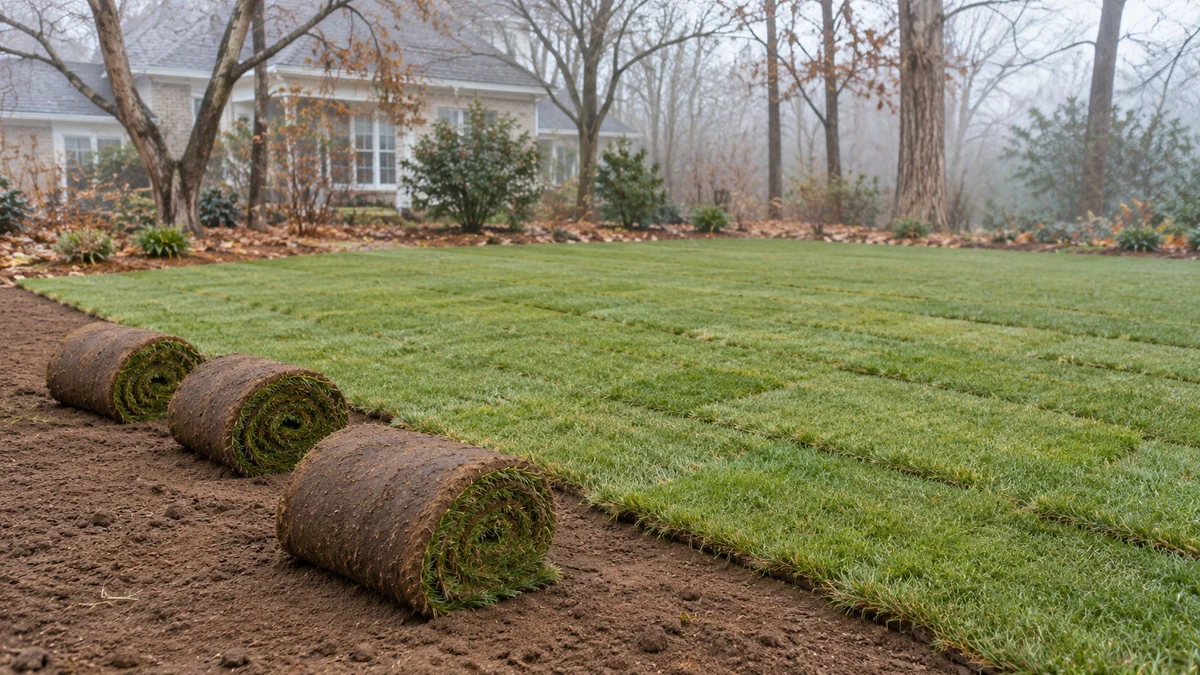
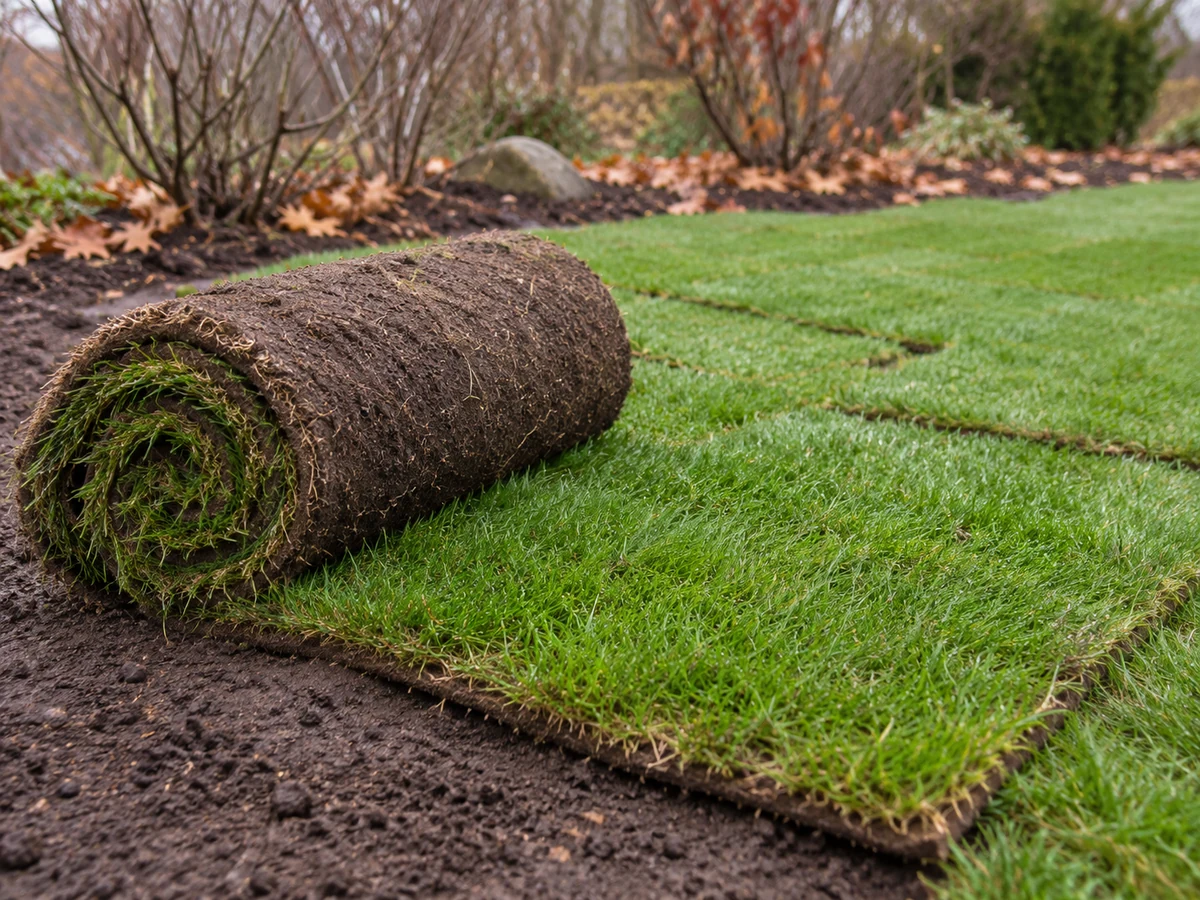
Yes, sod can sometimes be installed in cold weather, but whether it is a good time to proceed depends heavily on the grass type, soil temperature, ground condition, and upcoming weather.
Cool-season sod such as tall fescue can generally tolerate cooler installation conditions better than warm-season grasses. NC State Extension says cool-season sod can be installed during cooler portions of the growing season whenever the ground is not frozen. Warm-season grasses behave differently because root growth slows sharply in cold soil.
Cold-weather installation therefore should not be judged by air temperature alone. A sunny afternoon may feel mild while the soil remains too cold for meaningful root development. Frozen ground, saturated soil, prolonged freezes, or conditions that prevent watering can also justify postponing the project.
Main Street Sod’s sod installation services include evaluating the site, turf type, soil conditions, and other factors that influence establishment after installation.
Can Sod Be Installed in Cold Weather?
It can, especially when the grass being installed is suited to cooler conditions and the ground remains workable.
Sod has an advantage over seed because the lawn arrives as mature turf with an existing root and soil layer. Virginia Cooperative Extension notes that sod can be installed during much of the year as long as the soil is not frozen and irrigation is available when needed.
That does not mean every winter installation establishes at the same speed.
When temperatures are cool, root growth may be slower. The sod can remain in place while waiting for better growing conditions, but it still needs proper soil contact and enough moisture to avoid drying.
Grass type matters substantially.
Tall fescue is a cool-season grass and remains active in cooler periods when warm-season grasses may be dormant. Bermudagrass, zoysiagrass, centipedegrass, and similar warm-season grasses grow most actively during warmer weather and typically become dormant after frost.
The question is therefore not simply whether sod can be installed in winter. It is whether the specific turf and site conditions make installation practical at that time.
What Minimum Conditions Are Needed for Sod Installation?
There is no single air-temperature cutoff that applies to every grass.
A better checklist begins with the ground itself.
The soil should not be frozen. It should also be workable enough to grade, smooth, and provide consistent contact beneath each piece of sod.
NC State recommends laying sod on soil that is moist but not overly wet and rolling the finished lawn to improve sod-to-soil contact.
Fresh sod should also be installed promptly after delivery.
Other practical considerations include whether irrigation is available if rainfall is insufficient and whether a major freeze, ice event, or period of saturated conditions is expected immediately after installation.
Virginia Cooperative Extension summarizes the basic winter requirement well: sod can generally be installed when the soil is not frozen, although establishment still depends on turf type and weather.
A contractor should evaluate the complete forecast and site rather than approving or rejecting the project based on one afternoon temperature.
How Does Cold Soil Affect Root Growth?
Cold soil slows biological activity within the grass.
The turf may remain alive, but roots generally develop more slowly as soil temperatures fall below the grass’s preferred growing range.
The difference is particularly important with warm-season grasses.
NC State states that warm-season sod does not produce roots unless soil temperatures exceed about 55°F for several weeks. That figure should not be treated as a universal threshold for every grass, but it illustrates why dormant bermuda or zoysia behaves differently from cool-season fescue during winter.
Slow rooting means the sod can remain loosely attached longer.
During that period, homeowners should limit unnecessary traffic and continue monitoring moisture because the turf has not yet developed a strong connection with the soil below.
Cold installation can still be successful in appropriate situations. It simply may require patience before the lawn becomes firmly anchored.
Can Cool-Season Sod Be Installed in Cooler Weather?
Yes.
Cool-season grasses are adapted to active growth during cooler portions of the year.
NC State identifies tall fescue, Kentucky bluegrass, fine fescue, and perennial ryegrass as cool-season turfgrasses. These grasses generally perform most actively in spring and fall and remain greener through winter than warm-season turf.
For sod specifically, NC State says cool-season grass sod may be installed during cooler periods when the ground is not frozen.
Mississippi State Extension also notes that tall fescue is well suited to fall and winter installation because cooler conditions give it time to establish before summer heat.
Cool weather can even reduce some establishment pressure because evaporation is usually lower than during summer.
That does not eliminate the need for moisture, good soil contact, or appropriate preparation.
A cold-weather lawn still needs the same basic foundation as any sod installation: properly prepared soil, close seams, good contact, and enough moisture for the turf to remain healthy.
How Does Warm-Season Sod Respond to Cold Conditions?
Warm-season turf responds very differently.
Bermudagrass, zoysiagrass, centipedegrass, and St. Augustinegrass perform their strongest growth during warmer periods. NC State notes that these grasses generally go dormant following the first heavy frost and green up again in spring.
Dormant sod can still sometimes be installed.
Mississippi State Extension notes that professionals may install warm-season sod during winter when the ground is workable, although establishment requires appropriate planning.
The major limitation is rooting.
If soil is too cold for active root production, the sod may remain largely unrooted until temperatures improve. It can provide surface coverage during that period, but it should not be treated as an established lawn.
That extended establishment window can make moisture management, erosion, traffic, and soil contact more important.
Whether dormant warm-season sod makes sense depends on the property, weather outlook, turf availability, and the reason the homeowner wants the project completed during winter.
Is Fescue a Better Option for Cooler-Weather Installation?
Fescue is often better suited to cooler installation conditions than warm-season grasses, but it still needs to fit the property.
Tall fescue is a cool-season grass that performs especially well during spring and fall and has good cold tolerance. NC State identifies it as a reliable cool-season choice in much of the Piedmont and mountain regions.
Main Street Sod also identifies fescue as a cool-season turf and currently offers fescue varieties for homeowners seeking grass suited to cooler conditions.
Homeowners can review Main Street Sod’s fescue sod options when comparing turf for cooler-weather projects.
However, “better in cold weather” does not mean fescue is automatically the best grass for every yard.
Sun exposure, summer heat, irrigation, traffic, maintenance preferences, soil, and local climate all matter.
A homeowner choosing between fescue and a warm-season grass should think about the lawn’s performance throughout the entire year, not just which variety can be installed most easily during winter.
How Should New Sod Be Watered During Cold Weather?
Cold-weather sod still needs moisture.
One common mistake is assuming that dormant or slow-growing turf does not require water.
Virginia Cooperative Extension notes that even dormant warm-season sod has moisture requirements during winter. Natural rainfall or snow may supply enough water in some periods, but supplemental irrigation can still be necessary during abnormally dry conditions.
Cooler temperatures generally reduce evaporation, so sod often needs less frequent irrigation than it would during summer.
Mississippi State Extension similarly notes that cooler-month installations typically require less water because evaporation is reduced and seasonal rainfall may supply more of the lawn’s needs.
The correct schedule should therefore respond to actual conditions.
Check the soil beneath the sod. It should remain appropriately moist without being muddy or waterlogged.
Rainfall should be counted toward the lawn’s moisture needs, and watering should be reduced when the soil is already wet.
During freezing conditions, irrigation timing also deserves care. Avoid creating unnecessary ice on walkways, driveways, slopes, or the lawn surface.
Can Frost Damage Newly Installed Sod?
Frost does not automatically mean recently installed sod will die.
Grass type determines much of the response.
Cool-season grasses such as fescue are adapted to cooler conditions and generally tolerate frost much better than warm-season turf.
Warm-season grasses typically lose green color and enter dormancy after heavy frost. NC State describes seasonal browning as a normal response for bermuda, zoysia, centipedegrass, and other warm-season grasses.
That means newly installed warm-season sod turning brown after cold weather is not necessarily dead.
The bigger issue is that dormant turf may produce little or no new rooting until the soil warms sufficiently.
Frozen soil is different.
Installation should not proceed when the ground itself is frozen because the contractor cannot properly prepare the soil or create dependable root-to-soil contact.
After frost or freezing weather, avoid unnecessary traffic while the surface is frozen, saturated, or unstable.
When Should Sod Installation Be Delayed?
Cold alone does not always require postponement, but certain combinations of conditions can make waiting the better option.
Installation may need to be delayed when the ground is frozen, when soil is too wet to prepare properly, when severe weather would prevent timely installation, or when the chosen turf is unlikely to establish adequately under current conditions.
Warm-season sod deserves particular consideration when the soil is cold enough that rooting will effectively pause.
A project may also need to wait if irrigation systems have been winterized and there is no practical way to provide moisture during a dry period.
Site preparation matters too.
Main Street Sod’s installation process includes evaluating soil, drainage, leveling, and other conditions before placement because good root contact is essential regardless of season.
A short scheduling delay can sometimes be preferable to laying sod onto frozen, muddy, poorly prepared, or otherwise unsuitable ground.
The contractor should weigh the immediate weather against the turf variety and longer-term forecast rather than relying on the calendar alone.
How Do You Know Whether Conditions Are Suitable?
Start with the grass type.
If you are installing fescue or another cool-season grass, cooler conditions may be entirely appropriate as long as the ground remains workable.
If you are installing bermuda, zoysia, or another warm-season variety, understand that cold soil may substantially delay rooting.
Then evaluate the site.
The soil should not be frozen, waterlogged, or so soft that workers and equipment create deep ruts. It should be possible to grade the area and place sod with firm, consistent contact.
Consider the forecast as well.
Several mild winter days may offer a reasonable installation window. A major freeze, prolonged saturation, or severe weather immediately after placement may justify changing the schedule.
Finally, confirm that the sod can be watered when needed.
Main Street Sod currently states that sod can be installed throughout the year, while identifying spring and fall as favorable periods for growth. Actual feasibility still depends on the turf and site.
Main Street Sod serves homeowners across communities in North and South Carolina, including Rock Hill, Fort Mill, York County, Charlotte-area communities, and surrounding locations. Homeowners can check the company’s service areas when planning a seasonal installation.
FAQs
Can you lay sod in winter?
Yes, sod can sometimes be laid during winter as long as the ground is not frozen and site conditions allow proper preparation. Cool-season sod such as tall fescue is generally better suited to cooler conditions than dormant warm-season grasses.
Is there a temperature that is too cold for sod installation?
There is no single air-temperature cutoff for every turf type. Frozen ground is a clear reason to delay installation. For warm-season sod, NC State notes that root production requires soil temperatures above roughly 55°F for several weeks, while cool-season sod can be installed under considerably cooler conditions.
Can fescue sod be installed during winter?
Often, yes. Tall fescue is a cool-season grass, and extension guidance indicates that cool-season sod can be installed when the ground is not frozen. Site conditions and the upcoming forecast should still be evaluated.
Will dormant sod root during winter?
Warm-season dormant sod may develop little or no new rooting while soil remains cold. NC State reports that warm-season sod does not produce roots until soil temperatures remain above about 55°F for several weeks. The turf can remain dormant until favorable growing conditions return.
Does winter sod still need watering?
Yes. Dormant or slow-growing sod can still dry out. Cooler weather normally lowers water demand, and rainfall may supply much of what is needed, but newly installed sod should still be monitored for adequate moisture.
Will frost kill newly installed fescue sod?
Frost alone does not generally mean cool-season fescue will die. Fescue is adapted to cooler conditions and has good cold tolerance. Installation should still wait if the soil itself is frozen or site conditions prevent proper preparation.
Is fall better than winter for installing fescue sod?
Fall is generally an excellent period because fescue actively grows in cooler weather and has time to develop roots before summer stress. Winter installation can still be possible when the ground is workable, but rooting may slow during colder periods.
The answer to “can sod be installed in cold weather?” depends primarily on grass type, soil temperature, ground condition, moisture, and the upcoming forecast. Cool-season fescue can often be installed successfully in conditions where warm-season turf would remain dormant and root very slowly.
Main Street Sod can help homeowners determine whether current conditions fit the turf they are considering through professional sod installation. Homeowners comparing cooler-season turf can also explore fescue sod or review Main Street Sod’s service areas for local availability.