

If you are wondering how long dogs should stay off new sod, plan to keep them off the new lawn as much as possible for roughly the first two weeks and avoid returning to normal pet traffic until the sod has begun rooting firmly into the soil.
That timeline is a starting point, not a guarantee. Grass type, temperature, rainfall, watering, soil preparation, shade, and other site conditions can all affect how quickly new sod establishes. Some lawns may need additional time before they can handle running, playing, and repeated bathroom trips.
The best test is the sod itself. Once sections resist a gentle upward tug and no longer lift easily from the soil, rooting is underway. Until then, keeping dog traffic to a minimum can help protect the new lawn during one of its most vulnerable stages.
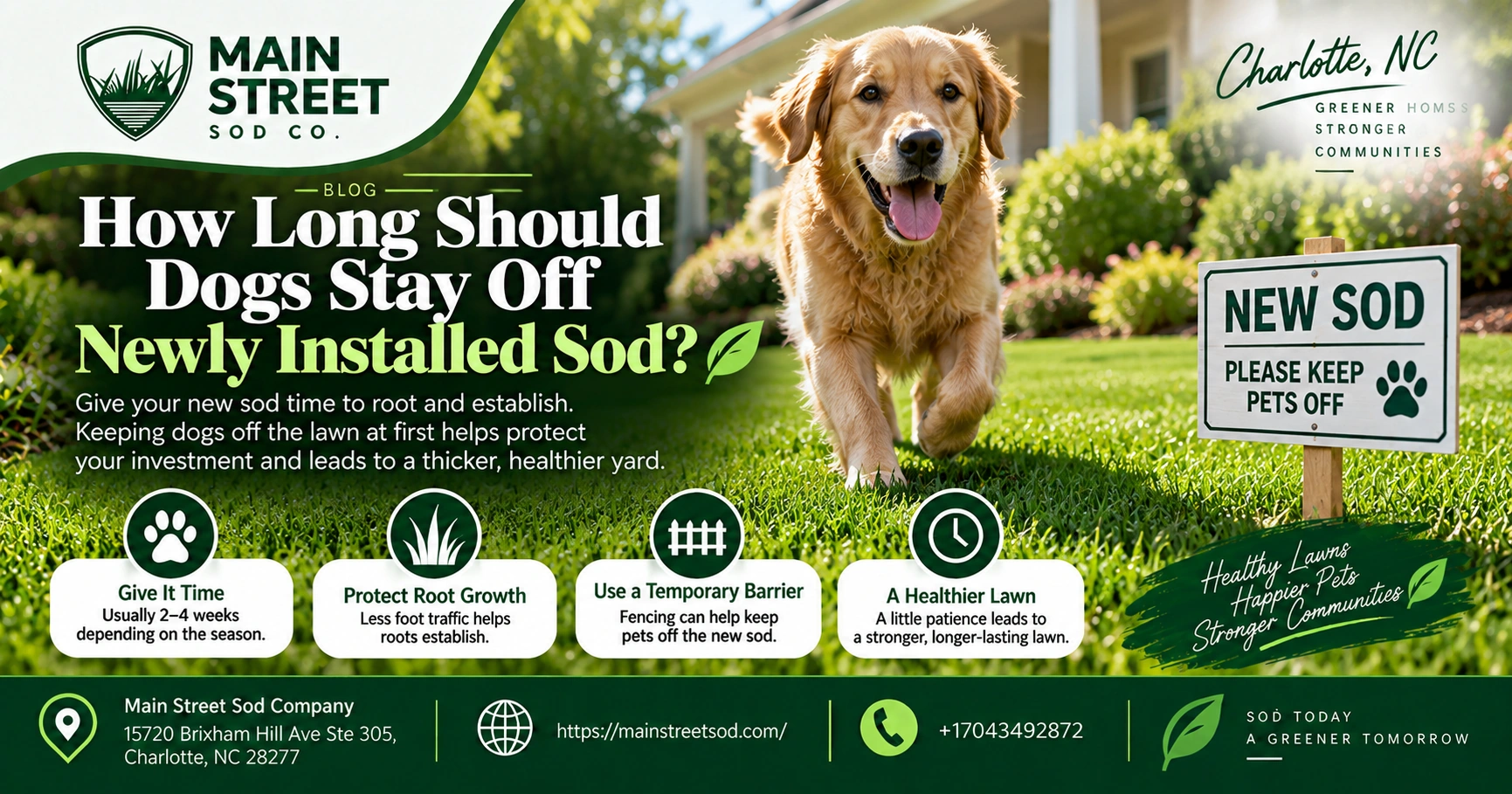
How Long Should Dogs Stay Off Newly Installed Sod?
For the first couple of weeks, dogs should stay off freshly installed sod as much as reasonably possible.
That does not mean every lawn is ready for unrestricted pet use on a particular day. A small dog making a controlled bathroom trip creates a very different amount of stress than two large dogs chasing each other across a wet lawn.
Before allowing normal activity, consider:
- Whether the sod has begun rooting into the soil
- How wet or soft the ground is
- The size and activity level of your dog
- How frequently the same area will be used
- Weather and growing conditions
- Whether the grass is showing healthy establishment
During early establishment, use time as a general guide and rooting as the more important indicator.
Main Street Sod recommends limiting heavy traffic during the initial establishment period because freshly installed pieces still need time to connect with the prepared soil underneath.
Once that root connection develops, the lawn becomes much better able to tolerate normal use.
Why Does New Sod Need Time Without Pet Traffic?
New sod may look like an established lawn immediately after installation, but underneath, its roots are still shallow and vulnerable.
The grass must grow new roots from the sod layer into the soil below. Until that happens, individual pieces can shift, lift, or become damaged more easily.
Dogs add several forms of stress at once.
Running can shift sod pieces
A dog accelerating, stopping, or turning quickly can push against individual pieces of sod before they are anchored.
That movement may pull seams apart or create uneven spots.
This is especially likely when the lawn is wet from the frequent watering needed during establishment.
Paw traffic can create depressions
Freshly watered soil can be soft.
Repeated foot or paw traffic may leave impressions, compact small areas, or make the surface uneven before the lawn has firmed up.
Larger dogs generally create more pressure than smaller pets.
Bathroom habits concentrate traffic
Dogs often return to the same preferred bathroom areas.
Even if each trip is short, repeated traffic over one section of fresh sod can place more stress on that area than occasional movement across the rest of the lawn.
New grass is still adapting
Fresh sod is dealing with transplant stress while developing a new root system.
Reducing unnecessary traffic gives the grass time to devote its energy to establishment rather than recovering from physical damage.
How Can You Handle Bathroom Breaks While Sod Establishes?
Keeping a dog completely away from a lawn for several weeks may not be realistic, especially for homeowners without another yard.
The goal is to minimize traffic rather than create an impossible routine.
Use another area when possible
If you have access to an established section of lawn, side yard, temporary pet area, or another appropriate outdoor space, use it during the early establishment period.
The less traffic the fresh sod receives, the better.
Take dogs out on a leash
For necessary trips onto the new lawn, keep your dog on a leash.
Walk calmly to the designated area and return directly afterward.
This prevents running, digging, sudden turns, and play sessions that can move newly installed pieces.
Designate one temporary bathroom area
Instead of allowing your dog to wander across the entire lawn, choose one practical section for bathroom breaks when possible.
Concentrating necessary activity protects the majority of the new sod while it establishes.
You can rotate the exact spot within that general area instead of encouraging your dog to use one small patch repeatedly.
Keep playtime somewhere else
Bathroom breaks and playtime should be treated differently during establishment.
A controlled walk across the sod creates far less disturbance than fetch, wrestling, chasing, or zooming around the yard.
Use another space for exercise until the sod is firmly rooted.
Be especially careful when the lawn is wet
Fresh sod requires regular watering, which means the underlying soil may be softer than normal.
If paws are leaving deep impressions or sod pieces are shifting, the lawn is not ready for that level of use.
How Can You Tell When New Sod Has Rooted?
Do not judge establishments based only on how green the lawn looks.
Sod can remain green before it has developed a strong connection to the soil underneath.
One of the simplest ways to check rooting is the gentle tug test.
Choose an inconspicuous section of sod and gently try to lift one edge.
If it lifts easily like a loose piece of carpet, the roots have not established firmly enough yet.
If you feel resistance and the sod stays attached to the ground, new roots are beginning to anchor it.
Do not repeatedly pull up different sections just to check them. The goal is a gentle test, not disturbing the developing root system.
Other encouraging signs include:
- Seams beginning to become less noticeable
- Healthy new growth
- Sod staying firmly in place during light movement
- The lawn becoming more stable underfoot
- Soil no longer feeling excessively soft
Rooting may not occur evenly across the entire yard.
Sunny areas, shaded areas, slopes, soil differences, and irrigation coverage can all affect establishment. If one section lifts easily, continue protecting that area even if another part of the lawn appears well rooted.
What Pet Damage Can Occur on New Sod?
Pet damage during establishment is not limited to worn grass.
Dogs can affect both the sod and the soil underneath it.
Shifted sod
Running and sharp turns can move pieces before their roots have anchored.
Look for:
- Widening seams
- Overlapping edges
- Lifted corners
- Pieces that no longer sit flat
Small issues are generally easier to address when noticed early.
Paw impressions and uneven areas
Heavy traffic over wet soil can create depressions.
Those low areas may remain visible even after the grass grows unless the underlying surface settles back evenly.
This is one reason to restrict activity when the lawn is saturated.
Torn or scuffed grass
Dogs that dig, skid, or repeatedly launch from the same spot can tear grass blades or disturb the sod layer.
Fresh turf is less capable of recovering from repeated wear because its root system is still developing.
Urine stress
Dog urine can sometimes contribute to discolored patches, particularly where a dog repeatedly urinates in the same location.
New sod is already under establishment stress, so concentrating bathroom use on one very small section can make that area more difficult to manage.
Avoid aggressively flooding the lawn in response, since new sod also needs appropriate not excessive watering.
Digging
Even a shallow digging attempt can lift newly installed sod.
If your dog likes to dig, supervised leash trips are particularly useful until the turf is securely rooted.
For households where pet activity will remain a major long-term consideration, our guide to the best sod for high-traffic yards explains how traffic tolerance should factor into turf selection.
How Can You Repair Sod Damaged by Dogs?
The right response depends on how much damage occurred and how established the lawn is.
Start by identifying the type of damage.
If a piece of sod has shifted
A recently installed piece that has moved slightly may need to be carefully repositioned so it sits flush against neighboring pieces and maintains good contact with the soil.
Avoid excessive walking or pressing on the surrounding wet lawn while doing so.
If the lawn has minor paw impressions
Allow the area to firm up and reduce traffic.
If the depression is significant or the soil underneath has been disturbed, contact your sod provider before trying to make major corrections yourself.
If you see a discolored bathroom spot
One isolated discolored area does not necessarily mean the sod has failed.
Continue following the appropriate watering and establishment guidance for the lawn and prevent the dog from repeatedly using that exact location.
If sod keeps lifting or is not rooting
Repeatedly loose sections deserve closer attention.
Possible factors can include:
- Excessive traffic
- Too much or too little water
- Poor soil contact
- Drainage problems
- Uneven irrigation
- Installation conditions
- Shade or other site-specific stress
If the sod is not established as expected, contact your installer rather than assuming more water or fertilizer will solve the problem.
Homeowners considering professional sod installation can also discuss pets before the project begins. Planning where the dog will go during establishment makes the first few weeks much easier.
Visit our service areas to see where Main Street Sod provides sod services.
Make the First Few Weeks Easier on Your Lawn and Your Dog
New sod needs temporary protection, not a permanently pet-free yard.
For roughly the first couple of weeks, minimize dog traffic and keep necessary bathroom breaks short and controlled. Before returning to normal use, make sure the turf has begun developing a firm root connection to the soil rather than relying only on a set number of days.
Leash trips, a temporary bathroom area, and keeping playtime off the new lawn can prevent many of the most common problems.
Once the sod is rooted and the surface has firmed up, you can gradually return the lawn to normal household use.
If you have dogs and are planning a new lawn, Main Street Sod can help you think through turf selection, installation, and practical aftercare so you have a plan for protecting the grass while it establishes.
FAQs
Can my dog walk on new sod to go to the bathroom?
If there is no practical alternative, brief and controlled bathroom trips may be necessary. Keep your dog on a leash, minimize walking across the lawn, and avoid running or playing until the sod has rooted.
Is two weeks long enough to keep dogs off new sod?
Two weeks is a useful general starting point for limiting heavier traffic, but establishment varies. Check whether the sod resists a gentle tug and feels firmly attached to the soil before allowing normal pet activity.
Can dogs ruin newly installed sod?
They can damage sod before it roots by shifting pieces, creating paw impressions, tearing grass, digging, or repeatedly using the same bathroom area. Limiting traffic during establishment greatly reduces that risk.
How do I know when my dog can run on new sod?
Wait until the sod is firmly rooted, does not lift during a gentle tug test, and the ground is firm enough that normal traffic does not leave impressions. Running and play place more stress on turf than controlled walking, so they should return later than brief bathroom trips.
Does dog urine kill new sod?
Repeated urine in the same small area can contribute to stressed or discolored grass, but lawn response varies. During establishment, rotate bathroom spots where practical and continue following the sod provider’s watering guidance rather than dramatically changing irrigation.
What should I do if my dog pulls up a piece of new sod?
If the damage is minor and the piece is still healthy, it may be possible to carefully return it to its proper position and restore soil contact. For significant movement, torn sod, or sections that continue failing to root, contact your sod provider for guidance.