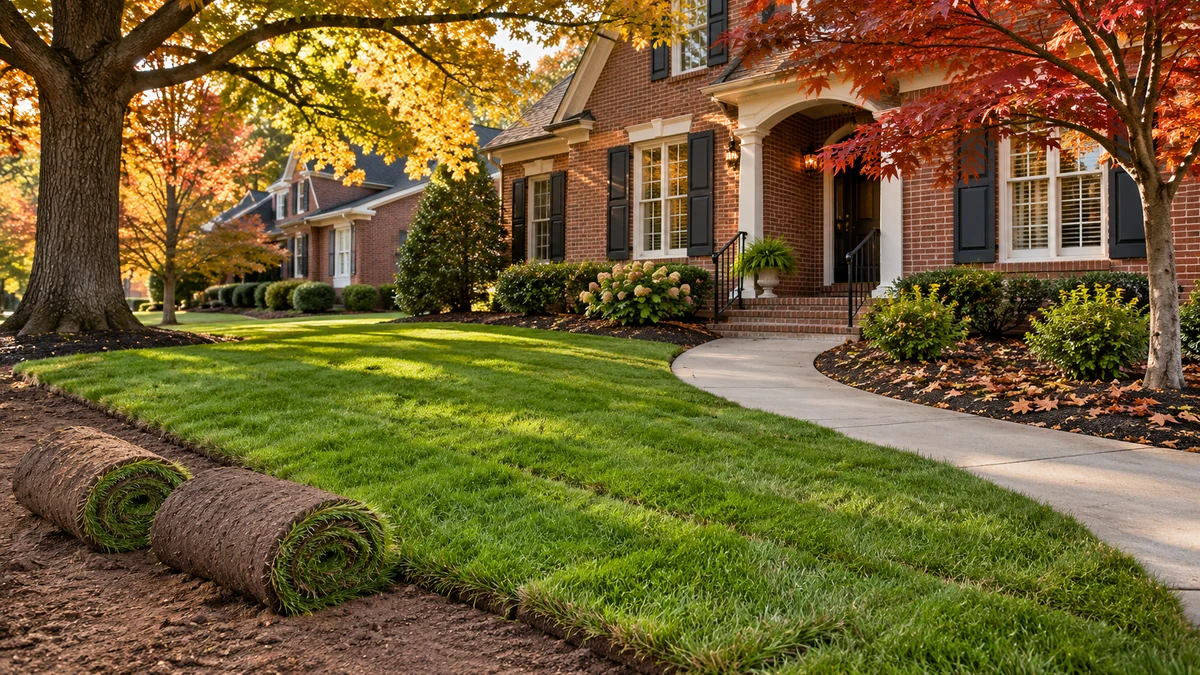
Spring is an exciting time to give a patchy, tired lawn a fresh start, but successful sod installation begins long before the first roll arrives. This spring sod installation checklist for Charlotte helps homeowners evaluate existing grass, check soil and drainage conditions, select suitable turf, and plan irrigation before installation. With the right preparation, new sod has a better opportunity to develop healthy roots and withstand the warmer months ahead.
Charlotte’s spring weather can bring mild temperatures, rainy stretches, and sudden warm afternoons. These changing conditions affect when sod should be installed and how it should be maintained afterward. Before scheduling a lawn transformation, homeowners should understand what their property needs and how grass variety, soil conditions, and seasonal timing influence establishment.
What Should You Check Before Spring Sod Installation?
Before installing sod in Charlotte, homeowners should inspect the existing lawn, evaluate drainage, check for compacted soil, select an appropriate grass variety, and confirm that irrigation is available.
Spring is particularly important for warm-season grasses such as Bermuda and Zoysia because these varieties become more active as soil temperatures rise.
Tall fescue follows a different growth pattern. Although established fescue can grow actively during spring, fall is generally the preferred establishment season for cool-season turf in North Carolina.
A successful project should begin with a property assessment rather than choosing an installation date based only on the calendar.
Spring sod installation checklist for Charlotte homeowners:
- Identify bare spots, thinning grass, and areas of recurring lawn damage.
- Check soil drainage after rainfall.
- Evaluate compacted soil and uneven ground.
- Determine how much sunlight different sections receive.
- Choose a grass variety suited to the property.
- Review the existing irrigation system.
- Identify weeds, debris, and unwanted vegetation.
- Determine whether soil preparation or grading is necessary.
- Schedule installation around suitable weather and soil conditions.
- Plan for watering, mowing, and limited foot traffic during establishment.
Each item helps prevent problems that could affect the appearance and performance of a newly installed lawn.
Inspect the Existing Lawn and Bare Areas
Before replacing grass, homeowners should understand why the existing lawn is struggling.
A thin or patchy yard does not always mean the grass itself is the problem.
Poor drainage, compacted soil, insufficient sunlight, heavy foot traffic, and unsuitable turf varieties can all contribute to lawn decline.
Installing new sod without identifying the underlying issue may lead to similar problems returning.
Look for Patterns in Bare Spots
The location of damaged grass often provides clues.
Bare areas near walkways may indicate repeated foot traffic.
Thinning turf beneath mature trees may suggest inadequate sunlight or competition from tree roots.
Grass that repeatedly disappears in low-lying sections may be affected by standing water.
Homeowners should walk around the property and record where these problems occur.
Taking photographs can also help when discussing the project with a sod installation professional.
Determine Whether the Existing Grass Is Dormant
Charlotte lawns commonly include both warm-season and cool-season grasses.
Bermuda and Zoysia typically turn brown during winter dormancy.
As spring temperatures rise, healthy warm-season turf gradually begins producing new green growth.
A lawn that appears brown in early spring is not necessarily dead.
Homeowners should allow enough time to assess whether existing grass is recovering before deciding that complete replacement is necessary.
Identify Recurring Problem Areas
A lawn may need more than new grass if the same areas fail repeatedly.
Recurring thinning, erosion, or muddy patches can indicate site conditions that should be addressed first.
The goal is to understand whether sod replacement will solve the problem or simply cover it temporarily.
Test Soil Condition and Drainage
Healthy sod depends on suitable soil conditions.
Even high-quality turf can struggle when installed over poorly draining, compacted, or nutritionally imbalanced soil.
Charlotte’s Piedmont region commonly contains clay-rich soils, although conditions vary between properties.
Clay soil can support healthy turf, but drainage and compaction deserve careful attention.
Check How Water Moves Through the Yard
After a moderate rain, homeowners should observe where water collects.
Some surface moisture is normal.
However, water that remains pooled for extended periods may suggest grading problems, compacted soil, or inadequate drainage.
Particular attention should be given to:
- Low areas near patios and sidewalks.
- Sections beside retaining walls.
- Areas where downspouts discharge water.
- Slopes showing signs of erosion.
- Spots that remain muddy after surrounding areas dry.
These conditions can interfere with oxygen availability around developing roots.
Consider a Soil Test
A soil test can identify important factors such as pH and nutrient availability.
Different grasses perform best within different soil conditions.
Applying lime or fertilizer without testing can create unnecessary expense and may fail to correct the actual problem.
North Carolina homeowners can obtain soil testing information through NC State Extension and the state’s soil testing services.
Because sampling and processing times vary, testing should be planned before installation whenever possible.
Don’t Assume Every Lawn Needs New Topsoil
Some properties already have suitable soil for sod establishment.
Others may benefit from amendments or additional soil material.
The decision should depend on actual conditions rather than the assumption that a thick layer of new topsoil is always necessary.
Check for Compaction or Grading Problems
Soil compaction is a common concern in residential landscapes.
Construction activity, vehicle movement, frequent foot traffic, and repeated equipment use can compress soil particles.
Compacted soil may restrict root growth and slow water infiltration.
Signs of Compacted Soil
Homeowners may notice water running off instead of soaking into the ground.
The soil may feel unusually hard, even when slightly moist.
Grass roots may remain shallow, and the lawn may struggle during dry weather.
A soil probe or similar tool can help assess resistance, although professional evaluation may be needed to identify more complicated conditions.
Why Grading Matters
Grading affects how water moves across the property.
A lawn should have appropriate drainage without directing runoff toward the home’s foundation or neighboring properties.
Uneven ground can create low spots, muddy areas, or difficult mowing conditions.
Review Slopes Before Installation
Steep or uneven slopes may require additional planning.
Water can travel quickly down exposed soil, increasing erosion risks.
Newly installed sod may also shift if it does not maintain adequate contact with the underlying surface.
Homeowners should identify these areas early rather than waiting until delivery day.
Correcting significant grading or drainage problems before sod installation helps protect the investment.
Choose the Right Grass Type for the Property
Grass selection is one of the most important decisions in the spring sod installation checklist for Charlotte.
Charlotte is located in North Carolina’s turfgrass transition zone, where both cool-season and warm-season grasses can grow.
However, their seasonal performance, maintenance requirements, and sunlight preferences differ.
Bermuda Grass
Bermuda is a warm-season grass known for its ability to tolerate full sunlight, heat, and substantial traffic when established.
It generally becomes more active as spring soil temperatures increase.
Bermuda can be a suitable choice for open lawns that receive abundant direct sunlight.
However, it performs poorly in heavily shaded areas.
Zoysia Grass
Zoysia is another warm-season option for Charlotte properties.
It forms dense turf and can provide an attractive lawn when matched with appropriate growing conditions.
Some varieties tolerate moderate shade better than Bermuda.
However, Zoysia generally establishes more slowly, so homeowners should have realistic expectations about root development and recovery from damage.
Tall Fescue
Tall fescue is a cool-season grass that remains green during much of Charlotte’s cooler weather.
It generally tolerates moderate shade better than Bermuda.
Although fescue sod can be installed in spring under suitable conditions, the grass may face increasing heat stress as summer approaches.
Fall is usually the preferred season for establishing tall fescue in North Carolina.
Comparing Grass Options
| Grass type | Spring considerations | Best-suited conditions |
| Bermuda | Establishes as warm-season growth becomes active | Full sun and higher-traffic areas |
| Zoysia | Benefits from warming soil, but roots and spreads relatively slowly | Sun to partial shade, depending on variety |
| Tall fescue | Can be installed in spring, but faces approaching summer heat | Cooler growing conditions and moderate shade |
Homeowners should consider not only how quickly grass establishes in spring but also how it will perform during July and August.
The best turf choice is one suited to the property’s year-round environment.
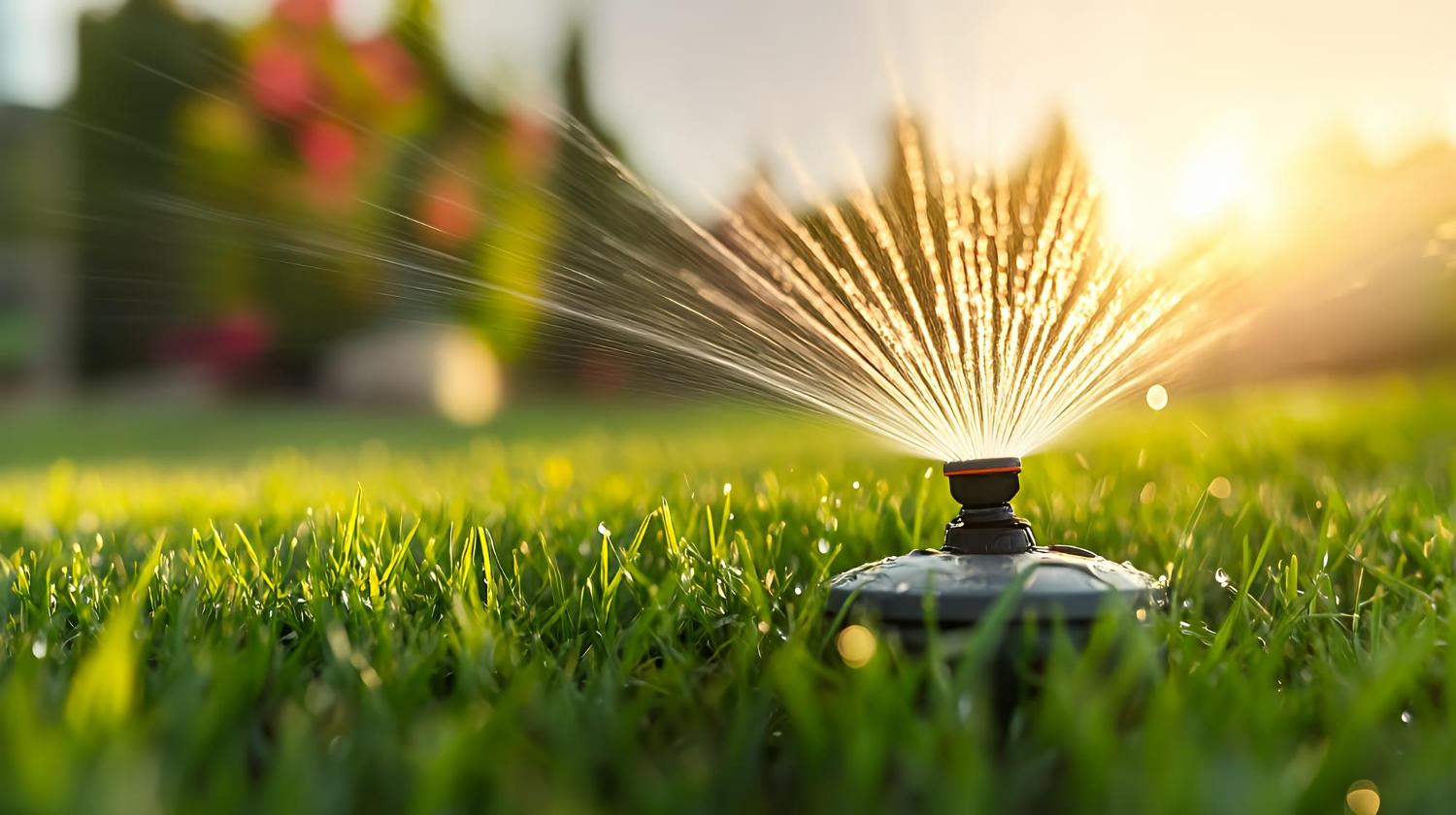
Plan Irrigation Before Sod Is Installed
New sod requires consistent moisture while roots begin growing into the underlying soil.
An irrigation plan should therefore be established before installation.
Homeowners do not necessarily need an elaborate automatic system, but they do need a reliable method of watering the entire lawn.
Check Existing Sprinkler Coverage
An irrigation system may appear functional while leaving certain areas dry.
Sprinkler heads can become misaligned, obstructed, or damaged.
Before installation, homeowners should run the system and observe its coverage.
Areas near fences, sidewalks, and landscaping beds deserve attention.
Look for Excessive Overlap
Too much overlapping coverage can create saturated sections.
This is particularly problematic where clay-rich soil drains slowly.
Irrigation should provide sufficient moisture without causing persistent puddles.
Plan for Changing Weather
Spring rainfall can vary considerably in Charlotte.
A rainy week may reduce supplemental irrigation needs.
A warm, windy period may increase moisture loss.
Homeowners should adjust watering according to actual soil conditions rather than relying on a fixed schedule.
Consider Water Access
For properties without permanent irrigation, hoses and movable sprinklers may be adequate when used carefully.
The important question is whether the homeowner can water all newly installed areas consistently.
A practical irrigation plan is essential before any sod delivery is scheduled.
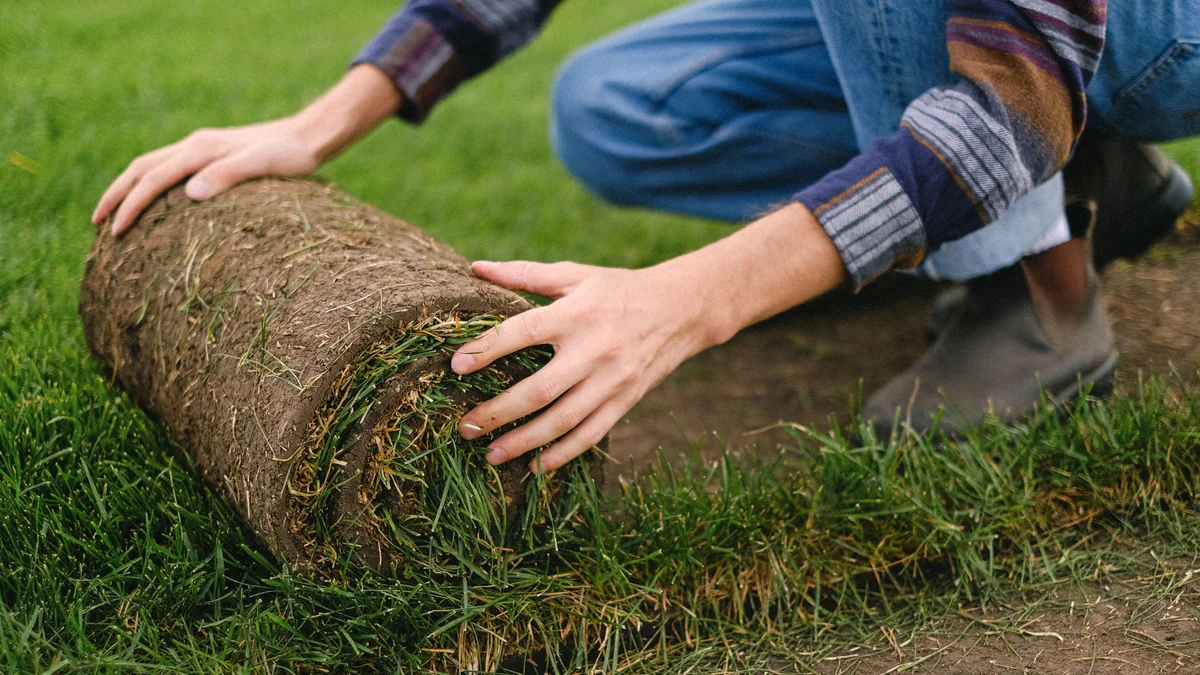
Remove Weeds, Debris, and Old Turf
Existing vegetation and debris can interfere with sod establishment.
Before installation, homeowners should assess what needs to be removed and whether recurring weeds indicate a larger lawn problem.
Identify Existing Weeds
Broadleaf weeds, grassy weeds, and invasive plants may compete with new turf.
Some aggressive weeds can regrow from surviving roots or underground structures.
Simply covering them with sod may not provide lasting control.
Proper weed management depends on the species involved and the condition of the site.
Homeowners should avoid applying herbicides immediately before installation without checking product label restrictions and any required waiting periods.
Remove Unwanted Material
Stones, construction debris, large roots, and other obstacles may prevent proper contact between sod and soil.
These materials can also create uneven areas.
A thorough site inspection helps identify obstacles before work begins.
Evaluate Existing Grass
A small patch of damaged turf may require a different approach from a property with extensive lawn failure.
The amount of removal needed should reflect the scope of the project.
Homeowners should also consider why the existing turf deteriorated.
Removing old grass without correcting poor drainage or shade problems may produce disappointing results.
Prepare the Soil for New Sod
Proper soil preparation creates the foundation for healthy root development.
However, this stage should focus on correcting identified conditions rather than performing unnecessary work.
Address Soil Problems First
Drainage issues, compacted areas, and inappropriate grading should be reviewed before the sod arrives.
Where soil amendments are recommended, they should be based on actual site conditions and testing information.
Maintain a Suitable Surface
The prepared area should allow consistent contact between sod and soil.
Large depressions, hard clumps, and uneven transitions may interfere with establishment.
The surface also needs appropriate drainage.
Avoid Working Saturated Soil
Spring rain can leave Charlotte soil too wet for effective preparation.
Working heavily saturated clay soil can damage its structure and create additional compaction.
Waiting for workable soil conditions is often preferable to forcing the project forward on a predetermined date.
Coordinate Preparation and Installation
Prepared soil should not remain exposed longer than necessary, especially where heavy rainfall could cause erosion.
At Main Street Sod Company, we help homeowners evaluate site conditions and determine whether professional sod preparation services are appropriate before the installation project begins.
The purpose of preparation is to create suitable growing conditions, not simply make the yard look smooth on delivery day.
Schedule Installation Around Spring Weather
Spring weather in Charlotte is not always predictable.
A pleasant afternoon can be followed by heavy rainfall, chilly nights, or an unexpected warm spell.
These changes can affect soil conditions and turf establishment.
Grass Type Influences Scheduling
Warm-season grasses such as Bermuda and Zoysia become more active as temperatures rise.
Their establishment generally improves when soil temperatures support root growth.
Tall fescue has different seasonal requirements and may face increasing stress as summer approaches.
For this reason, installation timing should be selected according to the turf variety rather than one universal spring deadline.
Watch Soil Conditions
Heavy rain can delay site preparation or leave the ground too wet for equipment.
Scheduling flexibility may be necessary.
Installing sod on saturated soil can lead to compaction and uneven surfaces.
Consider Sod Availability
Spring can be a busy period for lawn projects.
Homeowners planning large installations may benefit from discussing turf availability and delivery arrangements ahead of time.
Freshly harvested sod should be installed promptly to reduce the risk of deterioration.
Don’t Schedule Only Around a Holiday or Event
A homeowner might want a beautiful lawn before a graduation party, family gathering, or summer celebration.
However, newly installed sod needs time to establish before handling substantial foot traffic.
A lawn that looks complete immediately after installation is not necessarily ready for everyday use.
For a successful spring project, scheduling should account for both installation and the establishment period afterward.
What to Expect During the First Weeks After Installation
Fresh sod provides immediate ground coverage, but the grass still needs time to establish roots.
The first several weeks are particularly important because the sod must connect with the underlying soil.
Moisture Needs Careful Monitoring
New sod should remain appropriately moist while roots develop.
However, continuously saturated conditions can cause problems.
Homeowners should check the soil rather than judging moisture only by the appearance of the grass blades.
Root Development Takes Time
The rate of establishment depends on temperature, grass variety, soil conditions, and irrigation.
Warm-season grasses generally establish more actively when soil temperatures are suitable.
Tall fescue may develop roots during mild spring weather but can become stressed if temperatures rise rapidly.
A gentle check of sod attachment can help indicate whether roots are beginning to anchor into the soil.
The sod should not be repeatedly pulled or disturbed.
Limit Foot Traffic
New sod may look ready for backyard activities immediately.
However, repeated walking, running, or playing can shift pieces before they become established.
Heavy equipment and frequent traffic should be avoided until the lawn is sufficiently rooted.
Mow Only When Appropriate
The first mowing should depend on grass growth and root attachment, not a fixed number of days.
Mowing too early can disturb sod or damage developing turf.
Once the grass is established enough, mowing height should be appropriate for the selected variety.
Watch for Warning Signs
Homeowners should monitor:
- Sod edges lifting or separating.
- Persistent puddles or muddy areas.
- Grass blades showing moisture stress.
- Unusual discoloration.
- Sections that remain poorly rooted.
- Areas damaged by traffic or runoff.
Some changes are normal during establishment, but persistent problems deserve attention.
Prepare for Summer Conditions
Spring installation is only the beginning.
As Charlotte temperatures rise, homeowners should gradually transition toward an appropriate established-lawn maintenance routine.
This is especially important for tall fescue, which may experience stress during hot and humid summer conditions.
Spring Sod Installation in Charlotte
Charlotte homeowners face different lawn conditions depending on their neighborhood, property layout, and surrounding landscape.
A sunny backyard in Ballantyne may have different requirements from a shaded lawn in Myers Park.
Properties in Matthews, Mint Hill, or Huntersville may also differ in drainage, slope, soil compaction, and irrigation coverage.
These differences make a property-specific approach important.
At Main Street Sod Company, we help homeowners evaluate their lawn conditions before selecting turf and scheduling installation.
Our services include professional sod installation, preparation, grading-related solutions, and access to suitable turf varieties.
We work with homeowners who want to replace thinning grass, address lawn damage, or establish a new yard.
For those planning spring projects, reviewing the existing lawn and identifying potential problems early can make the installation process more manageable.
Homeowners can explore our professional sod installation services to learn more about available options.
We also serve communities throughout the Charlotte region and surrounding areas. Additional locations are listed on our service areas page.
A successful lawn project begins with understanding the property rather than rushing to select a delivery date.
FAQs About Spring Sod Installation
Is spring a good time to install sod in Charlotte?
Yes, spring can be a suitable time for sod installation, especially for warm-season grasses as soil temperatures rise. Tall fescue can also be installed during suitable spring conditions, although fall is generally its preferred establishment season.
What should homeowners do before installing sod?
Homeowners should inspect the existing lawn, check soil drainage, identify compacted areas, evaluate sunlight, select an appropriate grass variety, and confirm irrigation coverage. Any significant grading or soil problems should be addressed before installation.
Should Charlotte homeowners test their soil before installing sod?
A soil test is recommended because it helps identify pH and nutrient conditions. The results can guide decisions about amendments and fertilizer rather than relying on unnecessary or unsuitable products.
How often should new sod be watered in spring?
Watering depends on grass variety, rainfall, temperature, soil type, and root establishment. Newly installed sod needs consistent moisture, but excessive watering can create saturated conditions. Homeowners should monitor the soil and adjust irrigation as needed.
Can sod be installed immediately after heavy rain?
Installation may need to be postponed when soil is saturated. Working on excessively wet ground can cause compaction, uneven surfaces, and poor installation conditions. The soil should be sufficiently workable before the project begins.
How long should homeowners stay off new sod?
Foot traffic should be limited until the sod has rooted sufficiently into the underlying soil. The time required varies with grass type, weather, and growing conditions. Root attachment is a better indicator than a fixed number of days.
Give Your Charlotte Lawn the Right Start This Spring
A fresh lawn can transform the appearance of a property, but the best results begin with thoughtful planning. From identifying compacted soil and drainage concerns to selecting the right grass and preparing irrigation, every step contributes to successful sod establishment.
At Main Street Sod Company, we help Charlotte homeowners approach spring lawn projects with a clear understanding of their property’s needs.
Our team provides professional sod installation, soil preparation, and turf selection guidance for residential and commercial properties throughout the Charlotte area.
Whether a homeowner is replacing a patchy backyard, improving a newly constructed property, or planning a complete lawn renovation, we can help evaluate the conditions that may affect the project.
Spring weather can change quickly, which is why installation timing, turf availability, and soil readiness should be considered together.
With proper planning, homeowners can create favorable conditions for new grass to establish before summer arrives.
Ready to put this spring sod installation checklist for Charlotte into action? Contact Main Street Sod Company at (704) 349-2872 to request a free estimate and discuss the right sod installation plan for the property.