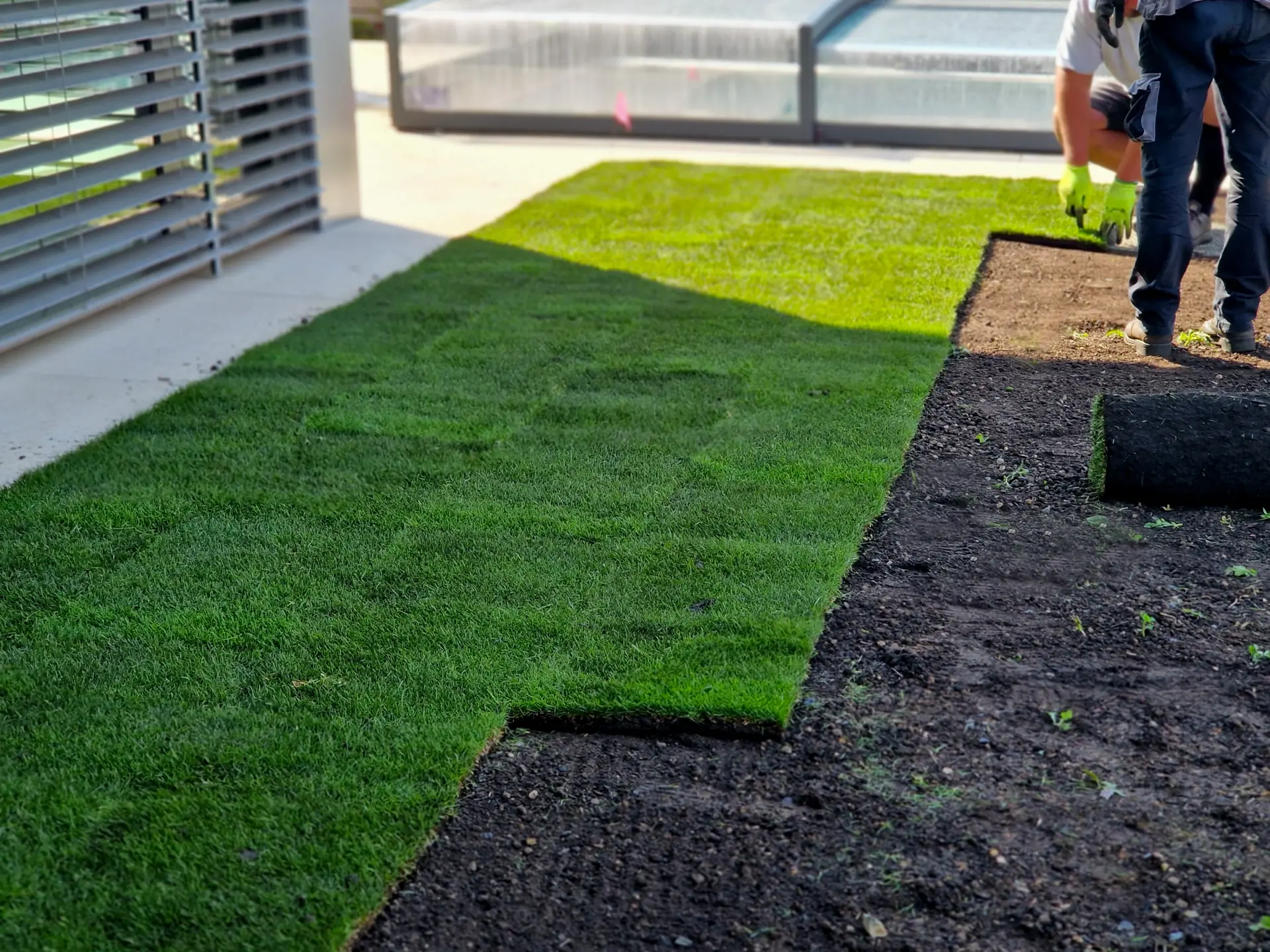
Professional installation usually costs more upfront, while DIY sod installation can reduce labor expenses for homeowners with suitable tools and experience. However, professional sod installation often saves more money long term by reducing grading mistakes, poor soil preparation, uneven seams, and early sod failure.
The better option depends on lawn size, property condition, equipment access, and personal skill. A small, level yard may suit a careful DIY project. Larger or difficult properties often benefit from trained installers who can complete the work faster, protect the sod, and improve establishment success.
Is DIY Sod Installation Cheaper Than Hiring Professionals?
DIY installation appears cheaper because homeowners avoid professional labor charges. The primary expenses are sod, delivery, soil amendments, equipment rentals, irrigation supplies, and disposal fees. For a small yard with healthy soil and easy access, those savings can be meaningful.
Properties requiring grading and leveling, turf removal, drainage correction, or irrigation adjustments increase cost and difficulty. Homeowners may need a sod cutter, tiller, wheelbarrow, lawn roller, and compacting equipment.
Professional estimates commonly include preparation, installation, cleanup, trained labor, specialized equipment, and project coordination.
When comparing DIY vs. professional sod installation, homeowners should compare complete project costs rather than sod prices alone. A low DIY estimate can become inaccurate when rentals, delivery charges, extra materials, and corrective work are added.
Another factor is project predictability. Professionals generally estimate material quantities, crew hours, equipment needs, and preparation requirements before work starts. DIY budgets often rely on ideal conditions. Unexpected roots, buried debris, hard clay, steep access, or damaged sprinkler lines can change the scope quickly. Building a contingency amount into either estimate gives homeowners a fairer comparison and prevents minor surprises from distorting the final decision.
What Hidden Costs Come With DIY Sod Installation?
Equipment is a common hidden cost. Complete lawn preparation often requires machinery, and rental fees rise when work takes longer than expected.
Delivery timing also matters. Sod is a living product that should be installed quickly after arrival. Delays caused by weather, limited help, equipment problems, or underestimated labor can damage the grass before it reaches the soil. Professional sod delivery can help homeowners coordinate arrival with installation timing.
Inaccurate measurements can produce waste, extra delivery charges, or visible differences between sod batches.
Other possible expenses include:
- Topsoil
- Compost
- Fertilizer
- Herbicide
- Irrigation repairs
- Dump fees
- Fuel
- Safety gear
- Replacement sod
Water usage can also rise during establishment, especially when uneven grading causes dry areas or pooling.
Rework is often the largest hidden expense. Removing failed areas, preparing soil again, and buying replacement sod can erase labor savings.
How Much Labor Is Involved in Laying Sod Yourself?
Laying sod is physically demanding and time sensitive. Much of the labor occurs before placement.
Site Preparation
Existing grass, weeds, rocks, roots, and construction debris must be removed. Professional sod tear-out may be necessary when an old or damaged lawn must be cleared before installation.
The soil may need tilling, amendment, leveling, and light compaction. Low spots should be corrected to prevent standing water. Proper preparation is essential because soil preparation before installing sod directly affects rooting, drainage, and long-term lawn health.
Sod Placement
Each piece must be carried, positioned, fitted, and trimmed. Seams should be tight without overlapping. Rows should be staggered, similar to brickwork, to reduce long continuous gaps.
Rolling and Watering
After installation, the lawn should be rolled to improve soil contact. Watering must begin immediately and continue on a careful schedule while roots develop. Following proven sod watering, mowing, and fertilization practices can improve establishment and reduce preventable stress.
A small lawn may require a full day and several helpers. Larger yards can take days, allowing uninstalled sod to dry out.
Homeowners should also consider recovery time and injury risk. Sod rolls are heavy, repetitive lifting can cause fatigue, and rushed work often leads to poor alignment or incomplete preparation.
Do Professionals Provide Warranties on Sod Installation?
Some installers provide limited workmanship or establishment warranties. Coverage varies, so homeowners should request written terms.
A warranty may cover installation defects, improper placement, or sections that fail because of workmanship. It usually does not cover drought, pet damage, insects, disease, irrigation failure, flooding, neglect, or failure to follow watering instructions.
Professionals may provide watering, mowing, fertilization, and stress guidance that protects the lawn during establishment.
DIY installation has no workmanship warranty. The sod supplier may guarantee product quality at delivery, but homeowners remain responsible for handling, preparation, placement, and care.
A clear warranty adds financial protection and accountability when required maintenance is followed.
Can Poor Installation Cause Sod Failure?
Yes. Poor installation can cause sod to dry out, root unevenly, develop gaps, or die completely. Even healthy sod can fail when the soil underneath is compacted, poorly graded, or contaminated with weeds and debris.
Weak soil contact is a major problem. Air pockets under the sod prevent roots from reaching moisture and nutrients. Loose seams can also dry quickly and create visible lines across the lawn.
Improper watering causes additional failure. Too little water dries the sod before rooting. Too much water can reduce oxygen, encourage disease, and create soft soil that shifts underfoot.
Incorrect grading may direct water toward the house, create puddles, or leave high areas dry. Installing sod over existing grass can also prevent proper rooting and produce an uneven surface. Homeowners experiencing drainage concerns should understand when lawn leveling improves drainage issues before beginning installation.
Professional crews reduce these risks through preparation, equipment, and installation speed. Homeowners can achieve good results, but they must follow each step carefully. Skipping preparation to save time often creates the most expensive problems later.
How Much Can Homeowners Save by Installing Sod Themselves?
Savings depend on labor rates, lawn size, preparation, equipment access, and available helpers.
Savings are usually strongest on small, level areas that need minimal correction. For example, replacing a compact backyard section can be manageable when the soil is already clean, loose, and properly graded.
Savings shrink when machinery, grading, irrigation work, debris removal, or lost work time enters the budget.
The sod installation cost in Charlotte, NC can vary because soil condition, grass variety, access, delivery distance, and seasonal demand affect pricing. Homeowners should collect detailed quotes and create a complete DIY budget using the same scope.
The realistic savings equal the professional quote minus every DIY expense, including replacement risk. Comparing only labor charges gives an incomplete answer and can make DIY savings look larger than they are.
Which Option Offers the Best Long-Term Value?
Professional installation often offers better long-term value for large, sloped, compacted, or poorly drained properties because preparation and speed improve establishment.
DIY work can offer strong value when the project is small and straightforward. It is also practical for homeowners who understand grading, soil preparation, irrigation, and sod handling.
Long-term value includes:
- Lawn survival
- Maintenance
- Water efficiency
- Appearance
- Drainage
- Future repairs
A professionally installed lawn may establish more evenly, reducing bare areas and replacement costs. A successful DIY lawn can perform just as well, but only when every stage is completed correctly. Understanding how professional placement impacts long-term lawn health can help homeowners compare more than the initial project price.
The best decision is based on risk tolerance. Homeowners comfortable with physical labor and precise preparation may choose DIY. Those who want faster completion, clearer accountability, and lower failure risk may find professional service more economical over time.
Key Takeaways
DIY sod installation can save money when the lawn is small, level, prepared, and supported by available tools and helpers. Professional installation usually provides stronger value for larger or difficult properties because trained crews reduce preparation errors, delays, drainage problems, and sod failure.
Homeowners should compare complete costs, including rentals, delivery, soil materials, water, disposal, lost time, and replacement risk. The least expensive option upfront is not always the most economical choice.
Long-term value comes from proper preparation, fast installation, consistent watering, healthy root establishment, and correct ongoing lawn care.
Build a Lawn That Protects Your Investment
MainStreet Sod Company helps homeowners evaluate site conditions, grass options, preparation needs, and realistic project costs before installation begins. Our team focuses on creating a stable foundation so new sod can root evenly and develop into a healthy lawn.
A detailed estimate can show where the money goes and which site challenges affect results. Contact MainStreet Sod Company to discuss your property, timeline, and a practical path to a durable lawn without unnecessary rework.