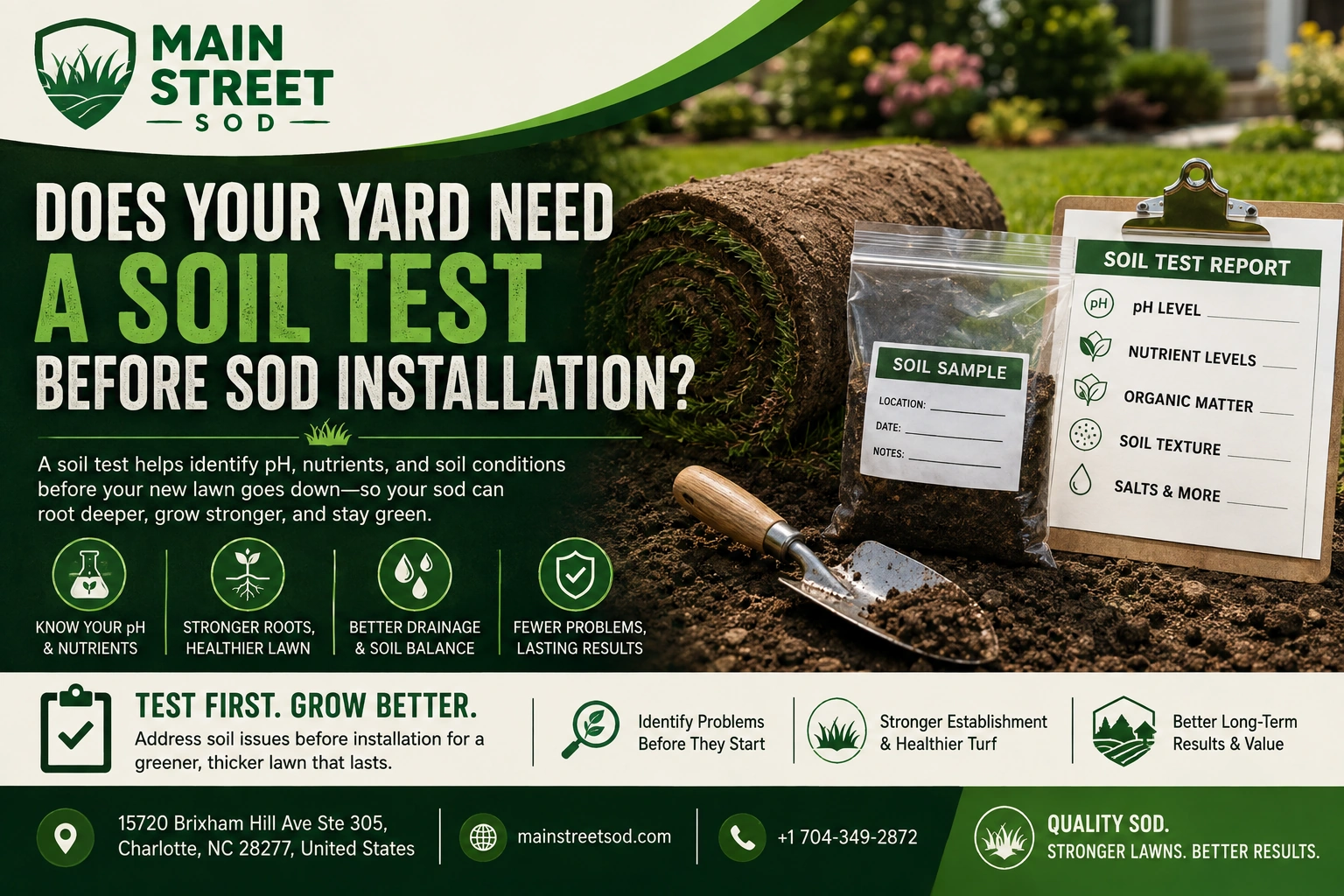
A soil test is not always required before installing sod, but it is one of the most useful ways to identify problems before a new lawn goes down. Testing can reveal whether the soil has the right pH, nutrient balance, organic matter, and overall condition to support healthy root growth.
Without that information, homeowners may apply fertilizer or amendments based on guesswork. New sod might look healthy at first but later struggle with weak rooting, discoloration, thinning, or uneven growth if the underlying soil is not suitable.
A soil test before sod installation is especially worthwhile when the existing lawn has performed poorly, the yard has drainage or compaction problems, or the property has recently undergone construction. Addressing soil issues before installation is usually easier than trying to correct them after the sod has rooted.
Is Soil Testing Necessary Before Sod?
Soil testing is not mandatory for every yard. Sod can establish successfully without laboratory testing when the soil is already known to be healthy, the site has supported a strong lawn in the past, and there are no obvious drainage or growth concerns.
However, a test can reduce uncertainty. It provides specific information about the soil rather than relying only on its appearance.
Testing is often recommended when:
- The previous lawn failed or remained thin
- Grass has struggled despite regular watering and fertilization
- The yard contains persistent bare or discolored areas
- The property has compacted construction soil
- Topsoil has recently been added or removed
- Drainage is poor or water collects in certain areas
- The soil appears unusually sandy, dense, or clay-heavy
- The homeowner is unsure which sod variety is appropriate
- The yard has not been tested in several years
Even when testing is not strictly necessary, it can help homeowners avoid unnecessary fertilizer applications and choose preparation steps based on the yard’s actual needs.
Soil testing is only one part of creating a stable base for a new lawn. Grading, debris removal, compaction correction, and soil conditioning may also be necessary. Homeowners can learn more about these early steps on the sod preparation service page.
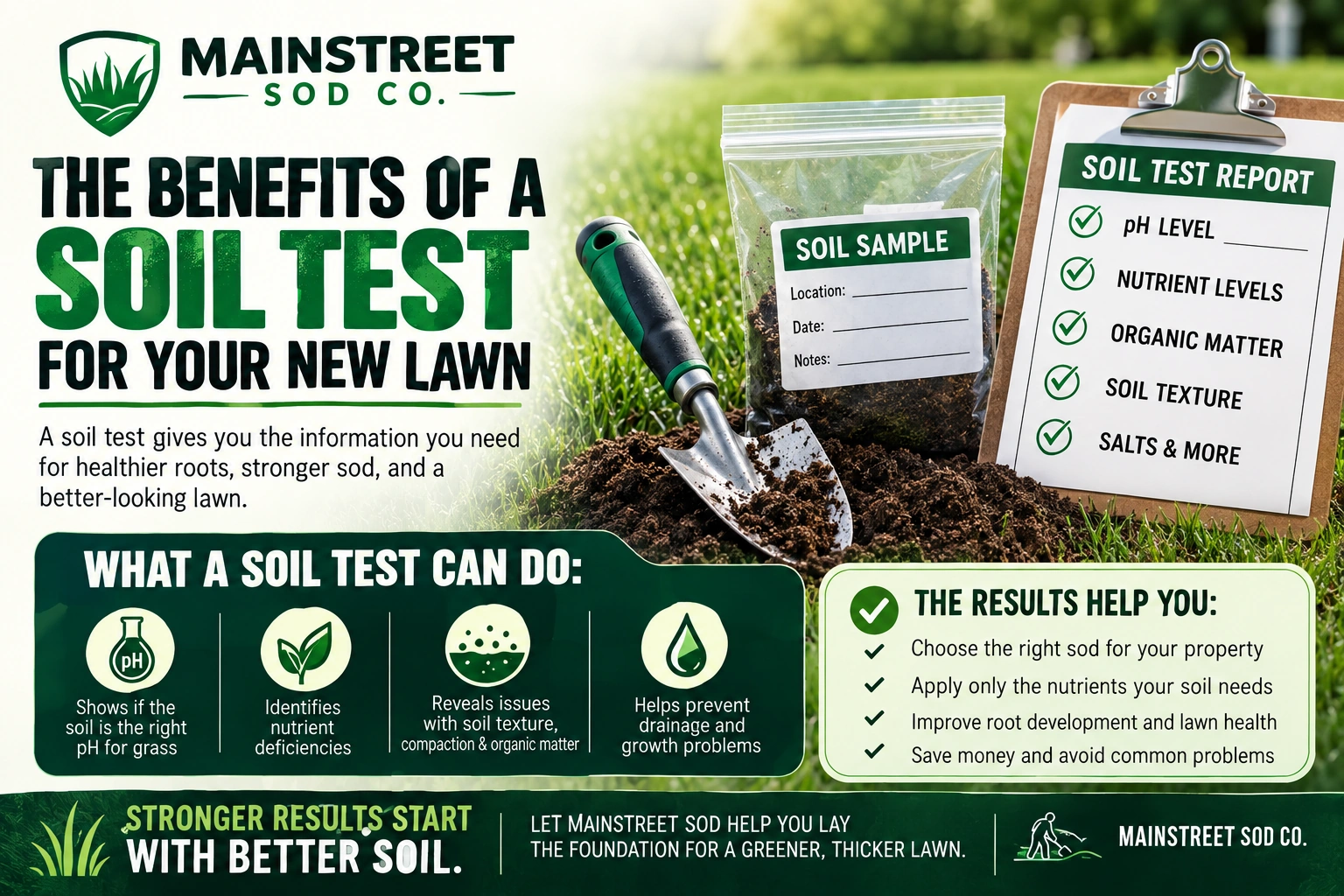
What Does a Soil Test Measure?
A standard soil test evaluates several characteristics that influence how well grass roots can absorb water and nutrients.
The exact information included depends on the testing provider, but most lawn soil tests examine the following areas.
Soil pH
Soil pH indicates whether the soil is acidic, neutral, or alkaline.
The pH level affects how easily grass can access nutrients already present in the soil. When the pH is too high or too low for the selected sod variety, certain nutrients may become less available even if they are present in adequate amounts.
A soil test can show whether materials such as lime or sulfur may be appropriate to adjust the pH. These products should be applied according to test recommendations rather than added automatically.
Nutrient levels
Tests commonly measure essential plant nutrients such as phosphorus and potassium. Some reports may also include other nutrients or provide recommendations based on the intended use of the soil.
Nitrogen is important for grass growth, but it may be evaluated differently because its levels can change quickly. The test report may still provide nitrogen application guidance based on the planned lawn type.
Knowing the existing nutrient levels helps prevent both under-fertilization and unnecessary overapplication.
Organic matter
Organic matter improves the soil’s ability to hold moisture and nutrients while supporting healthy soil structure.
Soil with very little organic matter may dry out quickly, compact more easily, or provide a less favorable environment for root development. A test may indicate whether compost or another approved organic amendment could improve the planting area.
Soil texture and composition
Soil texture refers to the relative amount of sand, silt, and clay.
Sandy soil tends to drain quickly but may not hold moisture and nutrients well. Clay-heavy soil can retain water but may become compacted and drain slowly. Loam contains a more balanced mixture and is generally easier to manage.
Not every basic laboratory test includes a full texture analysis, but texture can also be evaluated through a separate test or professional site assessment.
Soluble salts
Some tests evaluate salt levels in the soil. Excessive salts can interfere with water uptake and may damage new roots.
High salt levels may result from irrigation water, repeated fertilizer use, deicing materials, or other site conditions. Identifying the issue before laying sod allows time for corrective measures.
Soil condition beyond laboratory results
A laboratory report provides valuable chemical information, but it does not show every physical condition in the yard.
A complete evaluation may also consider:
- Compaction
- Drainage patterns
- Grading
- Soil depth
- Buried debris
- Erosion
- Areas where water collects
- Differences between sunny and shaded sections
These factors can be just as important as nutrient levels when preparing for sod.
Signs Your Soil Needs Testing
A yard does not need to look completely unhealthy to benefit from a soil test. Some soil problems produce subtle or inconsistent symptoms.
Testing may be especially helpful when you notice the following signs.
Grass repeatedly fails in the same areas
Bare or thinning sections may indicate compacted soil, improper pH, nutrient deficiencies, poor drainage, excessive shade, or a combination of factors.
Installing new sod without identifying the cause could lead to the same problem returning.
The lawn has uneven color
Yellow, pale green, or patchy growth may be linked to nutrient availability, watering patterns, disease, or poor soil conditions.
Because several issues can produce similar symptoms, a soil test helps narrow down possible causes.
Water pools or drains slowly
Standing water may point to compacted soil, heavy clay, improper grading, or drainage limitations.
A nutrient test alone will not correct these physical issues, but testing can be part of a broader site evaluation before preparation begins.
The soil is hard and difficult to dig
Compacted soil limits the movement of air, water, and roots. New sod placed over a dense surface may have difficulty rooting deeply.
Compaction is common in high-traffic areas and around newly constructed homes where heavy equipment has compressed the ground.
The yard dries out very quickly
Soil that dries soon after watering may contain a high percentage of sand or insufficient organic matter. Shallow soil over rock or construction material can cause similar problems.
Testing and site inspection can help determine whether soil conditioning or a change in watering strategy is needed.
There has been recent construction
Construction can disturb or remove topsoil, compact the remaining ground, and leave behind debris.
Even when the finished yard looks level, the soil may vary significantly from one area to another. Testing multiple sections may be appropriate when site conditions are inconsistent.
Fertilizer has not improved the lawn
Applying more fertilizer is not always the solution to weak growth. If the soil pH is unsuitable, nutrients may remain unavailable to the grass.
Testing can also reveal when nutrients are already present in sufficient amounts, helping homeowners avoid unnecessary applications.
A previous sod installation did not establish well
Poor sod performance can result from watering, installation timing, sod quality, pests, disease, or soil conditions.
When a previous lawn failed, testing the soil before trying again can help rule out underlying pH, nutrient, salt, or composition issues.
How Test Results Affect Sod Selection
Soil test results do not always determine the exact sod variety a homeowner should choose, but they provide useful information for matching grass to the site.
Sod selection should also account for sunlight, shade, expected foot traffic, irrigation, climate, maintenance preferences, and the intended use of the lawn.
Matching sod to soil pH
Different grass varieties perform best within particular pH ranges.
When the current pH is only slightly outside the preferred range, the soil may be adjusted before installation. If the soil requires major correction, a professional may recommend a gradual amendment plan or a sod variety better suited to the existing conditions.
Accounting for drainage
A yard with slow-draining soil may require preparation changes before any sod is installed.
The sod variety may also need to tolerate the site’s moisture conditions. However, choosing a grass that tolerates some moisture does not replace the need to correct significant pooling or poor grading.
Considering sandy or clay-heavy soil
Sandy soil may require additional organic matter and a watering approach that accounts for rapid drainage. Clay-heavy soil may need aeration, grading corrections, or soil conditioning to support better root development.
Some grass varieties handle certain soil conditions better than others, but proper preparation remains essential.
Identifying nutrient needs before installation
Test results can guide fertilizer selection and application rates.
Adding only the nutrients the soil needs creates a more balanced starting point for the new lawn. It also reduces the risk of applying excessive products that may not benefit the sod.
Evaluating different areas separately
A single property may contain several soil environments.
The front yard may receive full sun and drain quickly, while the backyard remains shaded and damp. Testing separate areas may be useful when their appearance, history, or performance differs significantly.
Sod selection should be based on the conditions where the grass will actually grow rather than choosing one variety solely for its appearance.
What Happens After Soil Testing?
A soil test is most useful when the results are translated into a practical preparation plan.
The report may recommend one or more of the following steps.
Adjusting the soil pH
If the soil is too acidic or alkaline, an amendment may be recommended.
The amount depends on the current pH, target pH, soil type, and amendment being used. Adding more than the recommended amount can create a different imbalance, so homeowners should follow the report carefully.
Some pH changes take time. Testing early provides more flexibility than waiting until the day the sod is scheduled to arrive.
Adding specific nutrients
The test may recommend a starter fertilizer or individual nutrients based on what the soil lacks.
Products should be selected and applied according to the test results, sod requirements, and local guidelines. Fertilizing without a clear need can waste money and may contribute to excessive growth or runoff.
Incorporating organic matter
Compost or another appropriate organic amendment may help improve soil structure, moisture retention, and nutrient-holding capacity.
Organic matter should generally be blended evenly into the prepared soil rather than left as a thin, separate layer. The appropriate material and amount depend on the existing soil.
Correcting compaction
Compacted soil may need to be loosened before sod is installed so roots can penetrate the ground.
The method will depend on the depth and severity of compaction. Simply roughening the top inch may not be enough when the soil is densely compressed below the surface.
Improving drainage or grading
Water should move away from structures and should not remain trapped beneath or around the new lawn.
Drainage improvements may involve grading corrections, soil changes, or other site-specific work. These issues should be addressed before sod is laid because they are much harder to correct afterward.
Removing debris and creating a consistent surface
Rocks, roots, construction waste, and old vegetation can interfere with grading and root contact.
After amendments are incorporated, the soil should form a consistent planting surface without major low spots, high areas, or loose debris.
Confirming the sod plan
Once the soil and site conditions are understood, homeowners can make a more informed decision about sod variety, preparation, timing, and ongoing care.
Information about the next stage of the project is available on the sod installation service page. The soil test itself does not replace proper installation, but it can help create better conditions for the sod to establish.
Homeowners can also review Mainstreet Sod’s service areas to find location-specific availability and guidance.
Why Soil Conditions Matter After Installation
New sod initially relies on frequent watering and close contact with the prepared ground. Its long-term success, however, depends on whether the roots can grow beyond the original sod layer and establish in the soil below.
Healthy soil supports:
- Deeper root development
- More efficient nutrient uptake
- Better moisture management
- More consistent lawn color
- Improved tolerance to heat and normal foot traffic
- Reduced dependence on corrective treatments
- A stronger transition from newly installed sod to an established lawn
Poor soil conditions can restrict roots near the surface. That may leave the lawn more sensitive to heat, missed watering, and other stresses.
Soil testing cannot prevent every lawn problem. Weather, shade, pests, disease, watering practices, and maintenance all affect sod performance. Testing simply removes some of the guesswork and allows homeowners to address identifiable soil problems before they become hidden beneath a finished lawn.
FAQs
How far in advance should I test my soil before installing sod?
Testing several weeks before installation is helpful because it allows time to receive the results and complete any recommended amendments. Some pH adjustments and drainage corrections may require additional time. Testing early also makes it easier to choose an appropriate sod variety.
Can I use a home soil test kit?
A home kit may provide a basic estimate of pH or selected nutrients. A laboratory test generally provides more detailed measurements and specific amendment recommendations. The appropriate option depends on the condition of the yard and the level of detail needed.
Should I test more than one area of my yard?
Multiple samples may be helpful when different areas have noticeably different soil, drainage, sunlight, or lawn performance. Samples from unlike areas should usually be kept separate rather than combined. This can reveal issues that a single average result might hide.
What is the ideal soil pH for sod?
The preferred pH range depends on the grass variety being installed. Many lawn grasses prefer soil that is slightly acidic to near neutral, but recommendations should be based on the selected sod and local growing conditions. A soil test can show whether adjustment is needed.
Can fertilizer fix poor soil before sod installation?
Fertilizer can correct certain nutrient deficiencies, but it cannot fix compaction, poor grading, inadequate drainage, shallow soil, or construction debris. Applying fertilizer without testing may also add nutrients the soil does not need. A complete preparation plan should address both chemical and physical soil conditions.
Can sod be installed immediately after soil amendments are added?
It depends on the amendment and the amount applied. Some materials can be incorporated during final preparation, while others need time to react with the soil. Follow the soil report, product directions, and professional recommendations before scheduling installation.
Give Your New Lawn a Stronger Start With Mainstreet Sod
A soil test may seem like a small step, but it can reveal conditions that affect the lawn for years after installation. Understanding the soil before laying sod helps homeowners make more informed decisions about amendments, drainage, preparation, and grass selection.
Mainstreet Sod can help evaluate the site and explain whether soil testing or additional preparation would benefit your yard. Starting with the right conditions gives new sod a better opportunity to establish strong roots and develop into a healthy, durable lawn.