
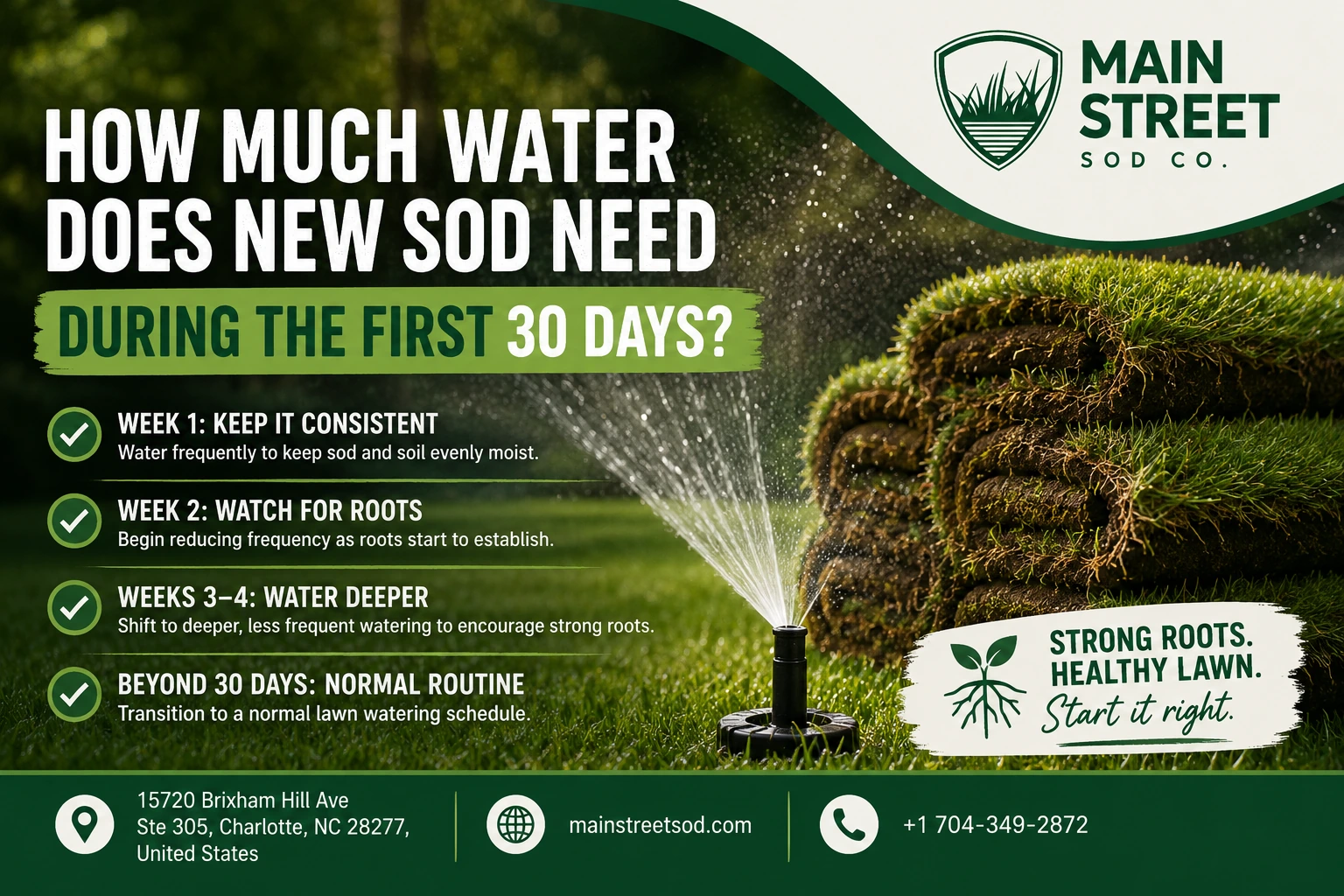
New sod generally needs consistent moisture during the first few weeks, followed by a gradual transition toward deeper, less frequent watering as roots begin growing into the soil below. The goal during the first 30 days is not to follow the same sprinkler runtime every day. It is to keep newly installed sod from drying out while avoiding constantly soggy soil.
On installation day and during the first week, moisture needs usually require the closest attention. During weeks two through four, watering can often be reduced gradually as the sod begins to establish roots.
Weather, soil type, shade, drainage, turf variety, and irrigation coverage can all change how quickly a lawn dries. That means homeowners should use the condition of the sod and soil, not just the calendar or irrigation timer, to decide when watering is needed.
How Much Water Does New Sod Need During the First 30 Days?
Think of the first month as a transition from frequent establishment watering to normal lawn irrigation.
A simple framework looks like this:
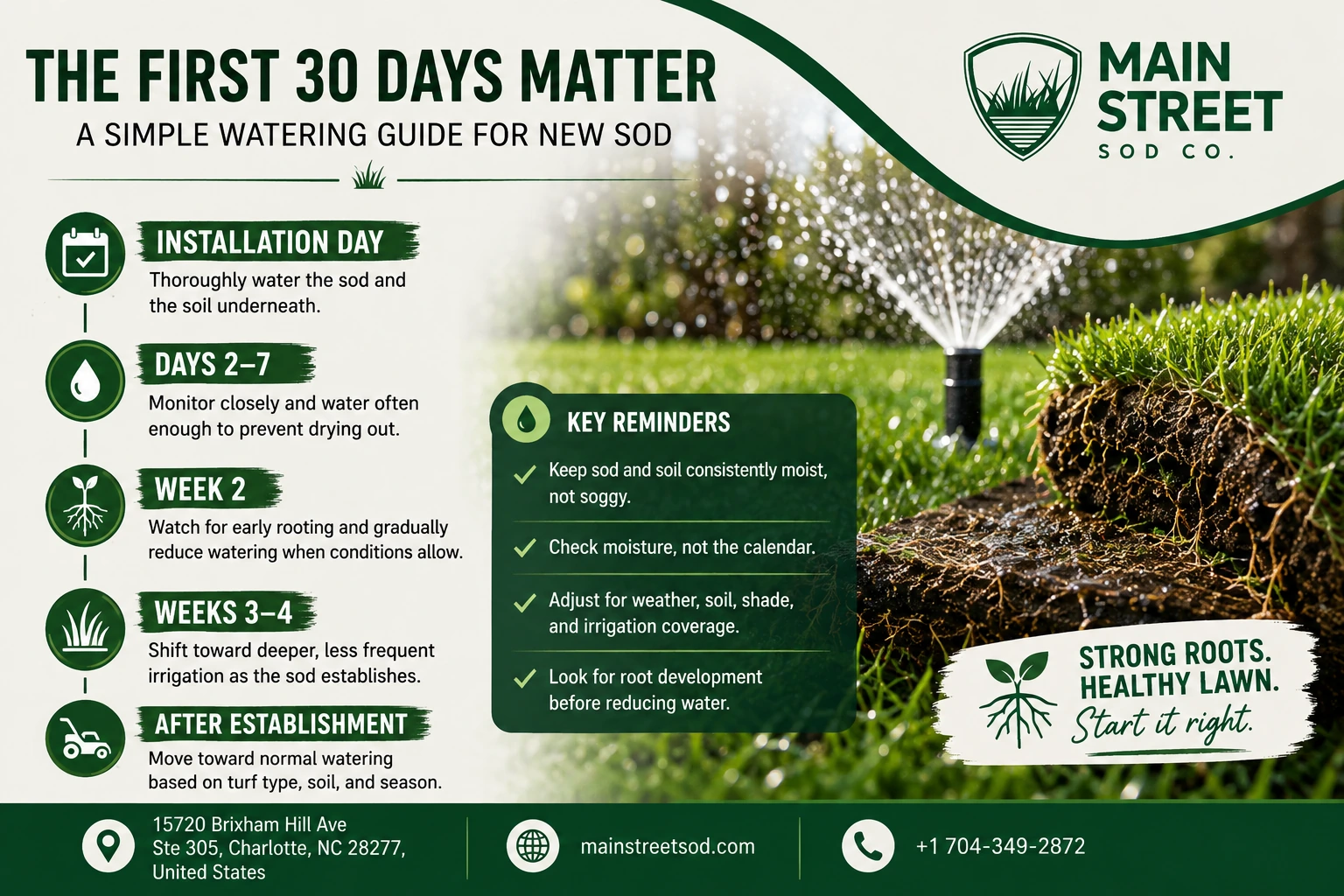
- Installation day: Thoroughly water the sod and the soil beneath it.
- Days 2–7: Monitor closely and water often enough to prevent the sod and underlying soil from drying.
- Week 2: Begin watching for early rooting and gradually reduce watering when conditions allow.
- Weeks 3–4: Shift toward deeper, less frequent irrigation as the sod establishes.
- After establishment: Move toward the normal watering approach recommended for the turf type, soil, and season.
This is intentionally flexible.
Penn State Extension notes that newly laid sod should be watered thoroughly and then irrigated as needed until it is well rooted, which may take up to four weeks depending on weather and site conditions. NC State similarly emphasizes frequent watering during the early establishment period before transitioning toward less frequent watering as turf develops.
The important question is not simply, “How many times should I run the sprinklers today?”
Instead, ask: Is the sod and the soil beneath it staying appropriately moist without becoming waterlogged?
What Are the First-Day Watering Requirements for New Sod?
The first day is especially important because freshly harvested sod can lose moisture quickly.
Once the sod is installed, watering should thoroughly moisten the turf and the soil underneath it. Penn State Extension specifically recommends making sure water moves through the sod and wets the underlying soil rather than only dampening the grass blades.
Good sod-to-soil contact also matters because roots need to grow from the sod layer into the prepared soil beneath it.
During installation day, the main goal is simple:
Do not allow newly laid sod to dry out.
This can be especially important during hot, sunny, or windy weather, when moisture can be lost more quickly.
At the same time, more water is not automatically better. The lawn should be thoroughly moist, but it should not remain flooded or excessively soft.
For homeowners still planning a new lawn, our Sod Installation provides more context about professional installation and establishment.
How Often Should You Water New Sod During the First Week?
The first week usually requires the closest monitoring.
The sod has not yet developed a strong root connection with the soil beneath it, so it cannot draw moisture from a deep root system the way an established lawn can.
During this stage, water often enough to maintain consistent moisture.
Depending on the conditions, this may mean frequent light irrigation. NC State Extension notes that establishing turf may require light watering multiple times per day in some circumstances, while Penn State emphasizes keeping the soil moist without making it excessively wet.
Do not treat that as a fixed schedule for every yard.
A sunny lawn exposed to heat and wind may dry far more quickly than a shaded lawn on a cool, cloudy day.
Check several parts of the lawn, particularly:
- Edges along sidewalks and driveways
- Corners
- Slopes
- Areas receiving full afternoon sun
- Spots farther from sprinkler heads
- Areas near buildings or fences
These locations may dry at different rates.
Uneven irrigation coverage is a common reason one portion of a new lawn struggles while the rest appears healthy.
How Should Watering Change During Week Two?
During the second week, some sod may begin developing noticeable roots into the underlying soil.
This is when homeowners can start shifting their attention from simply keeping the sod wet toward encouraging continued root establishment.
If the sod is rooting well and the weather allows, irrigation may gradually become less frequent while supplying enough moisture to reach the developing root zone.
Avoid abruptly cutting back watering just because the calendar says “week two.”
Root development depends on factors such as:
- Turf type
- Soil temperature
- Weather
- Soil condition
- Installation quality
- Moisture consistency
Instead, check whether the sod is beginning to resist gentle lifting.
If it still pulls away from the soil very easily, root development may still be limited. If it begins holding firmly to the ground, rooting is likely underway.
The transition should happen gradually rather than overnight.
How Much Water Does Sod Need During Weeks Three and Four?
By weeks three and four, properly establishing sod should generally be moving toward a more mature watering pattern.
Instead of keeping the upper surface constantly moist, the goal increasingly becomes providing moisture deeper in the soil and allowing enough time between waterings for healthy root development.
University extension guidance supports reducing irrigation frequency as turf becomes established rather than continuing frequent surface watering indefinitely. UGA Extension, for example, recommends gradually decreasing watering after active sod growth begins.
Some lawns may be well rooted during this stage.
Others may need more time.
That is why 30 days should be viewed as a useful establishment window not a deadline that guarantees every lawn has developed the same root system.
Continue checking soil moisture, turf appearance, and rooting rather than switching automatically to a weekly schedule on a specific date.
How Can You Tell When New Sod Is Establishing Roots?
One of the simplest checks is a gentle tug test.
Choose an inconspicuous area and carefully lift the edge of a sod piece.
During the earliest stage after installation, the sod may lift easily because the roots have not yet grown significantly into the soil.
As establishment progresses, you should begin to feel resistance.
That resistance indicates that new roots are connecting the sod to the underlying soil.
Do not repeatedly pull large sections of sod upward to check them. A light test in a few areas is enough.
Other signs of establishment may include:
- Sod staying firmly in place
- Consistent healthy color
- New growth
- Seams beginning to become less noticeable
- The lawn becoming ready for mowing
- Improved recovery after normal environmental stress
Rooting is a better signal for reducing irrigation than simply counting the number of days since installation.
What Are the Signs of Too Much Water?
New sod needs moisture, but constantly saturated soil can create its own problems.
Possible signs of overwatering include:
- Soggy or muddy soil
- Standing water
- A lawn that feels unusually soft underfoot
- Sod that remains poorly rooted
- Persistent wetness long after irrigation
- Increased fungal or disease concerns
- Yellowing or declining turf in persistently wet areas
Overwatering can also make the lawn difficult to mow because mower wheels or foot traffic may create ruts in soft soil.
The soil should be moist enough to support root establishment without remaining waterlogged.
If the lawn looks unhealthy, do not automatically assume it needs more water. Check the soil first.
What Are the Signs of Too Little Water?
Underwatered sod can deteriorate quickly because its developing root system is still shallow.
Possible warning signs include:
- Wilting or limp grass blades
- Dry soil beneath the sod
- Brown or straw-colored edges
- Curling or folding blades
- Gaps appearing between pieces as sod dries and shrinks
- Areas that feel dry or crisp
- Sod edges pulling upward
Edges and corners are often among the first areas to dry because they have more exposed surface area.
However, color alone does not always identify the problem.
Overwatering, underwatering, disease, poor rooting, and other issues can sometimes create similar-looking symptoms. Before changing the irrigation schedule dramatically, check actual moisture beneath the turf.
How Do Rain, Heat, and Soil Conditions Affect the Watering Schedule?
The weather can change your new sod’s water requirements from one day to the next.
Hot weather
Heat, direct sunlight, and warm surfaces can increase moisture loss.
New sod installed during a hot period may need closer monitoring than sod installed during cooler conditions.
Wind
Wind can dry turf and soil surprisingly quickly.
A windy day may increase water loss even when temperatures are not extreme.
Rain
Rainfall counts toward the lawn’s moisture needs.
If significant rainfall has already soaked the sod and soil, automatically running the full irrigation schedule may create overly wet conditions.
Light rain, however, may not provide enough moisture to reach the soil underneath the sod.
Check moisture rather than assuming that any rainfall means watering can be skipped.
Shade
Shaded sections generally dry more slowly than areas exposed to strong sunlight.
Running identical watering times across sunny and shaded zones can sometimes leave one area too dry and another too wet.
Sandy soil
Sandier soils generally drain more quickly and hold less water.
That can cause the root zone to dry faster.
Heavier soil
Soils with more clay can retain moisture longer and drain more slowly.
Excess irrigation may therefore create waterlogged conditions more easily in some heavy soils.
Irrigation coverage
Even a good schedule will not work if sprinkler coverage is uneven.
Watch for dry strips, missed corners, areas blocked by landscaping, or sprinkler heads that apply noticeably different amounts of water.
New sod should receive reasonably even coverage throughout the lawn.
When Can You Transition to a Normal Lawn Watering Schedule?
Transition when the sod has established roots not simply because 30 days have passed.
As the lawn becomes rooted and actively growing, irrigation can generally become less frequent and deeper.
Penn State notes that sod may take up to about four weeks to become well rooted depending on the site and weather, while extension guidance broadly recommends decreasing irrigation frequency as establishment progresses.
This transition can also coincide with normal mowing beginning.
Before the first mowing, the lawn should be rooted well enough that the mower will not shift the sod. The soil should also be firm enough that mower wheels and foot traffic will not leave deep impressions.
Once establishment is complete, watering becomes a long-term turf-maintenance question rather than a new-sod establishment question.
For ongoing guidance on watering, mowing, and fertilization after the establishment period, visit our Sod Maintenance Guide.
Homeowners who want to confirm whether Mainstreet Sod serves their area can also visit our Service Areas Page.
FAQs
Does new sod need to be watered every day?
New sod often needs frequent irrigation during early establishment, and daily watering may be necessary depending on weather and soil conditions. The goal is to keep the sod and underlying soil consistently moist without leaving the site waterlogged. Rainfall, shade, temperature, and soil type may reduce or increase the need for irrigation.
How long should I run sprinklers on new sod?
There is no universal sprinkler runtime because irrigation systems apply water at different rates. Instead of relying only on minutes, check whether water is reaching through the sod into the soil beneath it and whether coverage is even throughout the lawn.
How do I know if I am overwatering new sod?
Soggy soil, standing water, consistently soft ground, or sod that stays excessively wet may indicate overwatering. Check beneath the sod before adding more water, since some symptoms of excessive moisture can look similar to other turf problems.
What does underwatered new sod look like?
Underwatered sod may wilt, develop dry or brown edges, shrink at the seams, or feel dry beneath the turf. Edges and areas exposed to strong sun or wind may show symptoms first.
Should I water new sod after it rains?
It depends on how much rain fell and how deeply the moisture reached. A brief shower may wet the grass without soaking the underlying soil, while substantial rainfall may eliminate the need for additional irrigation for a period. Check the soil before deciding.
When should I start reducing water on new sod?
Begin reducing irrigation gradually when the sod starts establishing roots and conditions allow. A gentle tug that meets resistance can indicate rooting. Avoid reducing watering solely because a certain number of days has passed.
When can I mow new sod?
Wait until the sod is sufficiently rooted that mowing will not shift or lift it and the soil is firm enough to support the mower without rutting. Turf type and growth rate also influence the proper mowing height and timing.
How do I know if my sod has rooted?
Gently lift an edge in a small area. Sod that is newly installed will lift easily, while established roots create resistance as they grow into the underlying soil. Avoid repeatedly lifting the turf once you begin feeling that resistance.
Give Your New Lawn the Right Start
The first month after installation is less about following a perfect sprinkler schedule and more about responding to what the new lawn actually needs.
At Mainstreet Sod, we encourage homeowners to watch moisture levels, weather, irrigation coverage, and root development as the lawn moves from freshly installed sod toward established turf. Keeping the sod consistently moist at first and gradually changing the watering pattern as roots develop can help support that transition.
If you’re planning a new lawn or want professional help getting the installation and establishment process started correctly, learn more about our Sod Installation Services and available Service Areas.