New sod can feel slightly soft during the first days after installation because both the turf and the soil beneath it are being kept moist while roots begin establishing. However, a lawn that feels unusually spongy, squishy, muddy, or unstable underfoot may be holding too much water or may have another issue beneath the surface.
The most common causes include overwatering, poor drainage, uneven grading, weak soil contact, and ground that remains soft because roots have not yet anchored the sod.
Main Street Sod identifies unusually soft ground, persistent wetness, standing water, and poor rooting as possible signs that a new lawn is receiving too much water. Poor drainage can create similar symptoms when water continually collects in the same area.
The key is to look at the pattern. A lawn that feels slightly soft everywhere immediately after installation may simply be in the early establishment stage. A few spots that stay spongy long after surrounding areas firm up deserve closer attention.
Homeowners planning a new lawn can review Main Street Sod’s sod installation services for information about installation and early establishment.
Why Does New Sod Feel Spongy When You Walk on It?
New sod feels spongy when the turf, soil underneath it, or both contain enough moisture that they compress under your weight.
Some softness is expected at first.
Fresh sod needs consistent moisture while its roots grow into the prepared soil. During that stage, the ground may not feel as firm as an established lawn.
The concern begins when the lawn feels excessively soft or remains that way for an extended period.
Main Street Sod notes that constantly saturated soil can leave new sod unusually soft underfoot and can interfere with rooting.
If every step leaves a deep footprint, squeezes water upward, or causes the sod to shift, the lawn is probably wetter than it needs to be.
Softness can also occur when the sod is resting loosely over uneven ground instead of making firm contact with the soil.
That is why the symptom should be evaluated rather than automatically blamed on watering.
What Are the Most Common Causes of Spongy Sod?
Several problems can create the same soft feeling underfoot.
The most common possibilities are:
- Too much irrigation
- Heavy rainfall combined with routine watering
- Slow-draining soil
- Low areas where water collects
- Poor grading
- Soil compaction that limits infiltration
- Air pockets or uneven soil beneath the sod
- Sod that has not rooted firmly into the ground
These causes can overlap.
For example, a low spot may collect irrigation water because of the grade. Heavy soil beneath that area may then drain slowly, leaving the sod soft for much longer than the surrounding lawn.
Compaction can create another confusing situation. Main Street Sod notes that compacted soil may limit infiltration, causing water to collect near the surface rather than moving evenly through the root zone.
That means simply reducing or increasing irrigation without checking the soil can lead to the wrong correction.
Start by comparing the soft area with a nearby section that feels normal.
Can Overwatering Make New Sod Feel Soft?
Yes.
New sod needs frequent moisture at first, but it should not remain waterlogged.
Main Street Sod lists soggy or muddy soil, standing water, unusual softness underfoot, persistent wetness, and poor rooting among the potential signs of too much water.
Iowa State Extension also advises against keeping new sod saturated because overwatering can interfere with proper rooting. Once the sod begins establishing, watering should gradually become deeper and less frequent.
To check whether overwatering is contributing, gently inspect the soil beneath the sod.
The soil should feel moist during establishment, but it should not resemble mud or release water when lightly pressed.
Also watch how long the lawn stays wet after irrigation.
If the sod remains soggy well after surrounding areas have dried, reduce unnecessary irrigation and investigate whether poor drainage is also involved.
Do not stop watering abruptly just because the lawn feels soft.
New sod can still dry out quickly if watering is reduced too aggressively. Adjust based on actual soil moisture rather than the sprinkler timer alone.
How Does Poor Soil Contact Affect Sod Firmness?
New sod should sit firmly against the prepared soil below it.
If there are air pockets, depressions, clumps, or uneven areas beneath the turf, the sod may feel unstable when stepped on.
Instead of being supported evenly from below, the piece can flex or compress into the empty space.
Poor soil contact also makes rooting more difficult because roots need to grow directly into the soil beneath the turf.
Main Street Sod’s preparation guidance emphasizes creating a smooth, workable surface so new roots can establish good contact with the ground.
A simple clue is whether the sod moves independently of the soil.
If a soft area shifts, wrinkles, or lifts easily while nearby turf feels firmly attached, poor contact may be contributing.
Do not repeatedly walk in the area to “press it down.”
Heavy traffic on wet or unstable sod can create deeper depressions and compact the soil further.
Can Drainage Problems Cause a Spongy Lawn?
Yes, especially when only certain areas stay soft.
Main Street Sod identifies standing water, soggy low areas, and ground that remains wet longer than the rest of the lawn as signs of drainage problems. The company also notes that new sod does not correct drainage conditions underneath it.
If water naturally moves toward one section of the yard, new sod laid over that area may stay saturated even when the irrigation schedule is appropriate elsewhere.
Watch the lawn after it rains.
A drainage issue is more likely if the same spots repeatedly:
- Hold puddles
- Stay muddy
- Feel soft for days
- Receive runoff from pavement or roofs
- Sit lower than surrounding turf
- Develop weak rooting
Soil type can make the problem more noticeable.
Main Street Sod notes that clay-rich soil tends to hold water longer and drain more slowly than sandy soil.
A drainage problem generally requires evaluating how water moves across and through the property, not simply changing sprinkler duration.
Does Uneven Grading Contribute to Soft Areas?
It can.
Grading determines where surface water travels and where it collects.
A low area may receive water from several directions and remain soft even when the rest of the lawn drains normally.
Main Street Sod’s grading and leveling service specifically addresses dips, low areas, uneven terrain, and locations where water tends to collect.
Uneven ground can also interfere with soil contact.
A piece of sod stretched over a shallow depression may remain unsupported in the center. When someone steps on it, the turf can sink slightly into the low spot.
Over time, repeated traffic may make the depression more pronounced.
Homeowners should be more suspicious of grading when the spongy feeling consistently follows the same contours or low areas of the yard.
If several sections are holding water because of the shape of the property, watering adjustments alone are unlikely to correct the underlying issue.
Main Street Sod’s sod preparation services provide more information about preparing uneven, compacted, or poorly draining ground before sod installation.
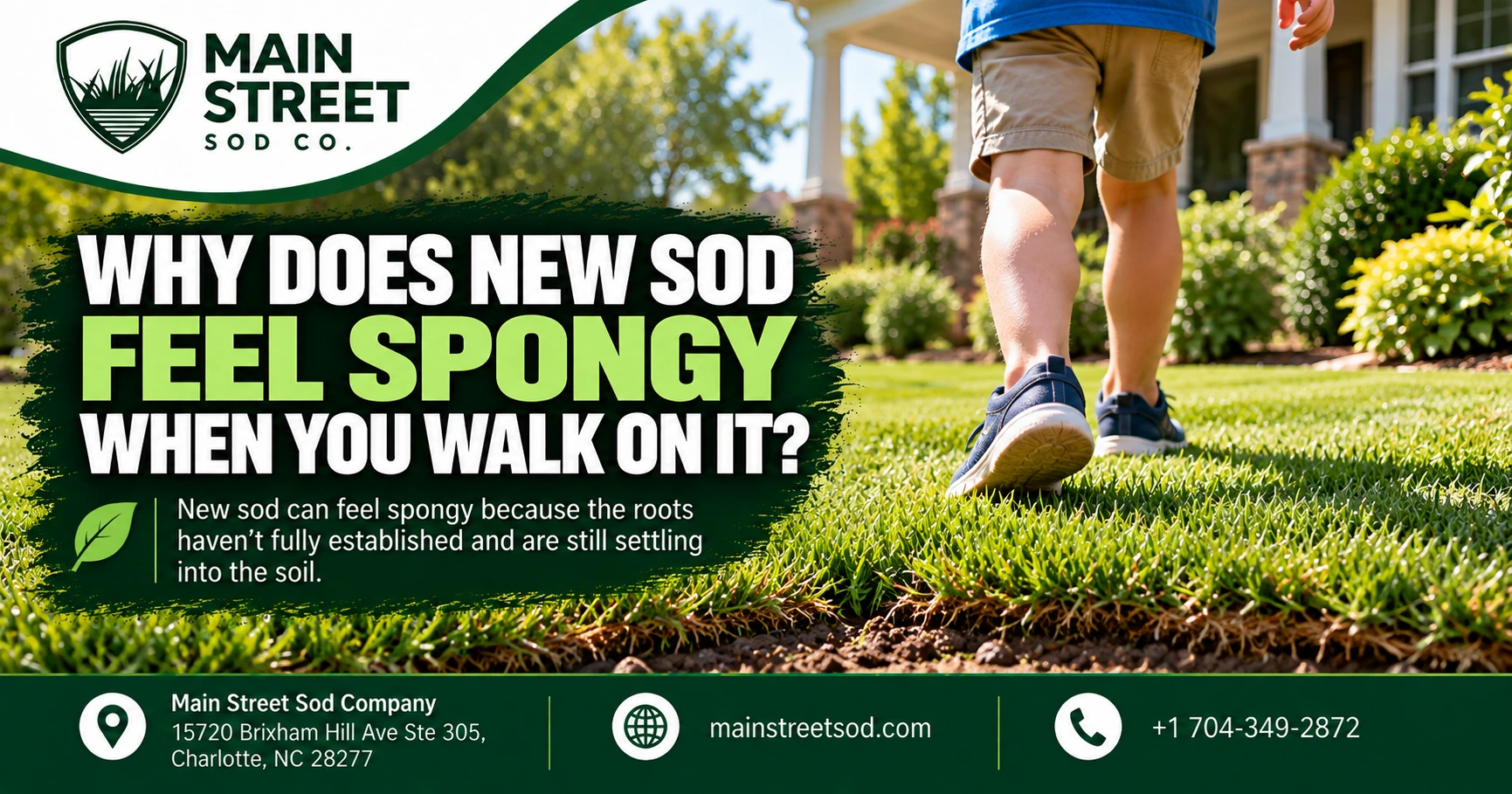
How Can You Check Whether New Sod Is Rooting Properly?
Use a gentle pull test.
Choose a small area near an edge or seam and lightly tug upward.
Freshly installed sod will lift easily. As roots begin growing into the soil below, the turf should gradually resist being lifted.
Main Street Sod notes that shallow rooting often begins within about 10 to 14 days, while fuller establishment usually takes several additional weeks depending on weather, soil, grass type, and site conditions.
Iowa State Extension gives a similar general timeframe for early rooting.
Check more than one part of the lawn.
A sunny, well-drained area may root faster than a low shaded section that stays wet.
Healthy progress usually includes:
- Increasing resistance to lifting
- Firmer soil underfoot
- Fresh upright growth
- Less movement at seams
- Reduced dependence on very frequent watering
Avoid repeatedly lifting sod once you begin feeling resistance.
The goal is to confirm rooting, not disturb new roots.
When Should You Reduce Watering?
Reduce watering gradually when the sod begins developing roots and the soil no longer needs frequent surface moisture to stay appropriately damp.
Do not make the change based only on a calendar date.
Main Street Sod recommends watching moisture, weather, irrigation coverage, drainage, and root development rather than using the same sprinkler runtime every day.
Iowa State Extension similarly recommends daily watering early in establishment, followed by deeper and less frequent irrigation once roots begin developing.
Consider reducing irrigation when:
- The sod resists a gentle tug
- Soil remains moist for longer periods
- The lawn stays soggy after the next scheduled watering
- Water begins pooling
- Footprints leave deep impressions
- The surface stays wet long after irrigation stops
Change the schedule gradually.
The goal is to encourage deeper rooting without allowing newly established turf to dry excessively.
If only one area is spongy while the rest of the lawn has appropriate moisture, investigate drainage or grading before reducing water across the entire yard.
Can Spongy Sod Recover on Its Own?
Sometimes.
Temporary softness caused by establishment watering often improves as the lawn roots and irrigation becomes less frequent.
If the underlying grade is good and the soil drains reasonably well, the surface may gradually firm as excess moisture leaves and roots anchor the turf.
A localized overwatering problem can also improve after the irrigation schedule is corrected.
However, persistent drainage or grading problems do not usually resolve simply because the sod becomes older.
A low area will continue collecting water unless something changes how that water moves.
Likewise, severe compaction beneath the sod can continue limiting infiltration and root development. Main Street Sod notes that adding more water does not correct compacted soil and can worsen conditions when drainage is already poor.
Watch the trend.
If the lawn becomes progressively firmer and better rooted, the issue may have been temporary.
If the same areas remain unstable or soggy while the rest of the lawn establishes normally, the underlying condition deserves more attention.
When Is Professional Correction Needed?
Consider professional evaluation when the softness is persistent, localized, or accompanied by other signs of an underlying site problem.
Warning signs include:
- Standing water after normal irrigation or rainfall
- Areas that remain muddy for long periods
- Deep footprints or ruts
- Sod that continually shifts
- Poor rooting after surrounding turf has established
- Repeated puddles in the same low spots
- Visible dips or uneven grading
- Runoff flowing across the lawn
- Erosion
- Extremely hard soil beneath wet surface layers
- Large areas that decline despite appropriate watering
Main Street Sod recommends evaluating drainage and preparation when water repeatedly collects, ground remains unusually soft, or low areas stay saturated.
Some lawns may need only a watering adjustment.
Others may require grading, leveling, soil preparation, drainage correction, or repair of poorly established sod.
The key is diagnosing the cause before continuing to add more water.
Main Street Sod provides sod preparation and installation services across communities in North and South Carolina. Homeowners can review the company’s service areas to confirm local availability.
FAQs
Is it normal for new sod to feel a little soft?
Yes. New sod and the soil beneath it are kept moist during early establishment, so some softness can be normal. The lawn should gradually become firmer as roots develop and watering frequency decreases.
How do I know whether spongy sod is overwatered?
Check the soil beneath the turf. Soggy or muddy soil, standing water, persistent wetness, and deep footprints are stronger signs of excess moisture than softness alone. Main Street Sod also identifies unusually soft ground as a possible overwatering symptom.
Should I stop watering if my sod feels squishy?
Not automatically. New sod still needs moisture. Check the soil and root development first, then adjust irrigation gradually. If only one area stays soft, drainage or grading may be the real issue.
Why is only one part of my new lawn spongy?
Localized softness often points toward a low area, poor drainage, uneven grading, compacted soil, or concentrated runoff. Compare the elevation and moisture level with surrounding sections.
Can walking on soft new sod damage it?
Yes. Repeated traffic on saturated or poorly rooted sod can create depressions, ruts, or movement. Limit unnecessary walking until the soil firms and the turf establishes roots.
How long should new sod take to firm up?
There is no exact timeline. Early rooting commonly begins around 10 to 14 days, while fuller establishment can take four to six weeks or longer depending on weather, soil, turf variety, and site conditions.
Can poor soil preparation make sod feel spongy?
Yes. Uneven soil, low areas, poor drainage, air pockets, and inappropriate compaction can all affect how stable the finished lawn feels. Proper preparation helps provide a smooth surface with good soil contact and suitable water movement.
If your new sod feels spongy, begin with the simplest check: compare soil moisture and firmness between the soft area and the rest of the lawn. Temporary softness often improves as rooting progresses, but persistent soggy areas, repeated puddling, poor root attachment, or obvious low spots can point to a preparation or drainage problem.
Main Street Sod can help homeowners evaluate site conditions through professional sod preparation and sod installation services, with local availability listed on the company’s service areas page.