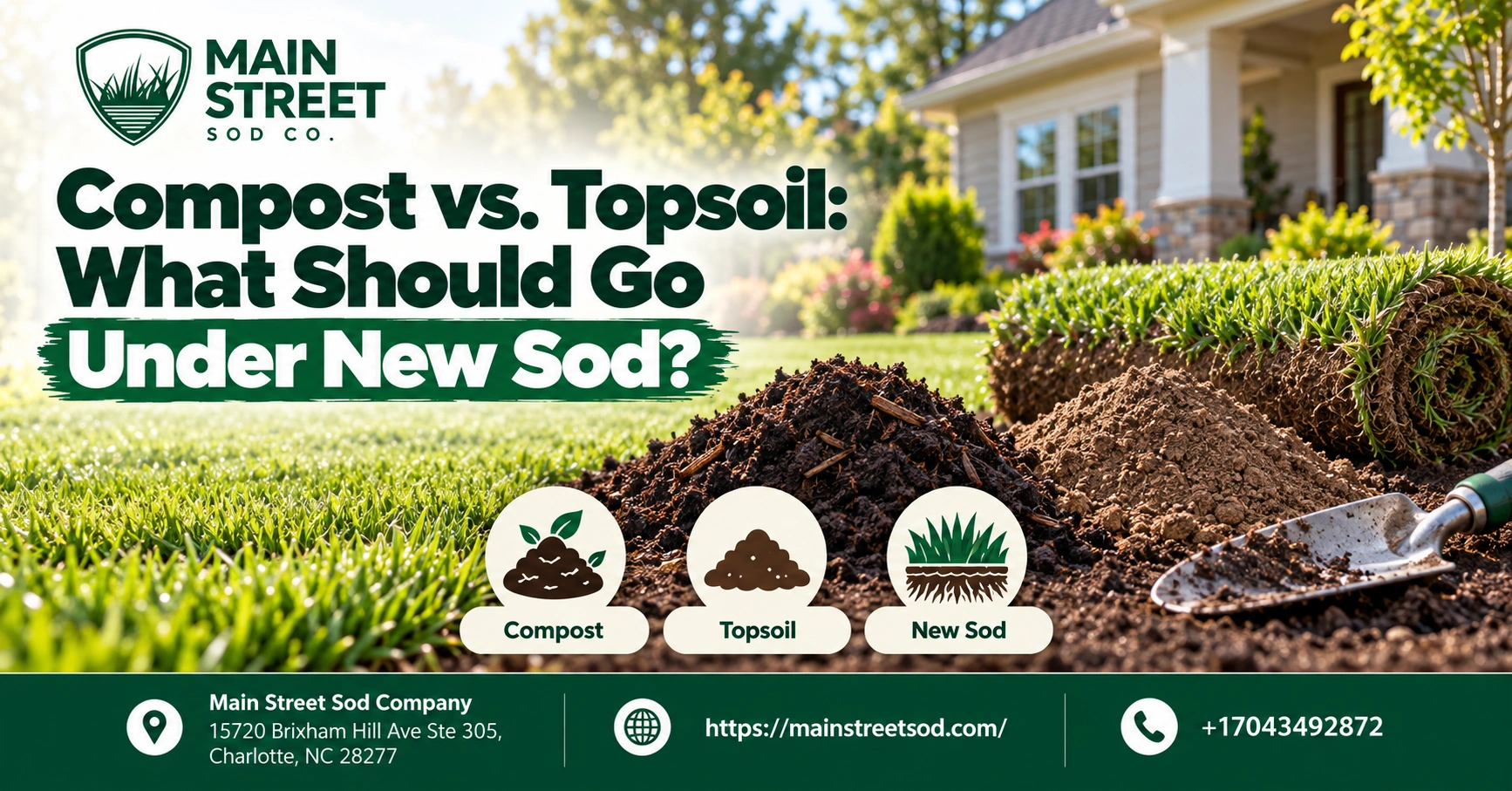
Topsoil usually provides the primary soil base under new sod, while compost is better used as an amendment to improve existing soil rather than as a complete replacement. The right choice depends on soil depth, structure, drainage, organic matter, grading, and the condition of the existing lawn area.
New sod needs consistent contact with a stable, workable root zone. Good topsoil can provide that foundation, while properly incorporated compost may improve certain soil conditions. Testing and evaluating the existing soil first helps determine whether topsoil, compost, or a combination is appropriate.
Compost vs Topsoil: What Is the Difference?
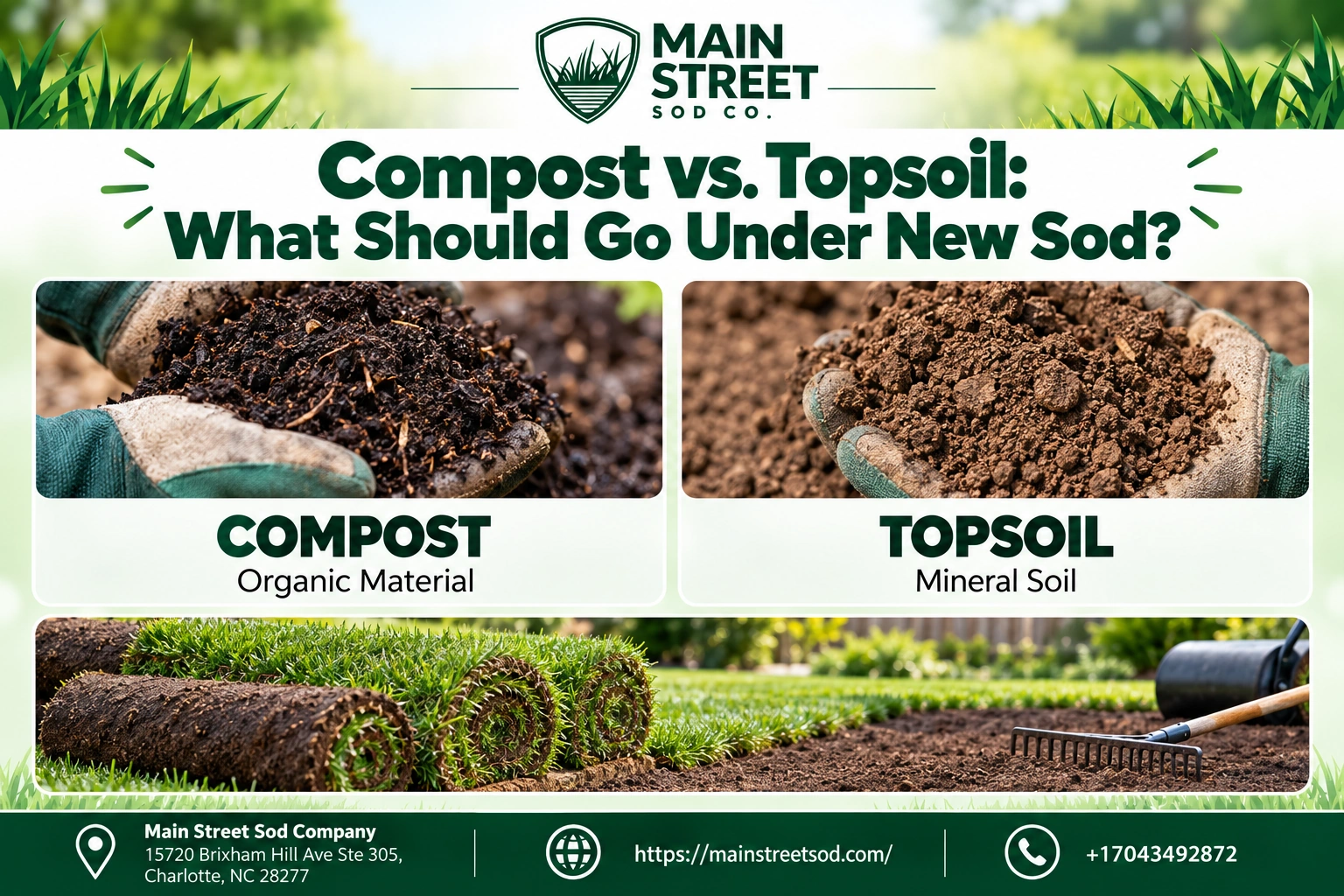
Topsoil and compost serve different purposes when preparing a lawn for sod.
Topsoil is the upper layer of soil where grass roots normally grow. Quality topsoil contains mineral particles, organic material, air, and moisture. Its texture and composition vary considerably depending on where it comes from.
Compost is decomposed organic material. Finished compost can be incorporated into existing soil to add organic matter and improve certain physical characteristics.
The distinction matters because new sod needs a stable soil base.
Topsoil can provide additional soil depth where existing ground is shallow, disturbed, or unsuitable. Compost generally works best as an amendment rather than as the entire growing layer underneath sod.
Is one automatically better?
No. The condition of the site determines what is needed.
A property with adequate, workable topsoil may need little additional material. Compacted or low-organic-matter soil may benefit from appropriate amendment. A construction site with poor fill may require quality topsoil.
Evaluate the existing root zone before ordering either material.
What Does Topsoil Add Before Sod Installation?
Topsoil can add usable soil depth and create a more suitable root zone where existing conditions are poor.
This can be especially important on properties where construction, grading, erosion, or previous landscaping has removed or disturbed the original surface soil.
Quality topsoil gives new sod a mineral-based growing medium into which roots can expand.
However, the word “topsoil” does not guarantee quality.
Products can vary in texture, organic matter, debris content, nutrient levels, and consistency. Material that is excessively sandy, heavy, rocky, or poorly screened may not provide the improvement a lawn needs.
Topsoil should also work with the soil underneath it.
Simply placing a thin layer over heavily compacted ground can create an abrupt boundary between soil layers. Preparing the existing surface and integrating appropriate material can encourage better root development.
Before adding topsoil, consider existing soil depth, grading, drainage, and final lawn elevation. Adding material without considering these factors can create new problems around sidewalks, driveways, foundations, and drainage areas.
What Does Compost Add to Lawn Soil?
Compost primarily adds organic matter to soil.
Organic matter can improve certain soil characteristics, including structure and moisture management. It can also support biological activity within the soil.
Those benefits can make compost useful when preparing some lawn areas for sod.
Compost should be mature, appropriate for landscape use, and applied according to the needs of the existing soil. Material that has not finished decomposing may not provide the same predictable growing conditions as properly finished compost.
Why incorporate compost instead of leaving a layer?
When compost is appropriate, integrating it with existing soil can create a more consistent root zone.
A distinct layer of organic material immediately beneath sod may behave differently from the mineral soil underneath. The objective is to improve the soil, not create disconnected layers.
More compost is not automatically better.
Soil already containing adequate organic matter may need little or none. Evaluating existing conditions helps determine whether compost provides a meaningful benefit before new sod is installed.
Can Compost Replace Topsoil Under New Sod?
Compost generally should not be treated as a direct replacement for topsoil under new sod.
The two materials have different functions.
Topsoil provides a mineral soil base that can support long-term root development. Compost is primarily an organic amendment used to improve suitable soil.
Installing sod over a deep layer of compost can create a growing environment that differs significantly from the soil below it. As organic material continues changing over time, the surface may also settle differently.
If existing soil is shallow, rocky, heavily disturbed, or unsuitable, adding appropriate topsoil may be more useful than attempting to build the root zone entirely from compost.
If the existing soil has adequate depth but would benefit from additional organic matter, incorporating compost may be appropriate.
The best decision begins with the existing soil.
Homeowners should avoid assuming that dark, rich-looking material is automatically the best sod base. Root-zone stability, drainage, texture, grading, and soil composition matter more than appearance alone.
Should You Mix Compost and Topsoil Together?
Compost and topsoil can be used together when the existing soil conditions justify both materials.
The objective should be creating a consistent growing environment rather than simply spreading separate layers.
For example, a lawn area with poor existing soil may need quality topsoil to improve root-zone depth. An appropriate amount of finished compost might then be incorporated when additional organic matter is beneficial.
The exact approach depends on the site.
Should every new lawn receive compost?
No.
Some soils already contain enough organic matter. Adding compost without understanding the existing conditions can be unnecessary and may create an excessive concentration of organic material.
The same principle applies to topsoil.
A lawn with adequate native soil may not benefit from having several inches of imported material placed over it.
Soil testing and physical inspection provide better guidance than a standard recipe.
Preparing for sod should address actual limitations, whether those involve compaction, insufficient soil depth, low organic matter, grading, drainage, or another condition affecting root development.
What Is the Best Soil Base for New Sod?
The best soil base for new sod is a prepared, stable root zone with appropriate texture, drainage, fertility, pH, and moisture conditions for the selected grass.
It should also provide good contact with the underside of the sod.
Roots can establish more effectively when they encounter workable soil rather than compacted ground, debris, rocks, or a loose layer that settles significantly after installation.
Existing native soil can provide an excellent base when its condition is suitable.
Imported topsoil should not be considered mandatory simply because new sod is being installed.
Likewise, compost should solve an identified soil issue rather than be applied automatically.
Proper grading is another part of the soil base.
The surface should support drainage without leaving depressions where water repeatedly collects. Final elevation should also account for nearby pavement and other landscape features.
The best base is therefore not one particular product. It is properly prepared soil suited to the lawn, site, and grass being installed.
How Much Soil Preparation Does New Sod Need?
The amount of preparation depends on what is already present.
A relatively healthy lawn area with workable soil may require less correction than a recently constructed property with compacted fill, debris, and little usable topsoil.
Begin by clearing unwanted vegetation, rocks, construction debris, and other materials that interfere with installation.
Next, evaluate compaction, grading, drainage, soil depth, and surface condition.
A soil test can provide information about pH and fertility. Physical inspection helps identify structural issues that a laboratory result may not show, such as severe compaction or poor grading.
Appropriate amendments or topsoil can then be added when necessary.
The final surface should be smooth enough for the sod to make consistent contact with the prepared soil.
Preparation should be completed before fresh sod arrives whenever possible.
Once delivered, sod should be installed efficiently. Completing major soil corrections beforehand reduces delays and provides a more consistent surface for installation.
Can Too Much Compost Cause Problems?
Yes. Excessive compost can create problems instead of improving the soil.
Compost contains organic matter, and some products may also contain substantial nutrients or soluble salts depending on their source and production process.
Adding more than the soil needs can alter the root-zone environment unnecessarily.
A thick compost layer may also settle as organic material continues to break down. That can contribute to an uneven lawn surface over time.
Product quality matters as well.
Compost can vary depending on feedstock, maturity, processing, and screening. Material appropriate for one landscape application may not necessarily be ideal directly beneath lawn sod.
How do you avoid overapplication?
Start by evaluating the existing soil.
If organic matter is already adequate, additional compost may provide limited benefit. When amendment is justified, use an appropriate amount and incorporate it into the soil rather than assuming a thick layer will produce better grass.
The purpose of compost is to improve soil characteristics, not replace the entire soil profile.
What Soil-Amendment Mistakes Should You Avoid?
One common mistake is adding amendments without first identifying a soil problem.
Homeowners sometimes apply compost, lime, fertilizer, or other products because they are associated with healthy lawns. Soil does not necessarily need every available amendment.
Another mistake is assuming all topsoil is the same.
Imported soil should be suitable for the intended lawn and reasonably consistent with site needs. Poor-quality material can introduce rocks, debris, unsuitable texture, or other unwanted characteristics.
Avoid creating abrupt layers whenever possible.
Placing a thin layer of different material over hard, compacted soil without preparing the underlying surface can restrict effective rooting.
Do not ignore the final grade while adding soil.
Raising the lawn surface excessively can interfere with drainage or create elevation problems near hardscapes and structures.
Finally, avoid delaying preparation until sod is waiting for installation.
Testing, grading, soil improvement, and irrigation corrections are easier to address before fresh sod arrives and needs prompt placement and watering.
When Is New Topsoil Needed Before Installing Sod?
New topsoil may be needed when the existing site lacks enough suitable soil to support consistent root development.
This is common on some construction sites where grading has removed original topsoil or left compacted subsoil and fill near the surface.
Topsoil may also be appropriate where erosion has reduced soil depth or where existing material contains excessive rocks, debris, or other unsuitable components.
Before adding it, determine whether the problem is truly insufficient soil.
Compaction alone does not always mean several inches of new material are necessary. Likewise, drainage problems may require grading or other corrections rather than simply covering the area with more soil.
Imported topsoil should become part of a properly prepared root zone.
The amount required depends on existing soil depth, site elevations, grading, and the quality of both existing and imported materials.
Evaluating those conditions first prevents unnecessary expense and gives new sod a more reliable foundation for establishment.
FAQs
Is topsoil or compost better under new sod?
Topsoil is generally more appropriate when additional soil depth or a better root-zone base is needed. Compost is primarily an amendment that can improve existing soil when additional organic matter is beneficial.
Can I lay sod directly over compost?
Using a deep layer of compost as the complete sod base is generally not the preferred approach. Sod benefits from a stable mineral soil root zone, with compost incorporated as an amendment when appropriate.
Do I always need new topsoil before laying sod?
No. Existing soil may provide a suitable base if it has adequate depth, structure, drainage, grading, and other appropriate conditions. New topsoil should address an actual site limitation.
Should compost be mixed into the soil before sod?
When compost is needed, incorporating an appropriate amount into existing soil can create a more consistent root zone than leaving a distinct organic layer directly beneath the sod.
How do I know whether my lawn needs compost?
Evaluate the existing soil and consider testing before adding amendments. Soil structure, organic matter, drainage, compaction, and the planned turfgrass can help determine whether compost would provide a meaningful benefit.
Can poor soil preparation cause new sod to fail?
Poor preparation can contribute to establishment problems. Compaction, inadequate soil contact, unsuitable grading, poor drainage, and inappropriate amendments can interfere with rooting even when the sod itself arrives in good condition.
Prepare the Ground Before the Sod Arrives
The material beneath new sod can influence how well roots establish long after installation day. At Main Street Sod Company, we believe soil preparation should address the conditions actually present rather than rely on a universal topsoil or compost formula.
We can help customers understand the site conditions that matter before sod installation and determine what preparation should happen before fresh grass is placed. If you are planning a new lawn and are unsure whether the site needs topsoil, compost, or other preparation, we can help you identify practical next steps for successful establishment.
Key Takeaways
Topsoil and compost serve different purposes beneath new sod. Topsoil can provide additional soil depth and a stable mineral root zone, while compost is primarily used to add organic matter and improve suitable existing soil. Neither material should be added automatically. The right preparation depends on soil depth, structure, compaction, drainage, grading, and test results. Avoid excessive compost, poor-quality imported soil, and abrupt soil layers. Evaluating the site before ordering materials helps create a consistent growing environment where new sod can develop roots and establish successfully.