You should aerate soil before installing new sod when compaction is limiting air, water movement, or root penetration, but standard lawn aeration is not necessary for every installation. Heavily compacted or disturbed soil may require deeper loosening or tilling instead of simple core aeration.
New sod establishes best when its roots can make close contact with workable soil underneath. Evaluating compaction before installation helps determine how much preparation is appropriate. The goal is not aeration itself, but creating a stable, loose root zone that supports moisture movement and healthy rooting.
Should You Aerate Soil Before Installing New Sod?
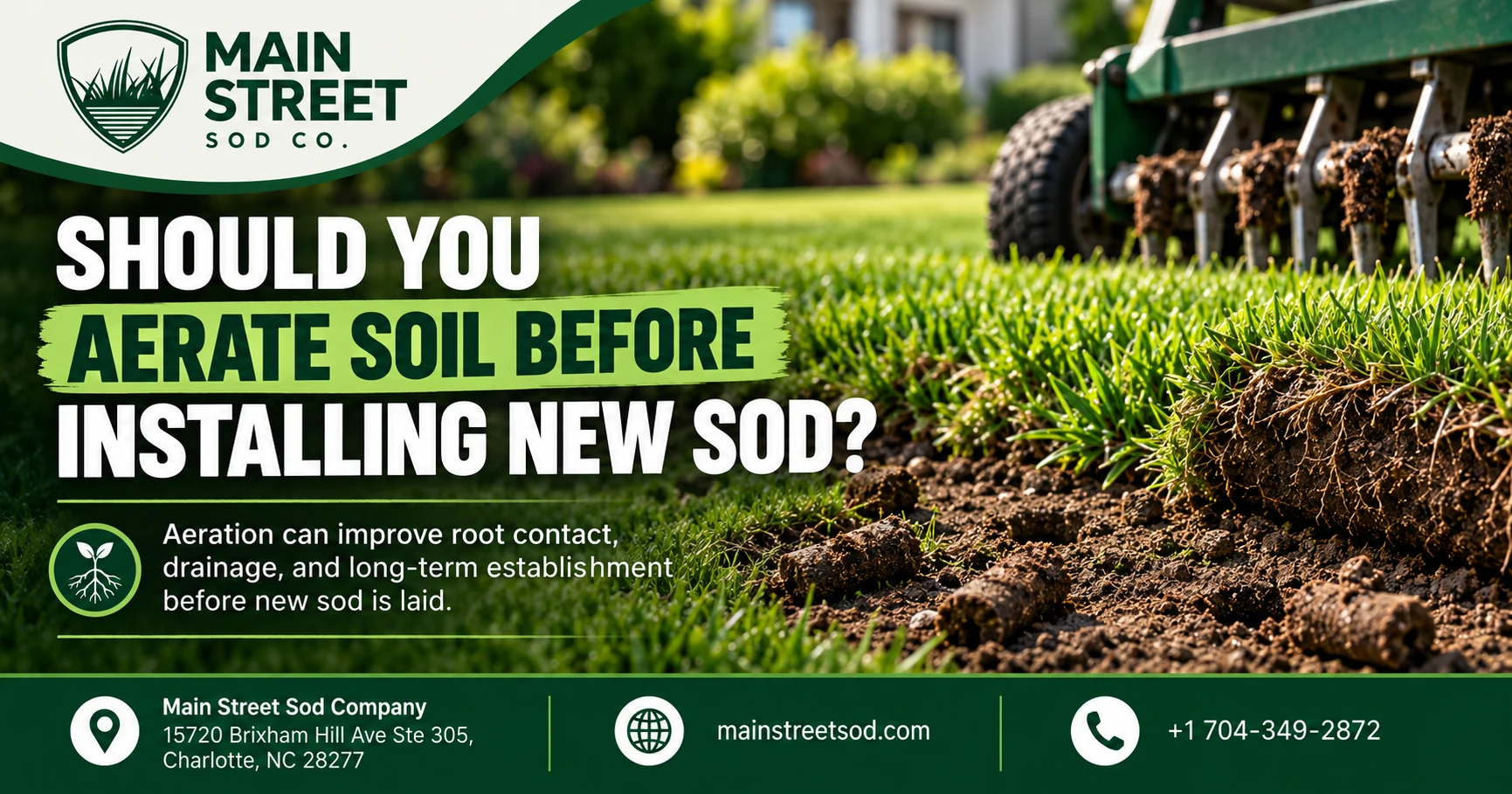
Aeration can be useful before sod installation when the existing soil is compacted but otherwise suitable for turf.
Core aeration removes small plugs from the ground, creating openings through compacted surface soil. These openings can improve conditions for air and water movement while reducing some surface compaction.
However, preparing bare soil for sod is different from maintaining an established lawn.
If old turf has already been removed and the ground is exposed, homeowners have an opportunity to loosen the entire surface more thoroughly. In those situations, cultivation or other preparation may be more effective than running a traditional aerator across the site.
The decision should depend on soil condition.
Ground that is already workable may not need aggressive disturbance. Hard soil that resists digging or restricts water infiltration deserves more attention.
The objective is to create soil that roots can penetrate without making the finished surface unstable, excessively loose, or poorly graded.
When Does Aeration Help Before Sod Installation?
Aeration can help when compaction is concentrated near the surface and the underlying soil remains reasonably suitable.
Compaction often develops from foot traffic, lawn equipment, repeated mowing, construction activity, or other pressure on the ground.
Core aeration creates openings without completely turning over the soil.
That can be useful when the property needs moderate loosening rather than major reconstruction of the root zone.
Aeration may also help water enter soil that has become resistant to surface infiltration. However, it should not be treated as a guaranteed correction for every drainage problem.
What should you check before aerating?
Inspect several areas across the planned lawn.
Try pushing a shovel or soil probe into the ground. Look for hard layers, standing water, construction debris, shallow topsoil, and noticeable differences between sections.
If compaction is mild and localized, aeration may be sufficient.
If the entire root zone is dense, rocky, heavily disturbed, or unsuitable, a more comprehensive soil preparation method may be needed before sod arrives.
What Are the Signs Soil Needs to Be Loosened?
Hard resistance near the surface is one of the clearest signs of compacted soil.
If a shovel, screwdriver, or soil probe is unusually difficult to push into moist ground, the root zone may need preparation.
Water behavior can provide another clue.
Compacted soil may accept water slowly, causing puddling or runoff. However, drainage problems can have several causes, so surface water alone does not prove compaction.
Examine existing roots when old turf or vegetation is removed.
Shallow, concentrated root growth can sometimes indicate restrictive conditions below the surface.
Construction sites deserve particular attention.
Heavy equipment can compress soil significantly, and grading may leave dense subsoil or fill near the surface. Rocks and debris may also interfere with the future root zone.
Do not judge soil only by whether the surface looks smooth.
A finely graded surface can still have a hard layer underneath. Testing several locations helps determine whether preparation needs to extend deeper than the visible surface.
Aeration vs Tilling: What Is the Difference?
Aeration and tilling both disturb soil, but they do so differently.
Core aeration removes small plugs from the soil while leaving most of the surrounding structure intact. It is commonly used to relieve surface compaction in established lawns.
Tilling disturbs a larger volume of soil.
A tiller or other cultivation equipment breaks and mixes the soil across a broader area and can reach deeper than typical lawn aeration, depending on the equipment and conditions.
That makes tilling potentially useful when bare soil requires substantial preparation.
It is not automatically better.
Excessive tilling can disrupt soil structure, bring buried weed seeds or debris toward the surface, and leave ground extremely loose. Loose soil can later settle unevenly if the site is not prepared correctly.
The appropriate method depends on the severity and depth of compaction.
Moderate surface compaction may respond to aeration. A dense, restrictive root zone may require deeper loosening.
Neither method replaces proper grading, soil evaluation, or removal of unsuitable debris.
When Is Aeration Not Enough?
Aeration may not be enough when compaction extends well below the depth affected by the aerator.
This is especially relevant on properties affected by construction traffic or heavy equipment.
If the surface consists primarily of compacted subsoil, rocky fill, or unsuitable material, creating small holes does not transform that material into a complete lawn root zone.
The site may require deeper loosening, removal of debris, suitable topsoil, or a combination of preparation methods.
Aeration also cannot correct every drainage problem.
Water may collect because of grading, low areas, dense underlying layers, or other site conditions. Those issues should be identified before assuming more aeration will solve them.
Should you simply add topsoil?
Not automatically.
Spreading new topsoil over a severely compacted surface can create a distinct layer without correcting the restriction underneath.
Preparing the existing ground before adding appropriate material can create a more continuous environment for developing roots.
The severity of the underlying condition should determine the preparation method.
Can Compacted Soil Prevent New Sod From Rooting?
Severe soil compaction can restrict how effectively new sod develops roots into the ground below.
Fresh sod begins with roots contained in its existing layer. Successful establishment requires new root growth to extend beyond that layer and into the prepared soil.
Dense soil creates greater physical resistance.
Roots may remain concentrated close to the surface instead of expanding efficiently into the available root zone.
Compaction can also affect water and air movement.
New sod requires consistent moisture during establishment, but roots also need a suitable soil environment. Poor infiltration may contribute to runoff or uneven moisture across the lawn.
Compaction is not the only reason sod may root slowly.
Insufficient watering, excessive watering, poor soil contact, unsuitable temperatures, grass condition, and other factors can influence establishment.
That is why the entire installation environment should be evaluated.
Correcting significant compaction before sod is installed is generally easier than attempting major soil work after a finished lawn covers the area.
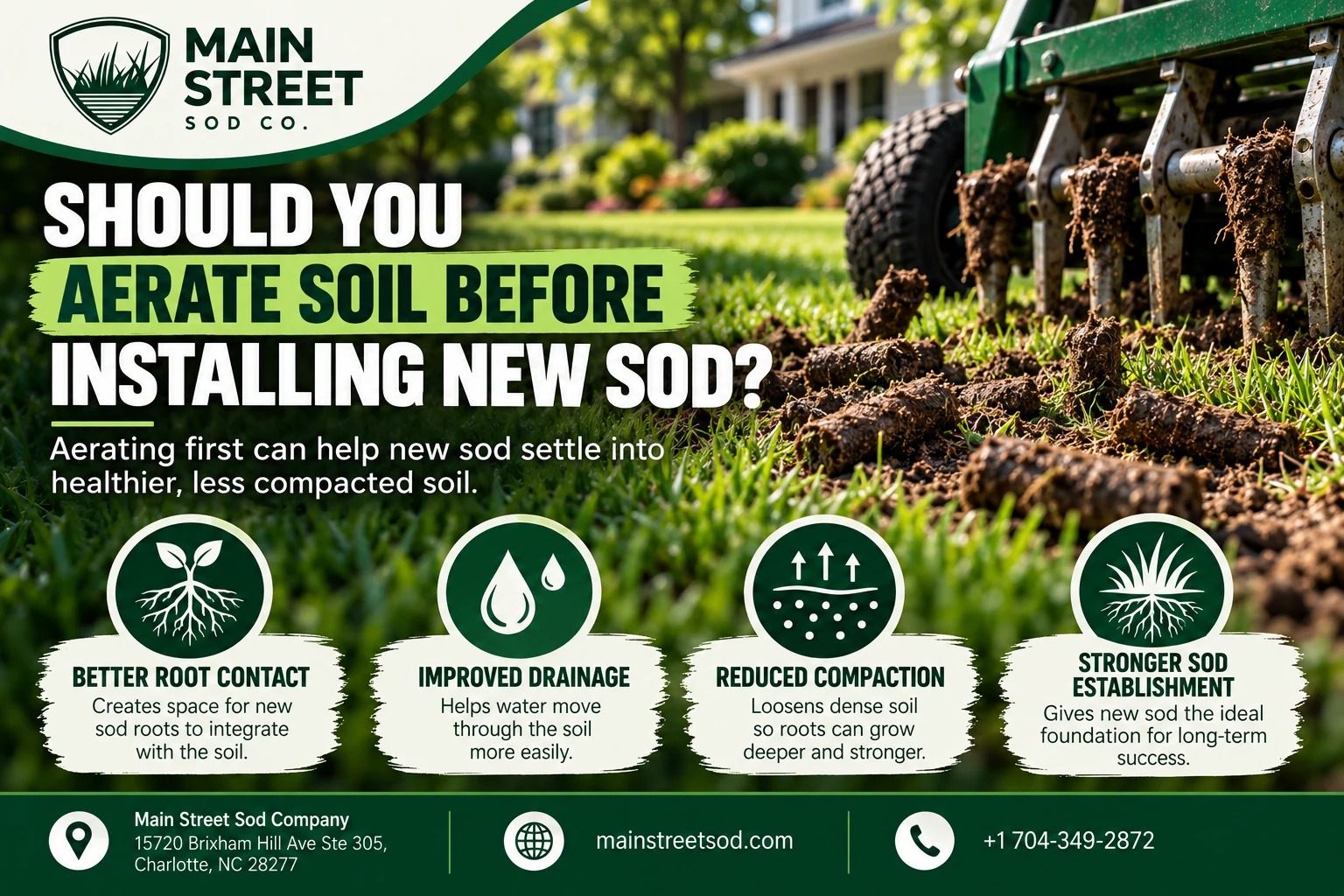
How Does Soil Loosening Improve Root Contact?
Soil loosening helps create a workable surface that can conform more closely to the underside of newly installed sod.
Good contact matters because large air gaps between the sod and soil can interfere with consistent moisture transfer and rooting.
The prepared surface should be smooth but not hard.
Roots need access to soil they can penetrate as establishment begins.
Loosening also provides an opportunity to remove stones, roots, construction debris, and large soil clods that could prevent even installation.
However, more loosening is not always better.
An extremely fluffy soil surface may compress and settle after irrigation, creating uneven areas across the finished lawn.
The goal is a balance.
Soil should be workable enough for root penetration while remaining stable enough to support sod without substantial settlement.
After deeper preparation, grading and light settling can help establish the final surface.
This creates a consistent foundation where sod pieces can sit firmly against the soil and begin rooting across the installation area.
Should Soil Be Amended After Aeration?
Soil amendments should be added when existing conditions show that they are needed, not simply because aeration has been performed.
A soil test can help identify pH and nutrient conditions before sod installation.
Physical inspection can identify other concerns, including poor soil structure, low usable soil depth, excessive rocks, or construction fill.
Compost may be useful when additional organic matter is appropriate. Topsoil may be needed when the site lacks adequate quality soil.
Neither should be applied automatically.
Adding excessive organic material can create an unnecessarily different layer beneath the sod. Adding topsoil without addressing severe compaction can leave a restrictive boundary underneath.
If amendments are recommended, exposed soil provides an opportunity to incorporate them into the prepared root zone.
This can create more consistent conditions than leaving a separate layer on the surface.
Choose amendments based on the soil problem being corrected. Proper preparation is targeted, not simply the addition of more material.
How Should the Final Soil Surface Be Prepared?
After aeration, loosening, or amendment, the site needs a smooth and stable final grade.
Remove rocks, roots, debris, and large clods that could prevent consistent contact between the sod and soil.
Address obvious low spots and abrupt changes in elevation.
The finished grade should support appropriate drainage and account for the thickness of the sod itself.
Areas beside sidewalks, driveways, patios, curbs, and other hard surfaces require particular attention. If the soil is already too high before installation, the finished sod may sit above adjacent surfaces.
Should the surface be packed down?
The soil should be settled and stable, but it should not be heavily compacted again.
Excessively loose soil can settle unevenly after watering. Excessively firm soil can undo the benefit of preparation.
A smooth, firm, workable surface provides a better installation base.
Complete major soil work before sod delivery whenever possible. Fresh sod should be installed promptly, so grading and preparation should not become unfinished tasks after the material has arrived.
When Is Professional Sod Preparation Worth Considering?
Professional preparation can be valuable when the site has conditions that are difficult to evaluate or correct consistently.
New construction properties are a common example.
These sites may contain compacted subsoil, fill material, debris, uneven grades, or limited topsoil. Correcting those conditions may require more than standard lawn aeration.
Professional assistance can also be useful when drainage problems, significant slopes, large installation areas, or uncertain soil conditions complicate preparation.
Equipment access is another consideration.
A large area of heavily compacted soil may require tools that homeowners do not have or are not comfortable operating.
Professional preparation can also help coordinate soil work with sod delivery.
The objective is to have the site ready when fresh sod arrives so installation can proceed without unnecessary delays.
Not every lawn needs extensive professional soil work. When existing soil is suitable and preparation is straightforward, basic site preparation may be sufficient.
The condition of the property should determine the level of assistance needed.
FAQs
Do you have to aerate before laying sod?
No. Aeration is not required for every sod installation. It can help with moderate compaction, but exposed soil may sometimes benefit more from broader loosening and preparation.
Can sod be laid over hard soil?
Sod can physically be placed over hard soil, but severe compaction may restrict rooting and water movement. Preparing the soil first gives roots a more suitable environment for establishment.
Should I aerate or till before new sod?
The answer depends on compaction depth and soil condition. Aeration can address moderate surface compaction, while deeper or widespread restrictions may require more substantial cultivation.
How loose should soil be before laying sod?
Soil should be workable enough for roots to penetrate and for the sod to make good contact. It should also be stable enough that the finished lawn does not settle excessively after watering.
Can I add topsoil after aerating?
Yes, when additional quality soil is actually needed. Existing soil should still be evaluated and prepared so the added topsoil does not simply cover a severe restrictive layer.
How can I tell whether sod is making good soil contact?
Freshly installed sod should sit evenly against the prepared surface without obvious gaps underneath. As establishment progresses, gentle resistance when carefully lifting an edge can indicate that roots are beginning to connect with the soil.
Give New Sod a Better Place to Root
Proper soil preparation can make the transition from fresh sod to an established lawn more consistent. At Main Street Sod Company, we look beyond the visible surface because compaction, grading, soil quality, and root contact all influence how new sod establishes.
We can help customers understand what their lawn needs before installation and identify preparation concerns that should be addressed before fresh sod arrives. If you are planning a new lawn and are uncertain whether aeration, deeper loosening, additional soil, or basic grading is appropriate, we can help you determine a practical approach.
Key Takeaways
Aerating before sod installation can help when moderate surface compaction limits water movement or root penetration, but it is not necessary for every lawn. Heavily compacted, disturbed, rocky, or construction-affected soil may require deeper loosening, additional preparation, or suitable topsoil. The goal is a stable, workable root zone rather than aeration itself. Soil amendments should address identified conditions, not be added automatically. Before sod arrives, correct major compaction, remove debris, evaluate drainage, and establish a smooth final grade that allows consistent soil contact and healthy root development