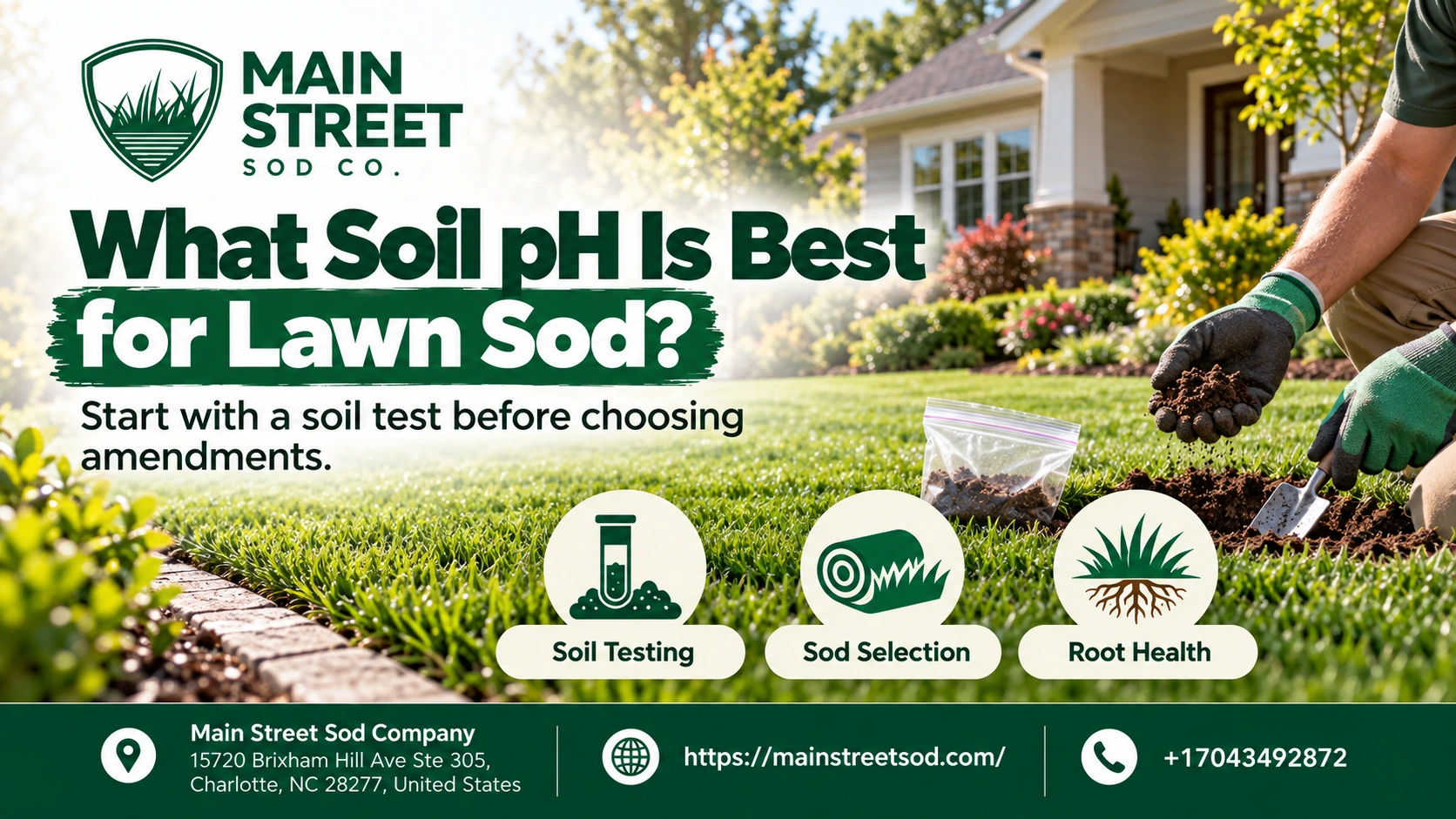
The best soil pH for lawn sod is generally slightly acidic to neutral, with many turfgrasses performing well around a pH of 6.0 to 7.0. The ideal range can vary by grass type, soil conditions, and local growing environment, so testing the soil before installation provides the most reliable guidance.
Proper soil pH helps new sod access essential nutrients while developing roots in the soil below. When pH is too high or too low, grass may struggle even when watering and fertilization appear adequate, making soil preparation an important step.
What Does Soil pH Mean?
Soil pH measures how acidic or alkaline the soil is. The pH scale runs from 0 to 14, with 7 considered neutral.
Values below 7 indicate acidic conditions, while values above 7 indicate alkaline conditions. Lawn soils often perform best within a moderate range rather than at either extreme.
Soil pH matters because it affects chemical and biological processes in the root zone. One of the most important effects is nutrient availability.
Grass roots depend on soil for nutrients needed to support growth, color, and establishment. When pH moves outside a suitable range, certain nutrients may become less available even when those nutrients are physically present in the soil.
This is why adding fertilizer does not automatically correct every struggling lawn.
A pH measurement gives homeowners useful information about the environment where sod roots will develop. Combined with a broader soil test, it can help determine whether soil preparation or specific amendments should be considered before installation.
What Soil pH Is Best for Lawn Sod?
For many common lawn grasses, a soil pH between approximately 6.0 and 7.0 provides favorable growing conditions. This range is slightly acidic to neutral.
It should be treated as a useful general range rather than a universal requirement.
Different turfgrass species can tolerate or prefer somewhat different conditions. Soil composition, climate, drainage, nutrient levels, and maintenance practices also affect how a lawn performs.
The best approach is to identify the grass being installed and test the existing soil before making major adjustments.
Does the pH need to be exactly 6.5?
No.
Soil pH does not need to reach one exact number for sod to establish successfully. Grass can often perform well across a range of suitable values.
Trying to force soil toward an unnecessarily precise target can result in excessive amendment.
A soil test provides a more useful starting point. Recommendations can then be based on the actual pH, soil characteristics, and turfgrass planned for the lawn.
Why Does Soil pH Matter for New Sod?
New sod arrives with an existing layer of roots and soil, but successful establishment requires those roots to grow into the prepared soil underneath.
The condition of that underlying soil matters.
Suitable pH helps create an environment where important nutrients remain accessible as new roots expand. If the soil is excessively acidic or alkaline, nutrient availability may become limited or unbalanced.
Newly installed sod is already adapting to a different growing environment.
Adequate irrigation, good soil contact, appropriate sunlight, and proper installation are important during this period. Poor soil conditions can add another source of stress.
Soil pH is not the only factor determining whether sod succeeds.
A lawn with an ideal pH can still struggle because of poor drainage, compaction, inadequate watering, excessive watering, unsuitable grass selection, or improper installation.
However, testing pH before laying sod gives homeowners an opportunity to correct significant problems while the soil remains accessible.
Do Different Grass Types Prefer Different pH Levels?
Yes. Turfgrass species can differ in their preferred soil conditions and their tolerance for acidity or alkalinity.
Many lawn grasses perform well within a moderately acidic to neutral range. However, one species may tolerate lower pH conditions better than another, while some grasses may perform more consistently closer to neutral.
That difference is one reason homeowners should avoid applying the same soil treatment to every lawn.
Grass selection should also account for climate, sunlight, expected traffic, maintenance requirements, and site conditions.
Why does grass type matter before soil preparation?
Knowing the planned sod variety gives soil test recommendations a meaningful target.
Without that information, a homeowner may attempt to change pH unnecessarily or move it toward a level that is not particularly beneficial for the selected turf.
Soil testing and grass selection should work together.
Rather than asking whether one pH number is perfect for every sod lawn, determine whether the existing soil falls within a suitable range for the grass being installed.
What Are the Signs of a Soil pH Problem?
Poor color, weak growth, thinning grass, or inconsistent lawn performance can occur when soil pH is unsuitable.
However, these symptoms do not confirm a pH problem.
Many lawn problems look similar from the surface. Drought stress, excessive watering, compacted soil, insects, disease, poor drainage, nutrient deficiencies, shade, and installation problems can all affect appearance.
A soil test is therefore more reliable than diagnosing pH from grass color alone.
Patterns across the lawn may provide useful clues.
If grass repeatedly struggles despite appropriate watering and maintenance, soil conditions deserve closer attention. Differences between areas can also justify testing separate sections, particularly when the property contains imported soil, construction fill, or noticeably different soil textures.
Avoid adding lime, sulfur, fertilizer, or other products simply because the lawn appears yellow or weak.
Testing first helps identify whether pH actually needs correction and reduces unnecessary applications.
How Is Lawn Soil pH Tested?
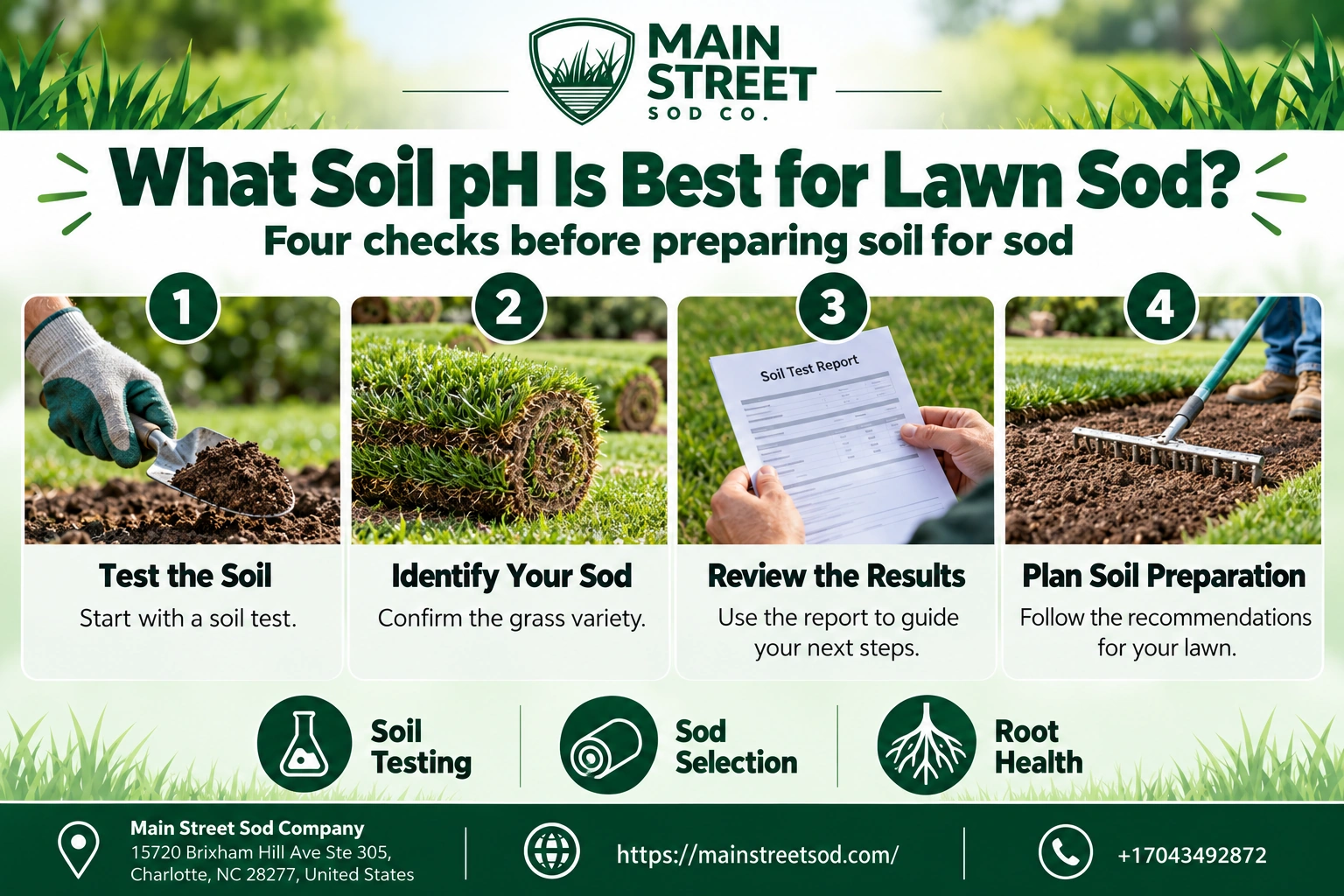
Lawn soil pH can be measured through a soil test.
Home testing products can provide an initial estimate, while laboratory testing can provide more detailed information and recommendations. Local agricultural or extension resources may also offer guidance on appropriate sampling and testing options.
Good sampling matters because soil conditions can vary across a property.
Collect small samples from several representative locations within the area being evaluated rather than relying on soil from one isolated spot. Combine samples only when they represent similar lawn conditions and follow the testing service’s instructions.
Areas with clearly different characteristics may need separate samples.
For example, a section near a foundation, a recently filled area, or a location with a different soil type may not represent the rest of the lawn.
Testing before sod installation is especially useful because amendments can be incorporated into exposed soil more effectively than after established turf covers the surface.
Can Poor pH Affect Nutrient Uptake?
Yes. Soil pH influences the availability of nutrients that turfgrass roots need.
When soil becomes too acidic or too alkaline, some nutrients may become less available to plants even if testing shows that those nutrients exist in the soil.
Other elements may become more available under certain conditions, potentially creating an imbalance.
This relationship explains why fertilizer alone cannot solve every nutrient-related lawn problem.
If pH is substantially outside the appropriate range, repeatedly adding nutrients without addressing the underlying soil condition may produce disappointing results.
Does poor color always mean a nutrient problem?
No.
Yellowing or weak growth can have multiple causes. Watering problems, root stress, poor drainage, disease, insects, compaction, and environmental conditions can produce similar symptoms.
Soil testing helps separate pH and nutrient concerns from problems that require a different solution.
For new sod, addressing major soil limitations before installation gives developing roots a better environment from the beginning.
How Can Soil pH Be Corrected Before Sod Installation?
The appropriate correction depends on whether the soil is too acidic or too alkaline and how much adjustment is actually needed.
Acidic soils are commonly adjusted with liming materials. Soils that need to become more acidic may require other amendments, depending on existing conditions and professional or laboratory recommendations.
Do not determine application amounts through guesswork.
The quantity and type of amendment needed can depend on current pH, target pH, soil texture, amendment characteristics, and the grass being installed.
Clay and sandy soils, for example, can respond differently to amendments.
Corrections should ideally be based on soil test recommendations.
Before sod installation, appropriate materials can often be distributed and incorporated into the prepared soil. This provides an opportunity to address the root zone instead of applying everything only to the surface.
Significant pH changes can also take time.
Planning soil preparation before the sod arrives reduces pressure to make rushed corrections during installation.
When Should Topsoil or Soil Amendments Be Added?
Topsoil or soil amendments may be appropriate when existing conditions are unsuitable for reliable sod establishment, but they should solve an identified problem rather than be added automatically.
Poor soil depth, heavy compaction, construction debris, drainage limitations, or unsuitable soil structure may justify additional preparation.
Topsoil can sometimes help create a more suitable growing layer, particularly where the existing surface has been disturbed during construction or grading.
However, simply spreading a thin layer of material over poor soil does not guarantee better rooting.
The new material should be appropriate for lawn establishment and integrated with the overall site preparation.
Soil amendments should also be selected based on need.
Organic material, lime, or other amendments may be recommended depending on test results and soil conditions. Applying unnecessary products can alter nutrient levels, pH, or drainage in unintended ways.
The objective is a stable, prepared root zone that supports the selected sod.
Why Soil Preparation Matters Before Laying Sod
Sod can create an immediate green surface, but its long-term performance depends heavily on what is underneath it.
Roots need suitable soil contact, moisture, air, nutrients, and enough workable soil to establish beyond the original sod layer.
Preparation can include removing debris, addressing compaction, correcting grading concerns, testing soil, making appropriate amendments, and creating a smooth planting surface.
Why should preparation happen before delivery?
Once sod is delivered, installation should proceed efficiently to reduce unnecessary stress on the grass.
Completing soil work beforehand allows installation crews to focus on placing the sod correctly rather than correcting major soil problems while fresh material waits.
Preparation also provides the best opportunity to address pH concerns throughout the upper root zone.
Good soil does not eliminate the need for proper watering and maintenance after installation.
It does, however, provide the foundation new sod needs to begin establishing consistently across the lawn.
FAQs
Is 7.0 pH good for lawn sod?
A pH around 7.0 can be suitable for many turfgrasses, although the preferred range depends on the specific grass and soil conditions. A soil test can determine whether any adjustment is actually necessary.
Can sod grow in acidic soil?
Many grasses tolerate moderately acidic conditions. However, excessively acidic soil can affect nutrient availability and lawn performance, so testing is recommended before attempting to change the pH.
Should I test soil before installing sod?
Yes. Testing before installation can identify pH concerns and other soil conditions while the ground is still accessible for preparation and amendments.
Can I put lime down before laying sod?
Lime may be appropriate when a soil test indicates that acidic soil needs adjustment. The amount should be based on actual soil conditions rather than a general application rate.
How quickly can soil pH be changed?
The timing varies according to the starting pH, soil characteristics, amendment used, application method, and environmental conditions. Significant changes should be planned rather than expected to occur immediately.
Does new topsoil need to be pH tested?
Testing can be useful, especially when a substantial amount of new topsoil will form the root zone for the lawn. Knowing its pH and other characteristics helps determine whether additional preparation is appropriate before sod installation.
Build Your New Lawn on Better Soil
Healthy sod needs more than a green surface. The soil underneath influences rooting, nutrient availability, moisture management, and how successfully the lawn establishes after installation. At Main Street Sod Company, we believe preparing the site properly is one of the most important steps before fresh sod goes down.
We can help customers understand the conditions that matter when planning a new sod lawn and identify preparation concerns that should be addressed before installation. If you are considering new sod and have questions about soil preparation, grass selection, or establishment, we can help you plan the next steps.
Key Takeaways
Most lawn sod performs well in slightly acidic to neutral soil, with approximately 6.0 to 7.0 serving as a useful general range for many turfgrasses. The right target still depends on grass type and existing soil conditions. Testing before installation helps identify whether pH correction, topsoil, or other amendments are actually needed. Proper pH supports nutrient availability, but it cannot compensate for poor drainage, compaction, or watering problems. Preparing the root zone before sod arrives gives new grass a stronger foundation for consistent establishment and long-term lawn performance.